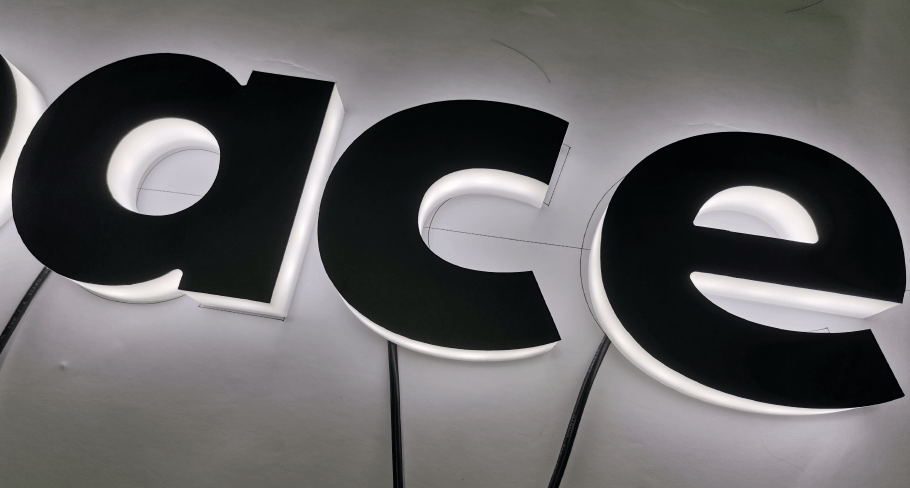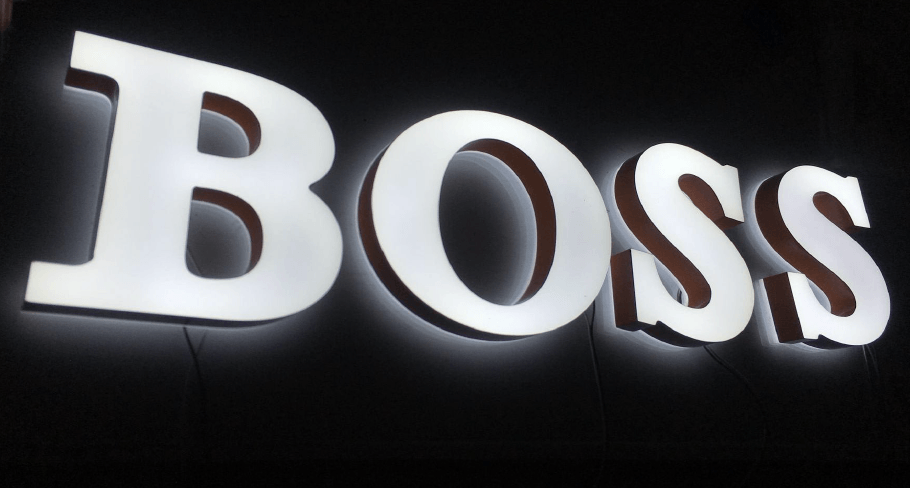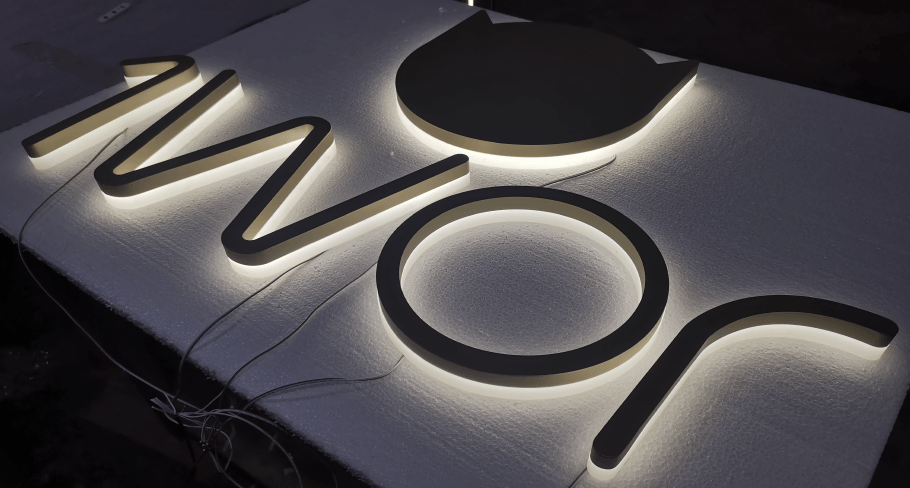
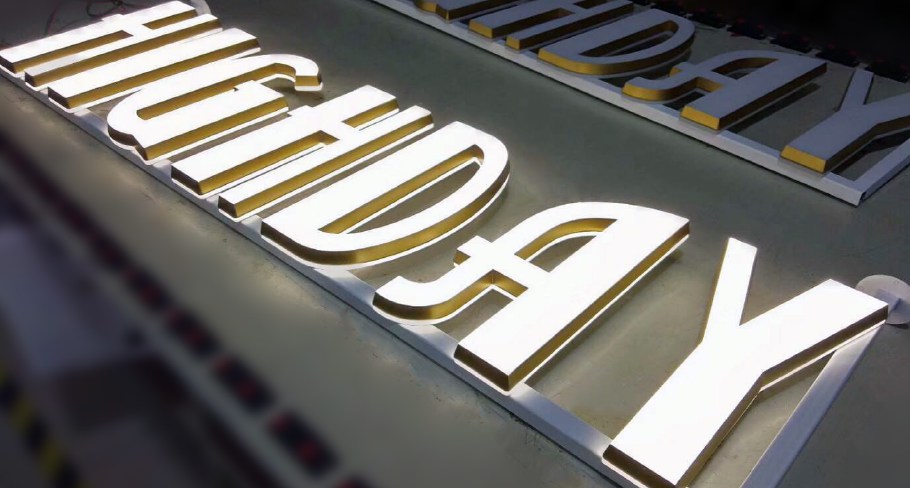
When we walk around at night, we see all kinds of signs, a significant part of which are channel letters.
Do you know exactly how many types of channel letters there are?
The main types of channel letters are listed below:
- Front Lit
- Back/Halo Lit
- Front and Back/Halo Lit(Dual-Lit)
- Trimless Back/Halo Lit
- Trimless Front Lit
- Side Lit
- Front and Side Lit
- Bevelled Edge
- Marquée
- Faux Neon
- Open Face
- Non-illuminated
- RGB Channel Letters
- Epoxy Resin Channel Letters
- Day-Night Channel Letters
- Push-Through Letters
- Rusty Metal Letters
Note: Some of the styles below are true channel letter variations, while others are related dimensional sign types with similar fabrication methods. For clarity, I’ve grouped them together in this article.
What is Channel Letters?
Channel letters are three-dimensional signage commonly found on the exterior walls of shops, restaurants, and commercial buildings. They are typically made of metal or plastic and can have internal light sources installed to illuminate the front or back of the letters, improving visibility and brand recognition at night and indoors.
Front Lit
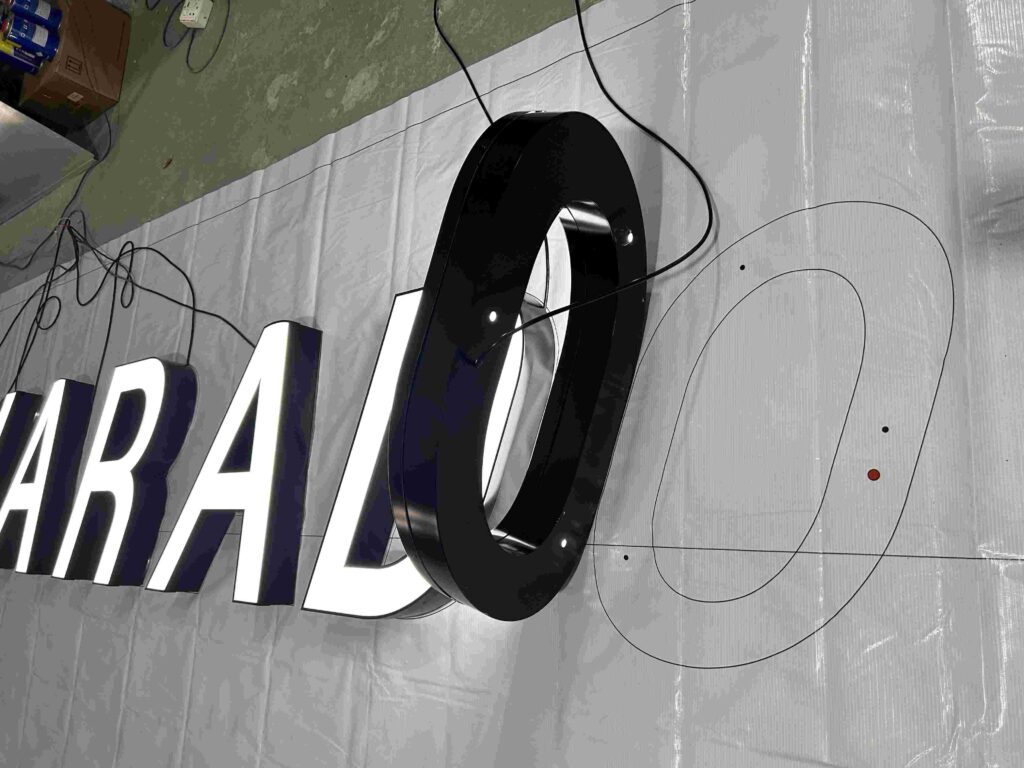
Front lit letters, also called face lit letters, are the channel letters with illumination directed towards the front of the sign, the light shines through the letter face, as shown in the figure below:
For more details about front lit letters, please refer to below article:
Beginner Guide For Face-lit Illuminated Channel Letters
Back/Halo Lit
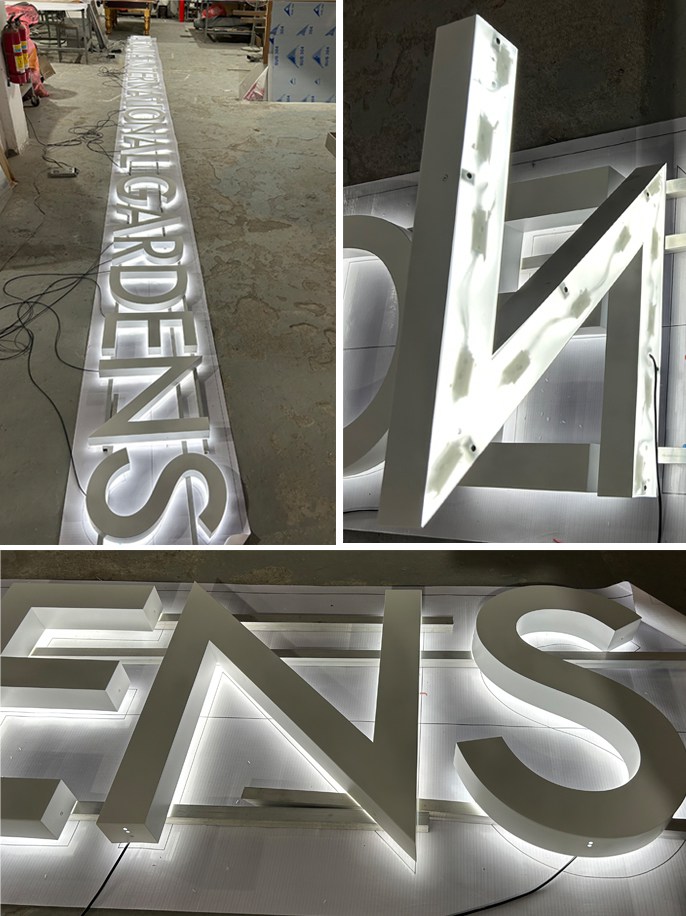
Back lit letters, also called halo lit letters, are channel letters where the illumination is directed towards the back, creating a halo effect around the letters, with the light visible only around the edges, as shown in the figure below:
For more details about back/halo lit letters, please refer to below articles:
FAQs For Business Backlit Signage
A Beginner’s Guide to Halo Lit Letters
Front and Back/Halo Lit(Dual-Lit)
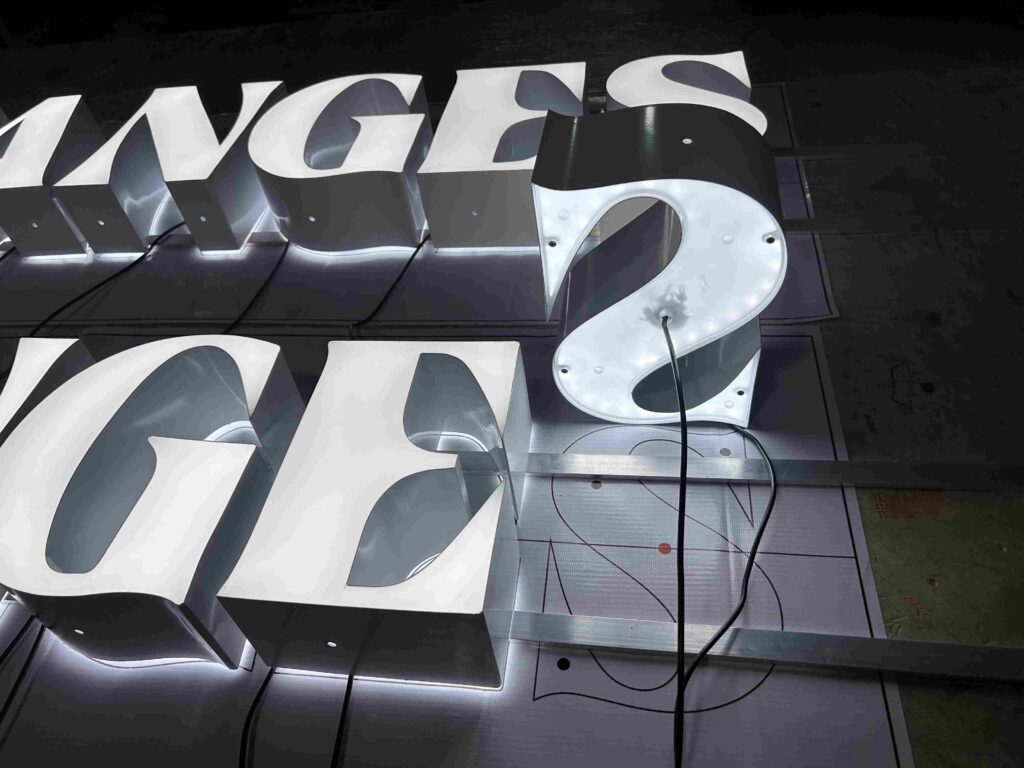
Front and back/halo lit letters, also called dual-lit letters, it combines both front and reverse lighting, Illuminates the letter face as well as creates a halo effect around the edges, offering a more dynamic lighting effect, as shown in the figure below:
For more details about dual-lit letters, please refer to below article:
A Brief Guide to Dual-Lit Letters
Trimless Back/Halo Lit
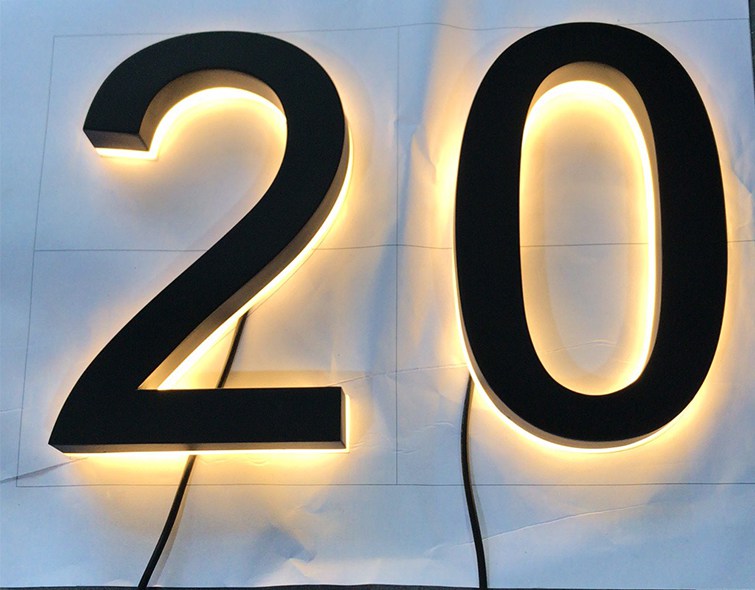
Trimless back/halo lit letters are structurally similar to regular halo lit letters. They are created by placing a transparent acrylic base plate under the trimless letter, making the halo effect around the letter more pronounced. The image below shows a trimless metal halo lit letter, where a transparent acrylic base plate is placed underneath it:
The video below shows a trimless stainless steel halo lit letter:
Trimless Front Lit
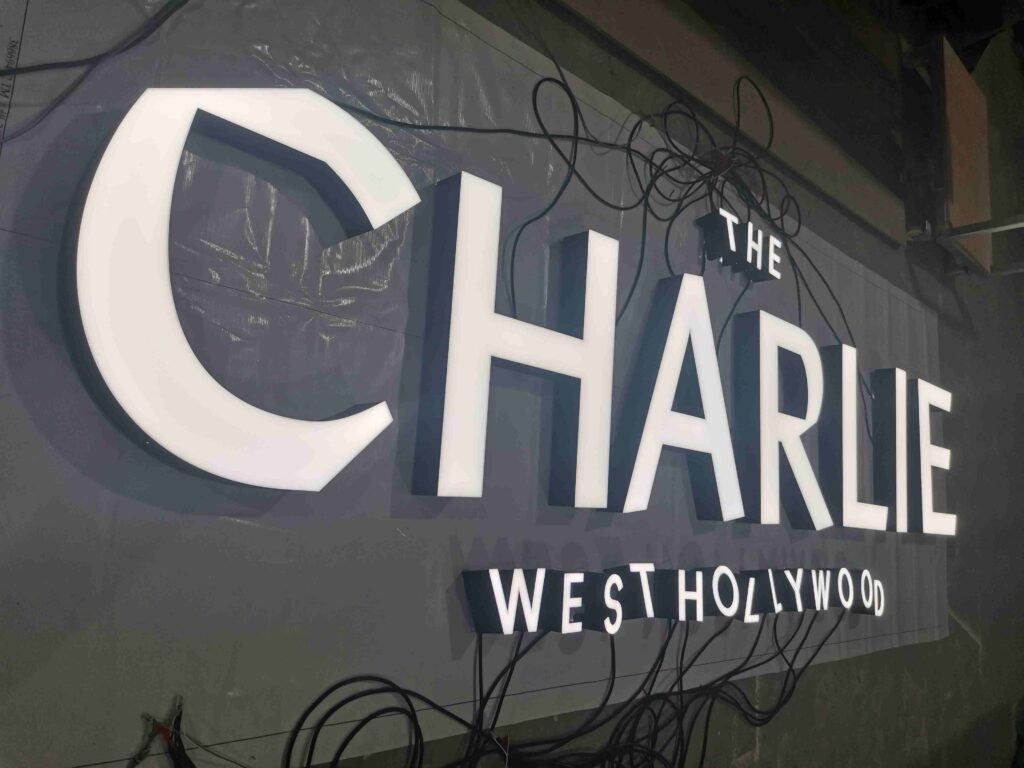
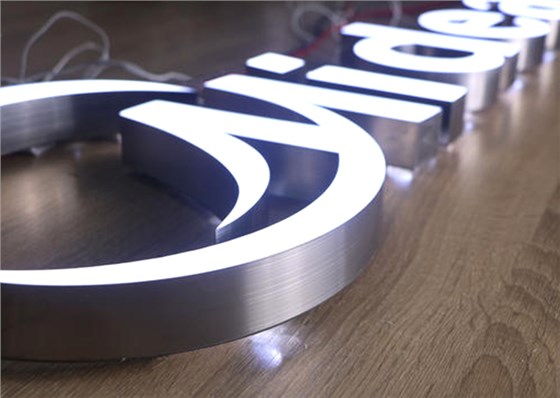
Trimless front-lit letters emit light in the opposite direction to trimless back/halo-lit letters; they emit light from the surface through a high-transmittance, edge-free light-emitting panel, as shown in the image below:
For more details about trimless front lit letters, please refer to below article:
A Brief Guide to Trimless Front Lit Letters
Side Lit
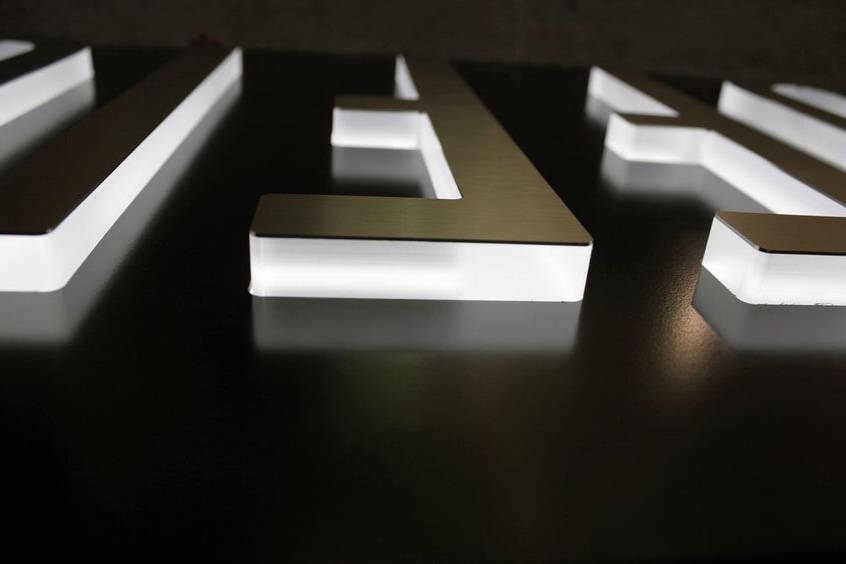
Side lit letters, also called edge lit letters, are channel letters where the lettering is illuminated from the sides, but not from the front. Generally, the front of side-lit letters is made of opaque materials such as black acrylic, stainless steel, brass, gold texture, or colored sheets, while the sides are made of acrylic. The light is projected through the return of the letters, as shown in the image below:
For more details about side lit letters, please refer to below article:
What Are Side Lit Letters? How Are They Different from Halo Lit Letters?
Front and Side Lit
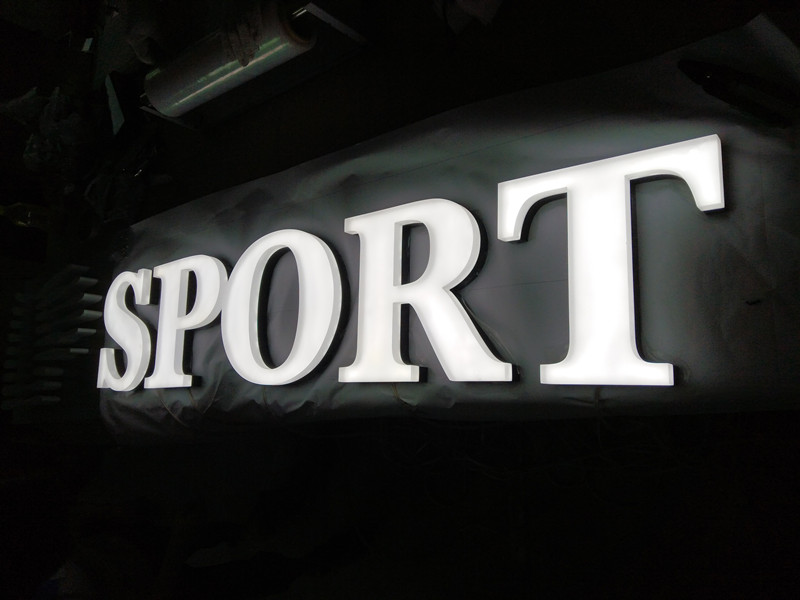
Front and side lit letters are channel letters that emit light from both the front and sides. Their front is a transparent or semi-transparent panel with an internal LED light source, allowing light to pass through the front panel while a small amount of light also shines through the narrow edges (returns) or side structures, creating a “front-lit + side-lit” effect, as shown in the image below:
The video below shows a acrylic face and edge lit letter:
Bevelled Edge
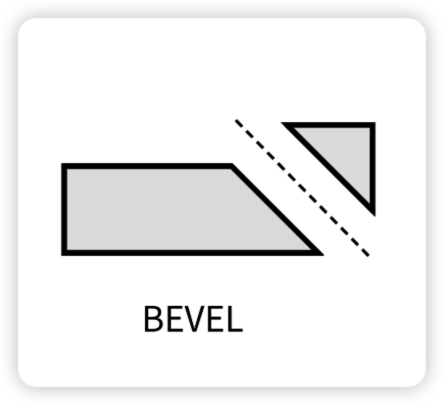
Beveled edge letters generally refer to letters with beveled edges, meaning the edges of the letters are cut at a small bevel instead of straight right angles. These letters visually create a “beveled edge,” and when light shines on them, it forms a bright or shadow line, making them appear more three-dimensional and refined. They are commonly found in metal or acrylic 3D letters, storefront signs, and directional signs, as shown in the image below:

Marquée
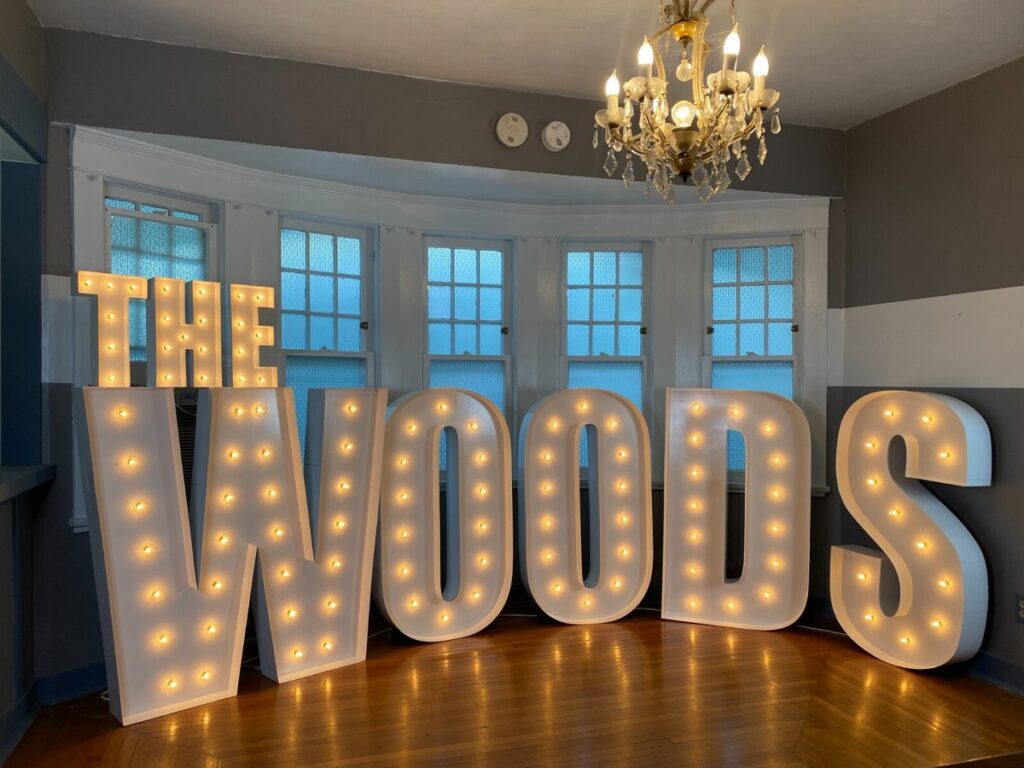
Marquee letters, also known as bulb letters, are decorative illuminated letters with bulbs arranged in an outer contour, giving them a retro stage feel, as shown in the image below:
Faux Neon
Faux neon is a type of lettering that mimics the effect of neon lights. It looks like a traditional neon tube, but typically uses safer and more durable LEDs or acrylic structures to achieve the luminous effect, as shown in the image below:

For more details about neon signs, please refer to below articles:
How to choose perfect Neon Signs
How to make acrylic neon sign letters
Open Face
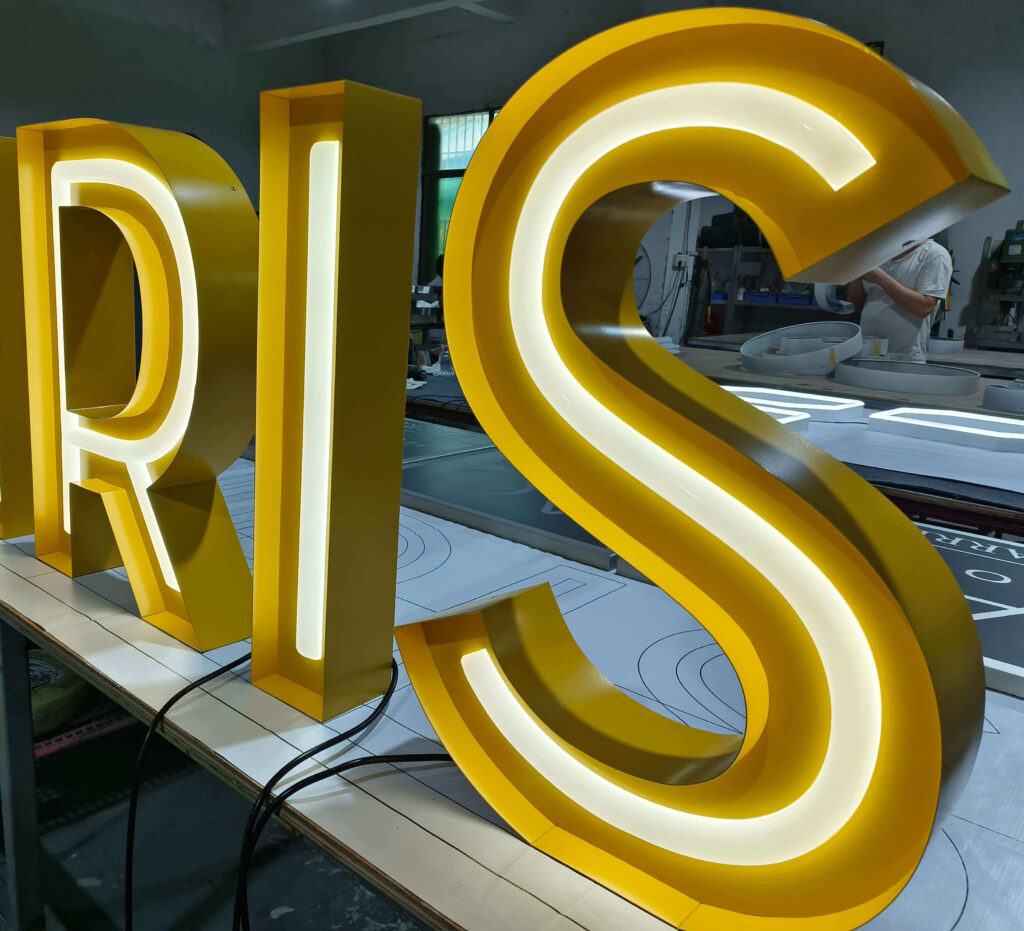
Open face letters are channel letters with an exposed lighting source, typically using no front face or a clear face, to create a bold retro-style look:
For more details about open face letters, please refer to below article:
A Guide to Open-Face Faux-Neon Signs
Non-Illuminated
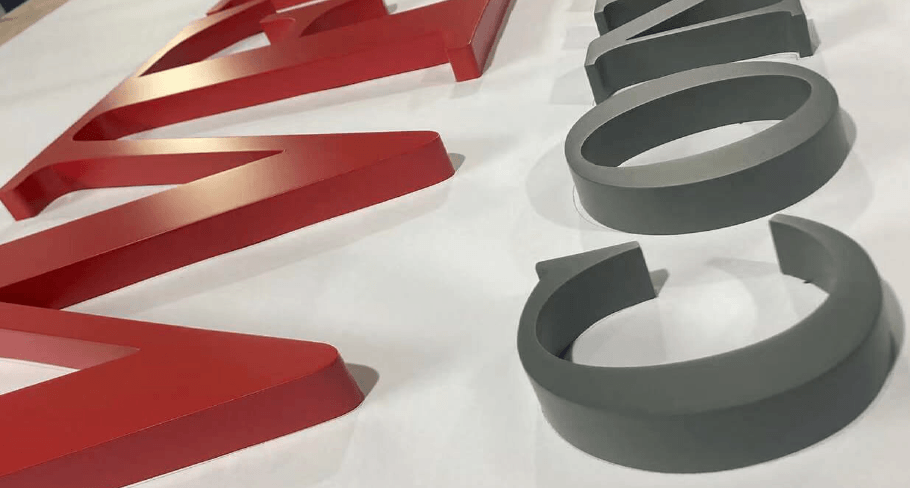
It keeps the appearance of 3D letters but does not include internal lighting, as shown in the image below:
For more details about non-illuminated letters, please refer to below articles:
Do Channel Letters Always Need to be Illuminated? How to Choose?
A guide to Flat Cut sign letters
RGB Channel Letters
RGB Channel Letters are illuminated signs that use RGB LED modules to produce dynamic, color-changing effects. Unlike traditional channel letters that typically emit a single fixed color, RGB channel letters can display a wide spectrum of colors and lighting patterns.
These signs are commonly constructed using stainless steel returns, opal acrylic faces, and integrated RGB LED lighting systems, offering both durability and visual versatility.
RGB stands for Red, Green, and Blue—the three primary colors of light. By adjusting the intensity of each color within the LED module, RGB systems can generate over 16 million color variations, enabling customizable and programmable lighting effects.

For more details about RGB channel letters, please refer to below article:
General Guide For RGB LED Channel Letters
Epoxy Resin Channel Letters
Epoxy Resin channel letters are made of epoxy resin face, metal returns, and inner LED lighting. It is a common advertising sign used in shops, branding chain stores, front door signs, etc.

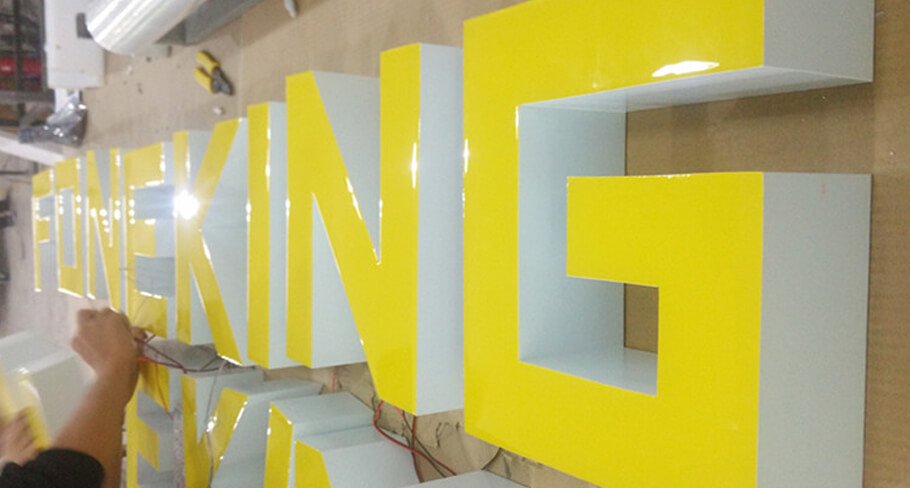
The appearance of Resin letters is similar to opal acrylic face-lit letters. What is the difference between them? please refer to below article:
Epoxy Resin Channel Letters VS. Acrylic Face-lit Letters
Day-Night Channel Letters
Day-Night channel letters are a modern signage solution designed to create two different visual effects in one sign. During the day, the letters appear dark, clean, and understated. At night, when the internal LED lights are turned on, the same letters glow brightly and become highly visible.
The effect is usually created with special day-night acrylic or perforated face material, making the face looks black or dark when the lights are off, but becomes white or brightly illuminated when the LEDs are on.
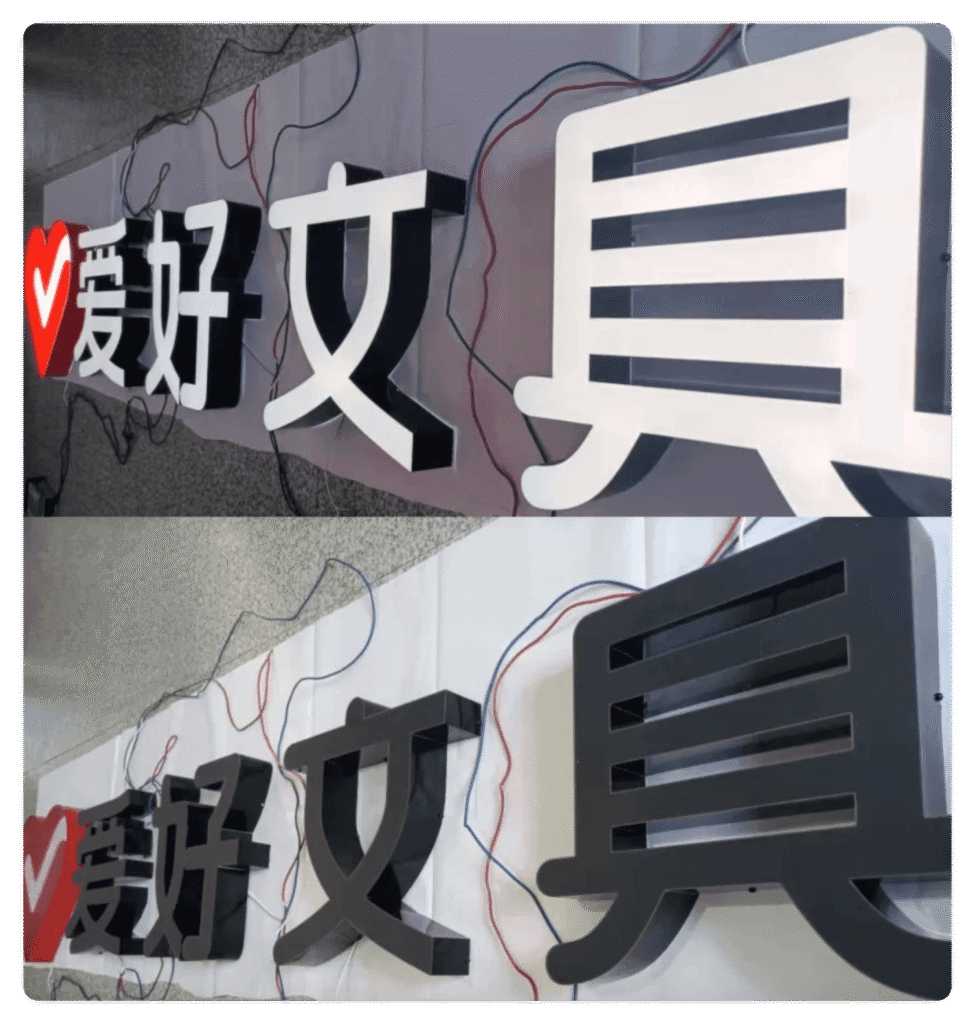
For more details about front lit letters, please refer to below article:
A Brief Guide to Day-Night Channel Letters
Push-Through Letters
Push-through letters are raised, three-dimensional letters created by “pushing” them through a surface, such as acrylic or other materials. This process produces a dimensional effect, making the letters stand out from the background. It allows light to illuminate them from behind, resulting in a glowing effect that is both captivating and professional.
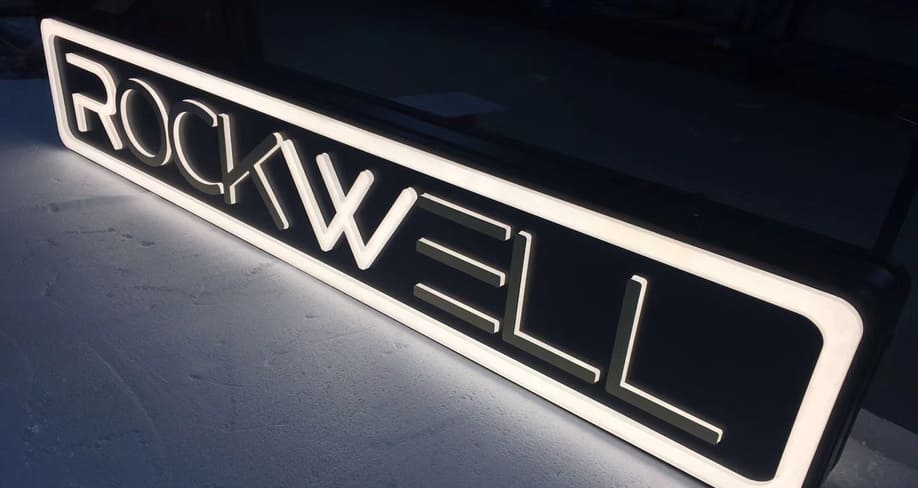
For more details about push-through letters, please refer to below article:
A Brief Guide to Push-Through Letters
Rusty Metal Letters
Rusted metal letters are metal letters designed with a weathered, vintage look. The rustic effect is created through natural rust or by distressing the metal to make it look aged. These letters are typically made from materials like steel, iron, or aluminum and can be customized in size, style, and design.
Rusted metal letters add a unique touch to any space, whether you’re displaying at the party or creating a custom business sign. They are commonly used for home decoration, business signs, or personal branding. Their durability and one-of-a-kind appearance make them a popular choice for both indoor and outdoor use.
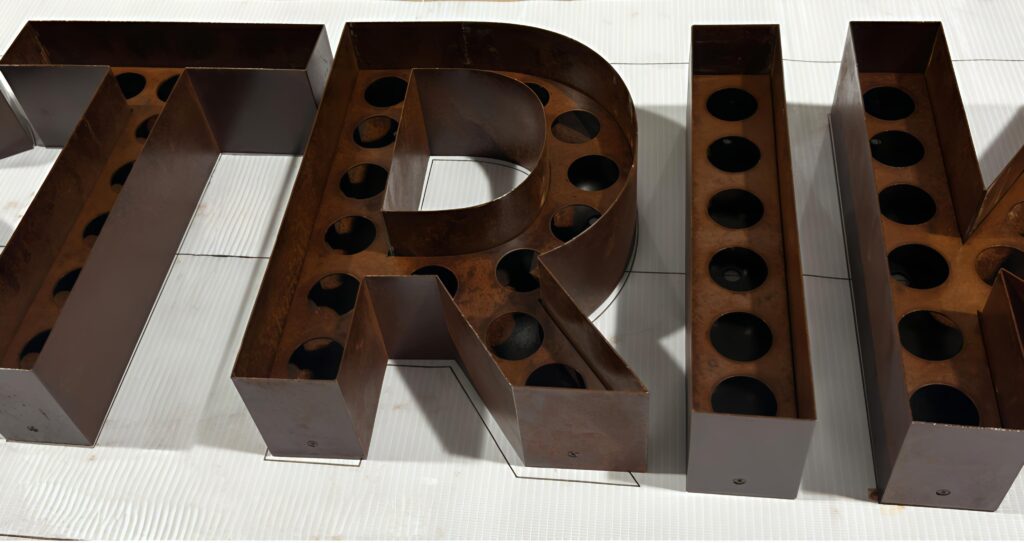
For more details about rusted metal letters, please refer to below article:
A General Guide for Custom Rusty Metal Signs
Which Type of Channel Letters is Best?
There is no best, only the most suitable. The most common and widely used are front lit letters, but different channel letters are suitable for different scenarios. We should choose based on the scenario and usage requirements.
Below is a summary table of different channel letters to help you make your selection:
| Type | One-line Description | Lighting Direction | Common Structure / Materials | Visual Effect |
|---|---|---|---|---|
| Front Lit | Channel letters with illumination directed toward the front, shining through the letter face. | Front lighting. | Metal returns + acrylic face + LED modules. | Bright front face with strong visibility. |
| Back/Halo Lit | Channel letters with illumination directed toward the back, creating a halo effect around the letters. | Rear lighting. | Metal letter body + LED modules + installation gap from the wall. | Soft glow around the letter edges. |
| Front and Back/Halo Lit | Dual-lit channel letters with both front lighting and rear halo lighting. | Front + rear lighting. | Metal body + acrylic face + LED modules. | More dynamic and layered lighting effect. |
| Trimless Back/Halo Lit | A trimless halo-lit letter built on a seamless structure, with a clear acrylic base added underneath to enhance the halo effect. | Rear lighting. | Trimless letter structure + transparent acrylic base + LED modules. | Cleaner edges and more pronounced halo glow. |
| Trimless Front Lit | A trimless front-lit letter with no visible trim, using a high-transparency face panel for front illumination. | Front lighting. | Trimless illuminated face panel + LED modules + base housing. | Clean, modern, and seamless appearance. |
| Side Lit | Letters that are lit mainly from the sides, while the front face remains non-illuminated. | Side lighting. | Black acrylic or metal face + translucent side returns + LED modules. | Subtle front face with glowing side edges. |
| Front and Side Lit | Channel letters that illuminate both the front and the sides. | Front + side lighting. | Transparent or translucent face panel + LED modules + translucent returns. | Stronger depth and richer lighting layers. |
| Bevelled Edge | Letters with a slanted cut edge, creating a beveled surface on the letter profile. | Not necessarily illuminated, but can be lit. | Metal or acrylic dimensional letters. | Sharper outline and a more refined look. |
| Marquée | Marquee letters, also called bulb letters, with exposed bulbs arranged around the outer contour. | Point-source bulb lighting. | Letter shell + bulb holes + light bulbs. | Retro, theatrical, and decorative appearance. |
| Faux Neon | A neon-style letter made to mimic traditional neon tubing, usually with LED or acrylic construction. | Linear lighting. | LED neon strip + acrylic base. | Bright, colorful, and neon-like. |
| Open Face | Channel letters without a front acrylic face, exposing the light source for a bold, industrial look. | Front lighting. | Metal returns + exposed LED or neon tubes + open front structure. | Bright, raw, and retro-style visual effect. |
| Non-illuminated | Channel letters with no internal illumination, using material finish and dimensional shape for branding. | None. | Metal returns + opaque face, typically aluminum, stainless steel, or acrylic. | A clean, dimensional, and understated look. |
| RGB Channel Letters | Channel letters with programmable RGB LEDs that can change colors dynamically. | Front lighting or front + rear lighting, depending on design. | Metal returns + acrylic face + RGB LED modules + controller. | Color-changing, eye-catching, and highly customizable lighting effect. |
| Epoxy Resin Channel Letters | Channel letters with a resin-filled front face that creates a smooth, glossy illuminated surface. | Front lighting. | Metal returns + epoxy resin face + LED modules. | Sleek, polished, and soft glowing appearance. |
| Day-Night Channel Letters | Channel letters with a day-night face that appears black during the day and white when illuminated at night. | Front lighting. | Acrylic face or perforated vinyl face + acrylic returns + LED modules. | Premium, high-contrast, black-by-day / white-by-night appearance. |
| Push-Through Letters | Channel letters with illuminated acrylic elements pushed through a metal face panel. | Front lighting or front + back lighting, depending on structure. | Metal face panel + acrylic push-through inserts + LED modules. | Clear letter definition with strong contrast and dimensional depth. |
| Rusty Metal Letters | Non-illuminated or decorative letters made with a rusted metal finish for a vintage industrial style. | No lighting. | Steel or iron letters with oxidized/rusted surface finish. | Weathered, rustic, and artistic appearance. |
Cost Comparison
Cost is often one of the first things customers ask about. In general, the more complex the lighting effect and construction, the higher the cost.
| Type | Relative Cost |
|---|---|
| Front Lit | $ |
| Halo Lit | $$ |
| Open Face | $$~$$$ |
| Front & Back Lit | flexible |
Front lit channel letters are usually the most budget-friendly option because they use a simple face-lit structure and are widely used in commercial signage. Halo lit letters typically cost more due to the added standoff structure and the need to create a clean halo effect on the wall surface.
Open face channel letters can vary more in price depending on whether they use exposed bulbs, neon-style lighting, or custom fabrication details, so they are best shown as a range rather than a fixed tier. Front and back lit channel letters are generally the most expensive because they combine two lighting effects and require a more complex build.
Note: Actual pricing depends on letter size, font style, mounting method, materials, LED type, finish, and permit requirements.
Common Mistakes When Choosing Channel Letters
Even with the right type of channel letter, small design or installation choices can make a big difference in how your sign looks and performs. Here are three common mistakes we see, and how to avoid them.
Mistake #1: Choosing Halo Lit for Dark Walls
Halo lit (reverse lit) channel letters rely on light reflecting off the wall behind the letters to create that soft “glow” around each character. If the wall is too dark, the effect is dramatically reduced.
What happens if you ignore this:
- The halo effect becomes very weak or almost invisible
- The light glow is not obvious at night, especially from a distance
- You may end up paying for halo lit letters but getting a visual result closer to non-illuminated letters
Why it happens:
- Dark paint (especially black or very deep colors) absorbs most of the light instead of reflecting it
- Highly textured or uneven surfaces (rough stone, heavy grout lines) break up the light and create patchy spots
- Glossy or mirrored surfaces can reflect individual LED dots instead of a smooth glow
How to fix it:
- For dark walls, use a front-lit channel letter instead, or
- Install a lighter backer panel behind the halo lit letters to act as a reflective surface, or
- Use a combination front + halo (dual-lit) design so the face still provides strong visibility even if the halo is weak
Mistake #2: Using Small Stroke Fonts for Front Lit Letters
Front lit channel letters use an acrylic face that is illuminated by LEDs inside the letter. The thickness of your font’s strokes directly affects how evenly the light spreads.
What happens if you ignore this:
- The face shows visible light spots (hot spots from individual LEDs)
- Brightness is uneven, with some areas much brighter than others
- Small or thin strokes can look washed out or “punctured” by LED dots
Why it happens:
- In very thin or small-stroke fonts, the distance from the LED to the edge of the face is small, so the light doesn’t have enough acrylic to diffuse evenly
- High-output LEDs in tight spaces create concentrated bright spots instead of a smooth glow
How to fix it:
- Choose fonts with thicker strokes for front lit channel letters, especially for exterior signs
- If you must use a small-stroke or delicate font, consider:
- Halo lit or dual-lit instead of pure front lit
- Using lower-output LEDs with more diffusion layers
- Increasing the letter size so the stroke becomes thick enough to diffuse light evenly
Mistake #3: Ignoring Local Sign Regulations
In the U.S., channel letters are not just a design choice — they’re also a regulated installation. Different cities and counties have their own sign codes, DarkSky ordinances, and lighting restrictions.
What happens if you ignore this:
- Your sign permit can be rejected or delayed
- You may be forced to rework or remove the sign after installation
- You could face fines or be required to downgrade brightness or change lighting type
Common regulatory issues:
- Maximum brightness / candela limits – some areas limit how bright your sign can be at night
- DarkSky / light-pollution ordinances – restrict uplight, glare, or certain lighting effects
- Size and projection limits – maximum height, width, and how far the sign can project from the building
- Fully cut-off / shielded lighting – some jurisdictions require light to be directed downward only
- Historic districts or HOA rules – may ban certain types of illuminated signs entirely
How to fix it:
- Always check with your local building department or sign office before finalizing the design
- Ask your contractor or sign manufacturer to help with permit drawings and specifications
- If you’re in a strict area (e.g., Title 24 in California, DarkSky cities), design with compliance in mind from the start, not as an afterthought
FAQ
How to Choose the Right Channel Letter Material?
Generally, first determine the type of channel letters you need, and then select the materials based on the structure.
For example, with front-lit channel letters, first select face materials, then face overlays (if you choose not to apply face overlays, you can skip this step), then select the materials for returns and backs, as well as internal components such as LED modules, HEYCO bushing, nutsert, and power wire.
How Are Channel Letters Fabricated?
Taking commonly used front-lit channel letters as an example, their creation generally involves the following process:
- Material Cutting: CNC routing for acrylic faces and Laser Cutting for metal returns/backs.
- Letter Bending: Automated precision bending of returns to match the letter stroke.
- Welding & Assembly: Joining returns and backs with welding, riveting, or other structural fastening methods.
- Painting & Finishing: Interior White Reflective Coating and exterior custom brand color finishing.
- LED & Component Integration: Strategic LED layout to eliminate Hot Spots, plus installation of Bushings, Nutserts, and a 24–48 Hour Burn-in Test.
- Face Assembly: Installation of the Acrylic Face and Trimcap with industrial-grade sealing and fastening methods.
- Mounting Prep: Preparation of Raceways, mounting hardware(e.g., Threaded Rods), and a 1:1 Paper Pattern for on-site installation.
How Are Channel Letters Installed?
Generally speaking, channel letters can be installed in the following 5 ways:
- Studs
- Studs with Spacers
- Double-sided Tape
- Raceway/Wireway
- Mounted with Backer
For installation details, please refer to:
Front-Lit Channel Letters: Structure, Materials, and Installation Guide
How Do I Install Channel Letters to Ensure Code Compliance?
Every country and city has strict regulations regarding the installation of channel letters. Non-compliant installations are subject to administrative penalties and may be required to be removed or retrofit.
For example, in California, to implement illuminated signage projects, three major standards must be met simultaneously: product certification, on-site installation, and local regulations.
For details on how to achieve compliance, please refer to:
California & Los Angeles County LED Channel Letter Installation Compliance Guide (2026 Edition)
For compliance information regarding DarkSky and light pollution, please refer to:
Are Your LED Signs Compliant? Navigating U.S. DarkSky and Light Pollution Laws
Take Away
Choosing the right type of channel letters depends entirely on your specific brand identity, installation environment, and visual goals. When planning your signage, do not assume that one style fits all. For instance, while a standard Front-Lit sign is highly effective for maximum daytime and nighttime visibility on a busy street, a high-end boutique or a professional indoor reception may benefit more from the sophisticated, soft glow of a Halo-Lit or Side-Lit design to create a premium atmosphere.
Therefore, for each project, we advise clients to evaluate their target audience, architectural backdrop, and desired visual depth before placing an order.
At FT Signage, we specialize in every technical detail. Whether your project requires high-visibility Front Lit letters, modern Trimless structures, retro Marquée bulb signs, or vibrant Faux Neon, we are here to manufacture products that perfectly match your design and aesthetic requirements.
Feel free to contact us to discuss your specific project needs.