In commercial design, premium brands often look for signage that is restrained, sophisticated, and memorable rather than flashy.
If you are searching for a solution that is “clear to see but not overly ostentatious”, halo lit letters (reverse channel letters) are the perfect choice. This beginner’s guide will break down their features, internal structure, and how they are crafted.
What Are Halo Lit Letters?
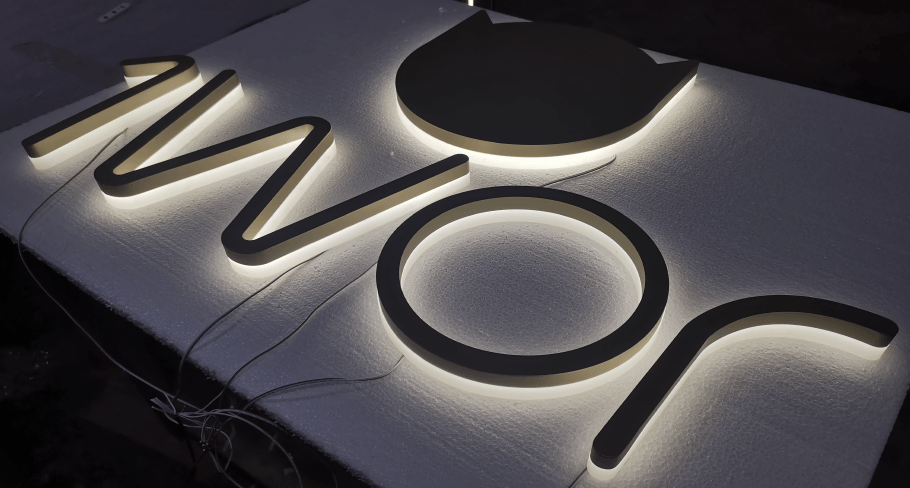
Halo lit letters refer to a type of backlit lettering: the light is installed inside the letter casing and shines from the back or edge of the letter, creating a soft “halo” effect on the wall where it is installed.
It has the following characteristics:
- It appears as three-dimensional metallic lettering during the day, and when illuminated at night, it produces a halo of light around the letters.
- Commonly used for storefront signs, shop brand lettering, building wayfinding, and indoor/outdoor identification signage.
- Generally uses LED light sources, which have low energy consumption, long lifespan, and are easier to produce different colored halo effects.
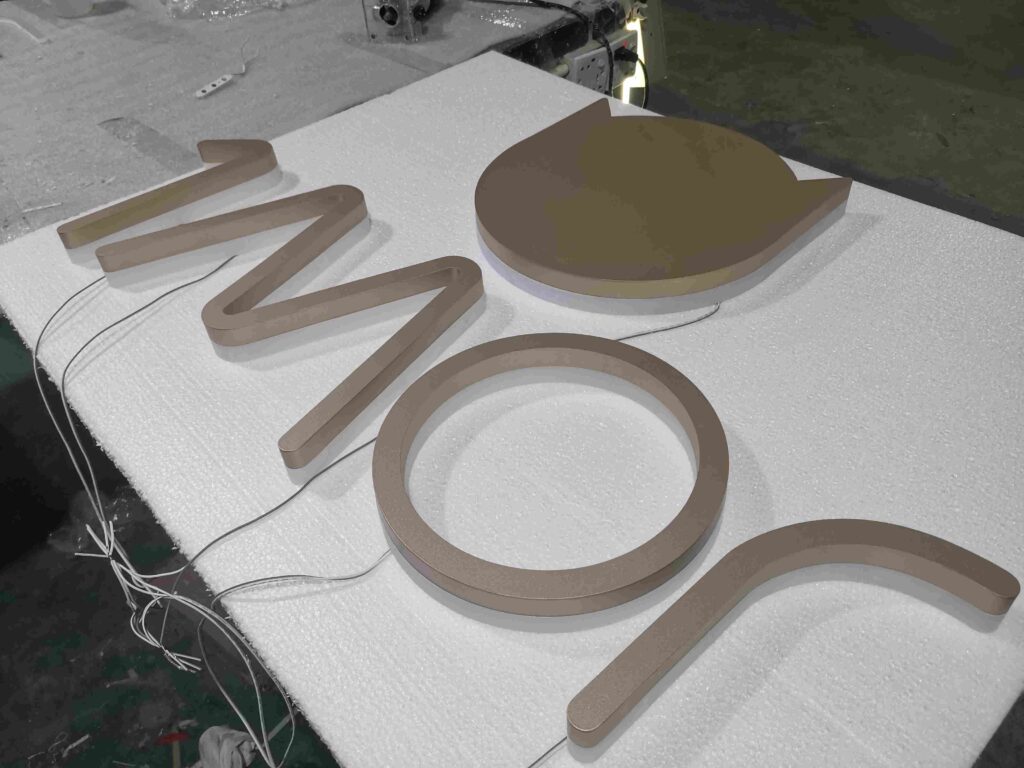
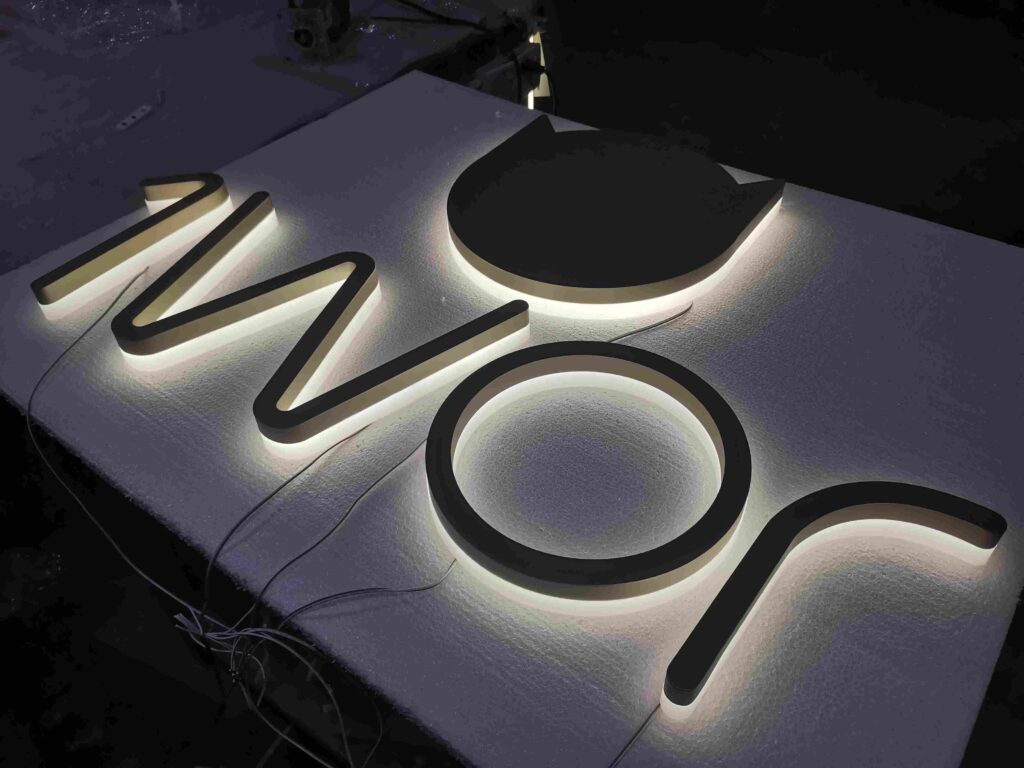
Compared to ordinary front lit letters, halo lit letters are backlit and face opaque, making them visually more restrained and sophisticated.
This structure is often referred to in the industry as reverse channel letters, also known as backlit letters.
What is the Structure of Halo Lit Letters?
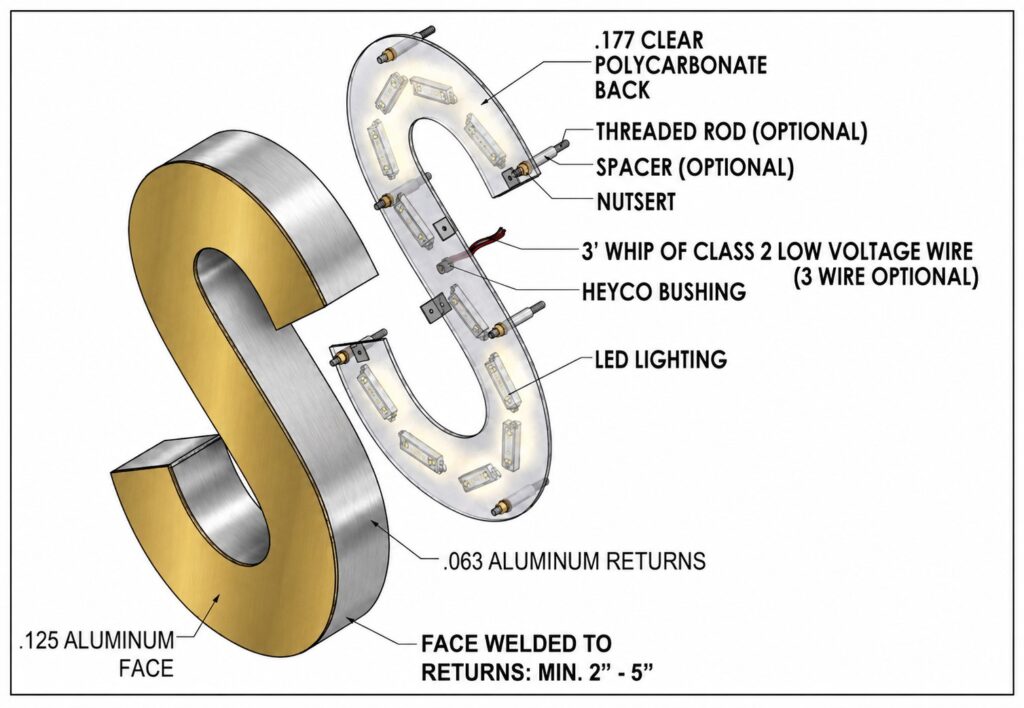
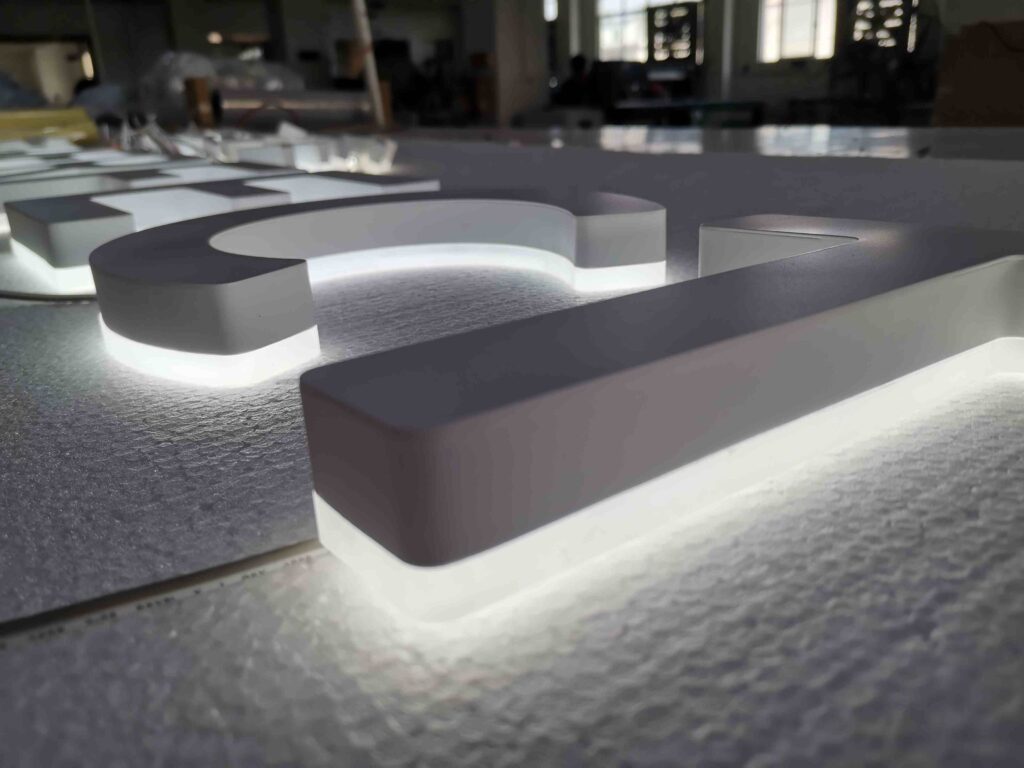
Halo lit letters feature a three-dimensional metal lettering structure, with the front and edge molded as a single piece. An internal LED light source is installed, and the back is fitted with a transparent polycarbonate or acrylic base plate. When illuminated, the light softly spills from behind the letters, creating a clear halo effect on the wall. The letter casing includes mounting and wiring components, resulting in a stable overall structure that facilitates installation and maintenance, while also offering a high-end feel and excellent nighttime visibility.
The structure of halo lit letters is typically shown in the following diagram:
How Are Halo Lit Letters Constructed?
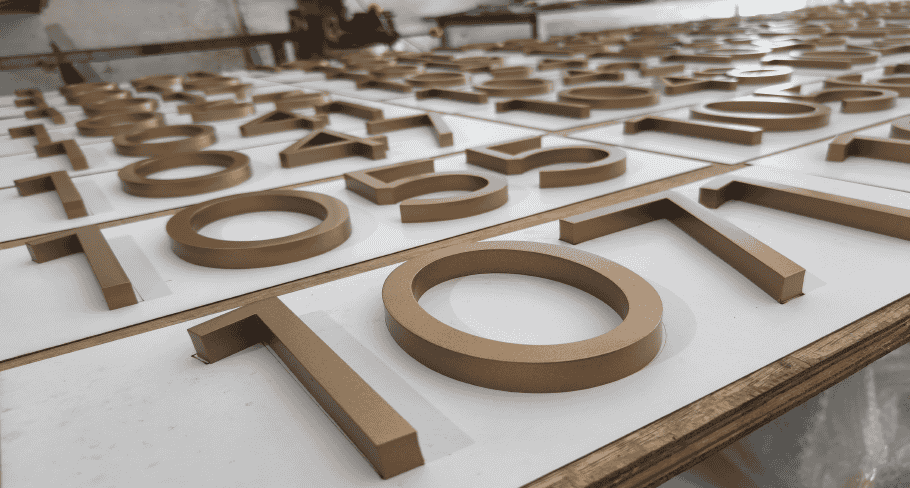
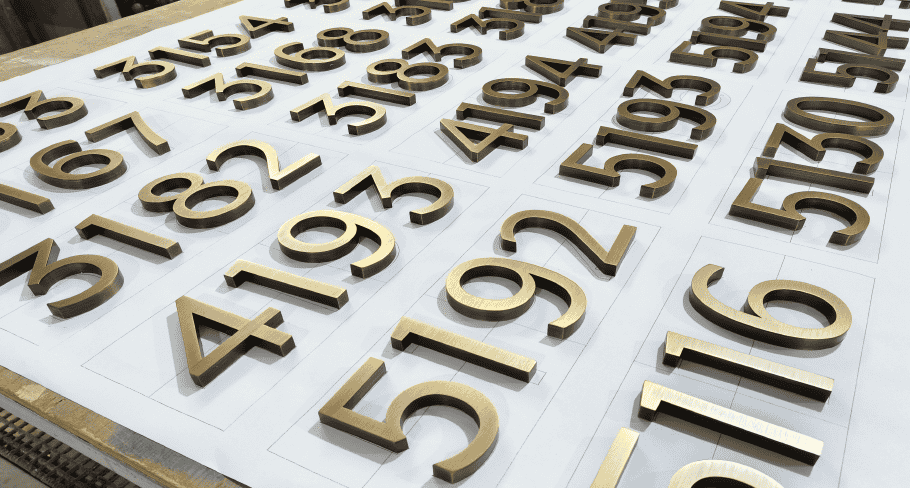
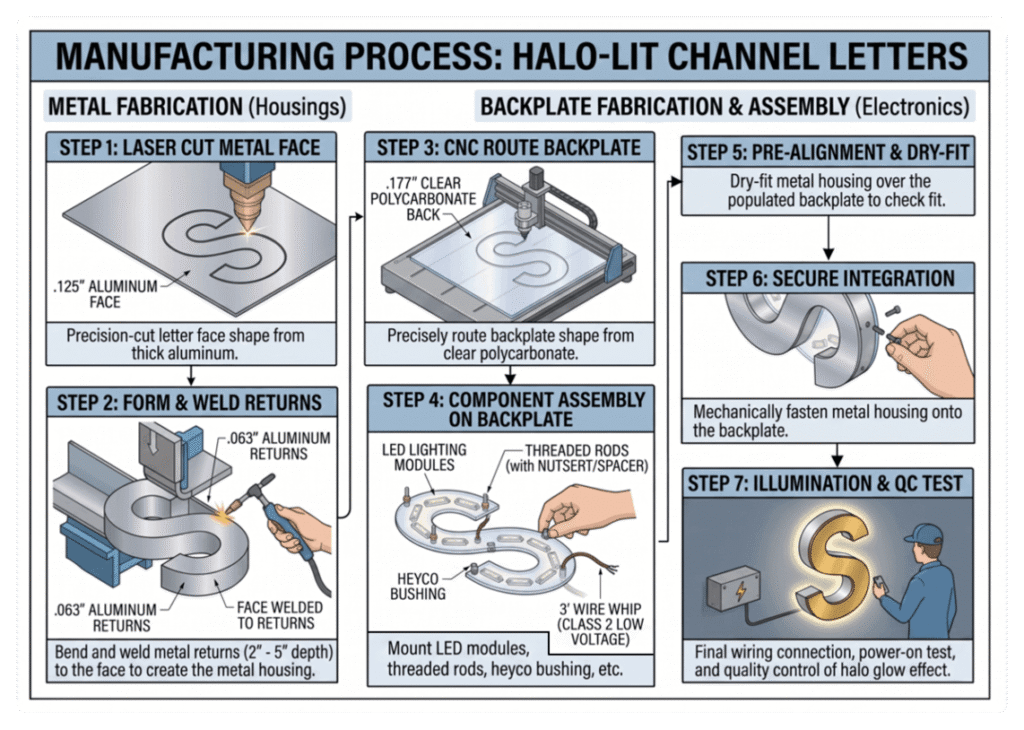
The fabrication of halo lit letters differs from that of other types of lettering. The production of a standard halo-lit letter typically involves the following seven steps:
- Step 1: Laser Cut Metal Face Use a precision laser cutter to cut the front face of the letter.
- Step 2: Form & Weld ReturnsShape the returns (with a depth of 2″ to 5″) and weld them securely to the laser-cut face to form the solid metal housing.
- Step 3: CNC Route BackplateUse a CNC router to precisely cut and shape the polycarbonate (or translucent acrylic) backplate to match the letter profile.
- Step 4: Populating the BackplateMount the LED lighting modules onto the backplate. Install the hardware components including the Nutserts, Heyco bushings, optional threaded rods/spacers, and feed the 3-foot Class 2 low voltage wire whip through.
- Step 5: Pre-AlignmentDry-fit and align the fabricated metal letter housing over the fully loaded polycarbonate backplate.
- Step 6: Housing AssemblyFasten and secure the metal housing onto the polycarbonate backplate, locking all components inside.
- Step 7: Final Halo-Lit Quality ControlConnect to power to test the LEDs, ensuring a flawless, clean, and uniform halo glow around the letter.
The schematic diagram of the entire manufacturing process is shown below:
What Are the Application Scenarios for Halo Lit Letters?
Halo lit letters have a wide range of applications, most commonly in commercial storefronts and brand signs, because they can create a soft backlit outline at night, making the store name or logo easier to see and more sophisticated.
Common scenarios include:
- Corporate headquarters and office building facades: used to enhance the overall brand image.
- Shopping mall brand stores, high-end retail stores, and chain store signs: suitable for emphasizing modernity and recognizability.
- Commercial spaces such as restaurants, cafes, and bars: can create a more atmospheric nighttime visual effect.
- Medical clinics, technology companies, and financial institutions are also suitable when they want to present a professional, restrained, and sophisticated brand image.
- Indoor wayfinding, brand walls, and identification signage are commonly used in corridors, reception areas, and other locations that need to balance decoration and wayfinding.
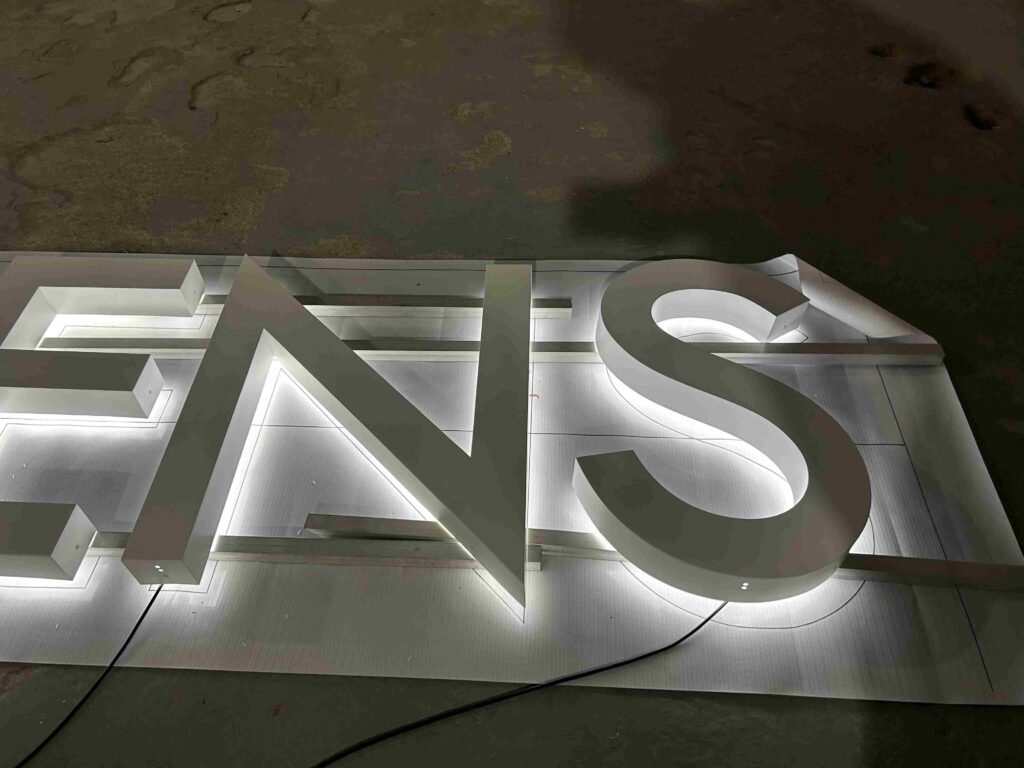
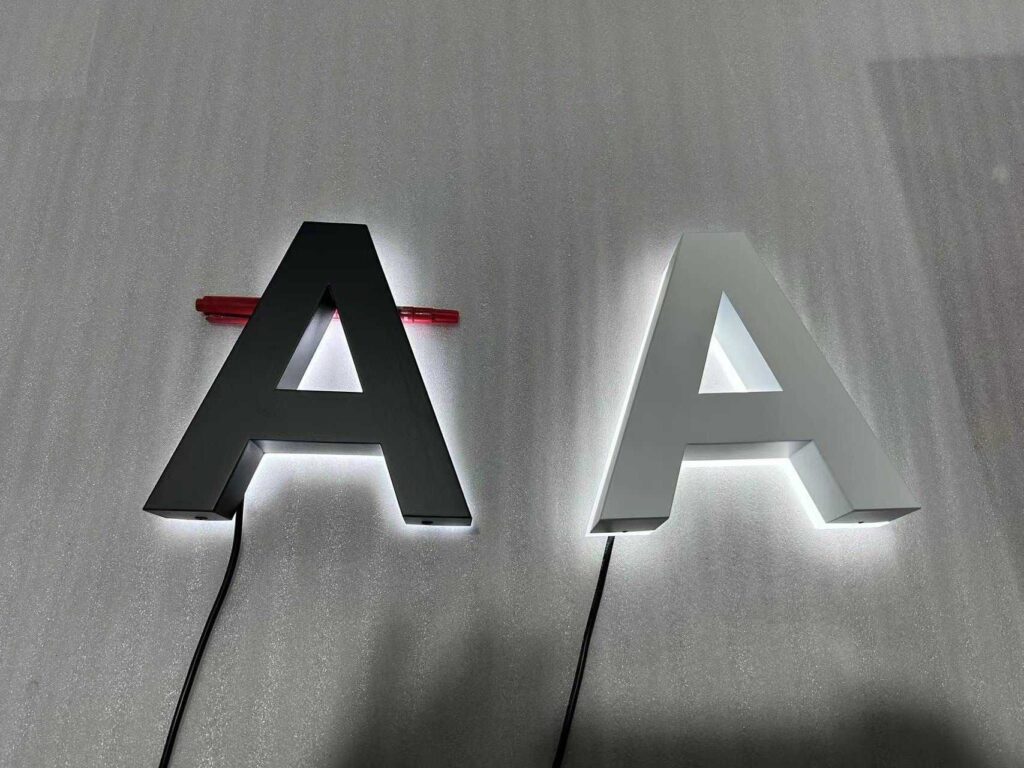
Because the light from halo lit letters is reflected from behind, it is not as direct and glaring as front lit letters, so it looks more sophisticated and softer. It is suitable for both indoor and outdoor installation, providing a three-dimensional texture during the day and a clear outline at night.
In short, if a scenario requires a signage effect that is “clear to see but not overly ostentatious”, halo lit letters are usually a very suitable choice.
Want to explore more types? Check out our comprehensive guide on What Are the Different Types of Channel Letters? to find the perfect fit for your brand identity.
FAQ
What is the difference between halo lit letters and front lit letters?
The main difference lies in the direction of light projection. Front lit letters emit light directly from the surface of the sign; while halo lit letters project light onto the wall behind them, creating a halo around the lettering.
Are halo lit letters suitable for indoor and outdoor use?
Yes, Halo lit letters are extremely versatile, suitable for both indoor and outdoor environments. Also known as “back lit letters” or “reverse lit letters”, their soft halo effect from the back enhances nighttime readability while maintaining a clean, sophisticated visual appeal during the day. Whether installed indoors or outdoors, Halo lit letters help brands present a more professional and modern visual image while balancing aesthetics and functionality.
How are halo lit letters installed and maintained?
Halo lit letters are typically stud mounted(for installation details, please refer to: installation methods for channel letters), maintaining a certain distance from the wall, allowing the built-in LED light to project backward, creating a clear and soft halo effect. Since the light source and structural components are all concentrated inside the letter casing, maintenance and repair are relatively convenient.
Take Away
When selecting halo lit letters, it is recommended to focus on the following three key elements:
- Structure: Achieving a sophisticated backlit effect requires a seamless integration between the single-piece molded metal housing (aluminum or stainless steel) and the clear polycarbonate or acrylic backplate. This ensures an enclosed, stable structure that protects internal components while providing high-end nighttime aesthetics.
- Fabrication: A standardized and meticulous manufacturing process is crucial. From precision laser cutting the metal face to welding returns, CNC routing the backplate, and precisely populating LED modules, every step directly determines the uniformity of the soft halo glow and prevents any light leakage.
- Installation: Stud mounting is typically used, creating a precise gap between the letters and the wall. This allows the built-in LED light to project backward effectively, presenting a clean, floating visual effect and a clear, non-glaring nighttime outline.
As a professional manufacturer in the signage industry, FT Signage not only focuses on the product craftsmanship itself, but also pays close attention to global design trends and technological developments to ensure that we provide customers with signage solutions that are both aesthetically pleasing and reliable.
Welcome to contact us to get tailored solutions and project support.