For outdoor illuminated signs, the most recommended colors are high-brightness red, orange, yellow, and green, as they provide maximum visibility and clarity. For indoor signs, warm white or neutral white is usually preferred, with 2700K–3500K commonly used for relaxing spaces because it feels warmer and more comfortable, while 3500K–4500K is better for most commercial and office spaces, offering clearer light and less eye strain.
What Colors Are LED Illuminated Signs Available In?
LED colors vary widely, depending mainly on the type and structure of the semiconductor material. They range from standard white to vivid colors and even invisible light. So, what colors are available for LED illuminated signs?
In general, the LED illuminated signs we use are based on white light produced by a “blue chip + yellow phosphor” LED, combined with acrylic light-transmitting panels in different colors to create different lighting effects. With this method, the available colors usually include the following:
| Color | Wavelength Range (nm) | Visual Characteristics |
|---|---|---|
| Red | 620–750 | Vibrant, highly noticeable |
| Orange | 590–620 | Warm orange |
| Yellow | 570–590 | Bright and vivid |
| Green | 495–570 | Emerald to true green |
| Blue | 450–495 | Deep vibrant blue |
| Purple | 380–420 | Deep purple, near ultraviolet |
| Amber | ~585–600 | Yellow-orange transition |
| Cyan | ~485–495 | Blue-green transition |
If the sign is an RGB illuminated sign, it uses RGB LED lights. By combining red, green, and blue LEDs, it can produce about 16.78 million colors at the standard 256-level brightness setting, which makes RGB illuminated signs much more colorful. The video below shows a custom-made RGB channel letter sign that can dynamically display a variety of different colors:
Why Are There Different LED Colors?
First, it serves visual needs. Second, it helps meet different scene and function requirements. For example:
| Color | Typical Applications |
|---|---|
| Red | Emergency signal lights, brake lights, night indicator lights |
| Green | Power indicator lights, ambient lighting |
| Blue | Cool atmosphere, medical equipment, high-tech appearance |
| Yellow / Amber | Warning lights, traffic signal lights |
| Ultraviolet / Infrared | Sterilization, remote controls, sensors |
In the illuminated signs field, the same principle applies as in the table above: red, orange, yellow, and green are often used for outdoor high-mounted signs, such as rooftop signs, because they offer strong visibility and clarity, making them easy to spot from a distance. Yellow and amber, on the other hand, are often used for indoor illuminated signs, as they create a more relaxed and harmonious atmosphere.
Is Color Temperature a Color?
No. Color temperature is not a color itself; it is a value used to describe whether a light source looks warmer or cooler, and it is measured in K (Kelvin).
Although color temperature is not a color, it is very important to the lighting effect of illuminated signs, especially in indoor white-light applications, because color temperature describes the variation in white light, while colored light does not have color temperature.
White light at different color temperatures has different uses:
| Color Temperature | Feeling | Applications |
|---|---|---|
| 2700K | Warm, soft, comfortable | Bedroom, living room |
| 4000K | Neutral, natural | Office, store, road |
| 6500K | Cool, crisp, efficient | Factory, workshop, gym |
How to Choose the Right Color for Illuminated Signs?
In one sentence: choose color for outdoor signs, and choose color temperature for indoor signs.
Outdoor Sign Color Selection
Outdoor signs are mainly designed to stand out and attract attention as widely as possible, so they are usually installed in high places and use bright colors that can be noticed at a glance from a distance.
For standard single-color illuminated signs, high-brightness red, orange, yellow, and green are recommended. These colors have longer wavelengths and stronger visibility, so they remain easy to see even in rain or fog. That is also why these colors are used for traffic signals.
Indoor Sign Color Temperature Selection
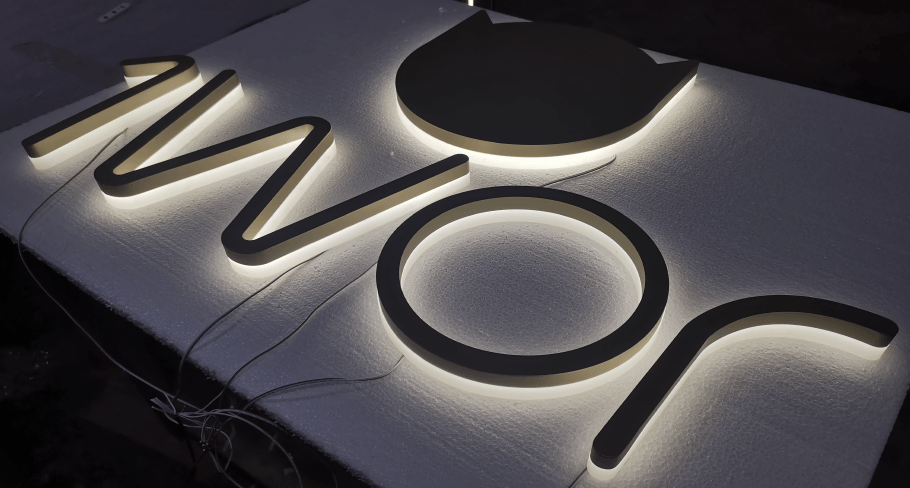
Indoor signs are more about comfort and atmosphere, helping people feel relaxed and at ease. In this case, it is better to avoid colors that are too harsh or attention-grabbing, and choose warmer white light instead, such as the back-lit channel letters shown below:
Here are the typical applications of different color temperature ranges in indoor settings:
| Light Color | Color Temperature | Feel | Typical Applications |
|---|---|---|---|
| Warm White | 2700K–3500K | Softer, cozier, more comfortable | Bedrooms, living rooms, dining rooms, cafés |
| Natural White | 3500K–4500K | Most versatile, balanced | Shops, offices, kitchens, display areas |
| Cool White | 5000K–6500K | Brighter and clearer | Work areas, tool areas, warehouses |
Of course, to create a more atmospheric look, you can also choose colored illuminated signs, such as beige, which produce a similar effect to warm light, like the one shown below:

FAQ
What colors attract bugs the most?
In general, short-wavelength light such as violet light, heat-producing light such as traditional incandescent bulbs, and lights with strong flicker or certain electrical effects are more likely to attract bugs.
For more information on this topic, please refer to this article:
Do LED Channel Letters Attract Bugs?
Are outdoor signs always better when brighter?
No. If a sign is too bright, it may cause skyglow or light trespass, create light pollution, and even violate local regulations.
For more information on this topic, please refer to this article:
Are Your LED Signs Compliant? Navigating U.S. DarkSky and Light Pollution Laws
Take Away
- For outdoor illuminated signs, the best choices are usually high-visibility colors such as red, orange, yellow, and green, because they are easier to notice from a distance and remain clear in challenging weather.
- For indoor illuminated signs, the safer default is warm white or neutral white:
- Warm White (2700K–3500K) for cozy, relaxing spaces.
- Natural White (3500K–4500K) for most commercial and office settings.
- Color temperature is not a color. It describes how warm or cool a white light appears, so it applies mainly to white lighting, not colored lighting.
- For RGB illuminated signs, the color options are much broader, since RGB LEDs can create millions of color combinations.
- In simple terms: outdoor signs prioritize visibility, while indoor signs prioritize comfort and atmosphere.
If you have any specific needs, please feel free to contact FT Signage to discuss your custom requirements.