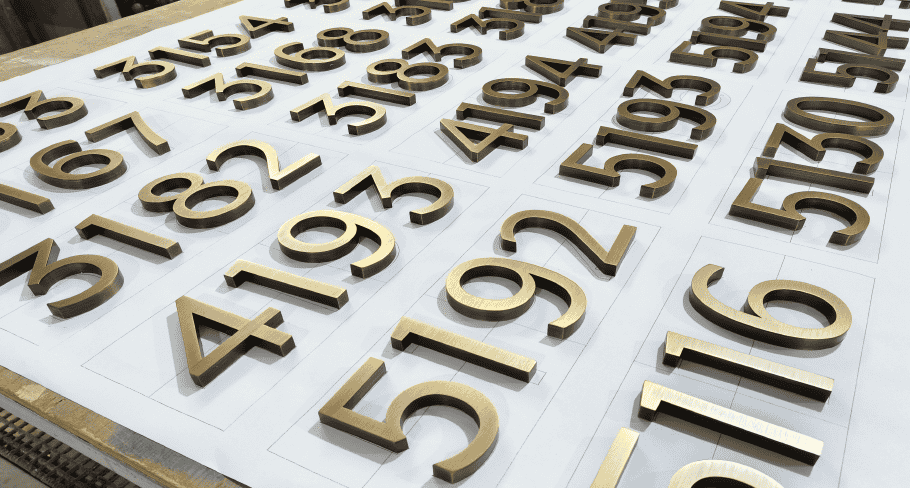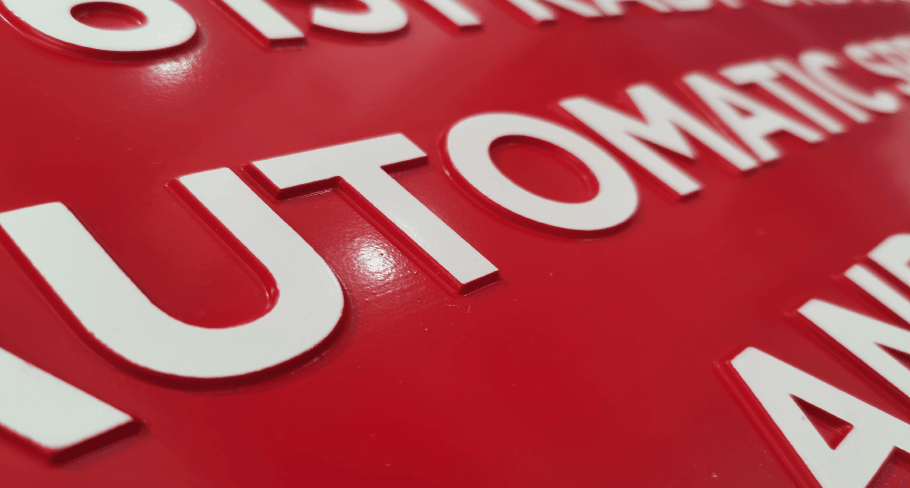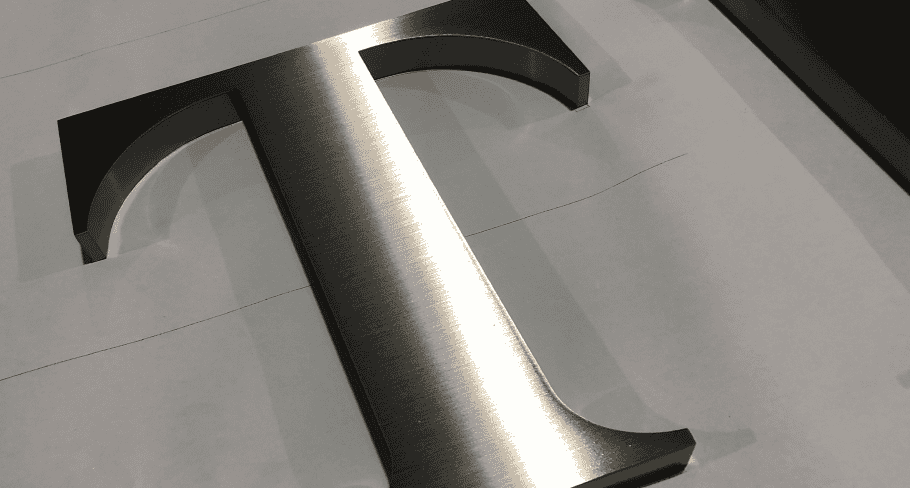
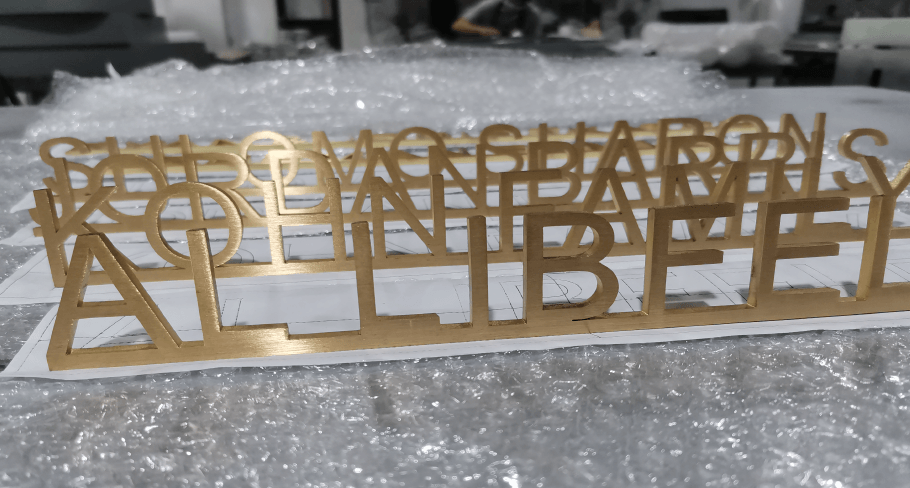
When we make letters, we use different cutting methods. Some use lasers, some use water, and some even use plasma.
So how many cutting methods are there?
Simply put, there are water cutting, wire EDM, plasma cutting, laser cutting, milling machine, stamping press, etc., let’s go through them one by one below.
Water Cutting
Water cutting (commonly known as a waterjet) is a cold-cutting process that uses an ultra-high-pressure stream of water. The water is pressurized to around 4,100–6,400 bar and forced through a very fine nozzle to create a supersonic jet. Because no heat is generated during the process, the material doesn’t deform or undergo any chemical changes.
Wire EDM
Wire EDM (also known as wire cutting or electrical discharge machining) is a non-traditional machining process that uses a charged thin wire to precisely cut conductive materials. It works on the principle of electrical discharge, removing material through controlled spark erosion.
Plasma Cutting
Plasma cutting is a process that uses a high-velocity jet of hot plasma to cut electrically conductive materials. The materials typically cut include steel, stainless steel, aluminum, brass, and copper.
Laser Cutting
Laser cutting is a technology that uses a laser beam to cut materials. It’s widely used in industrial manufacturing. The process works by directing the output of a high-power laser through an optical system. The laser used is a controllable, monochromatic light source with high intensity and energy density, which can be focused to achieve extremely high power density.
Milling Machine
Milling is a machining process that removes material from a workpiece using a rotating cutting tool. The process can be controlled by adjusting multi-axis motion paths, tool speed, and cutting pressure, making it suitable for everything from small individual parts to large, heavy-duty assemblies. It’s also one of the most commonly used methods for achieving tight tolerances in custom parts.
Stamping Press
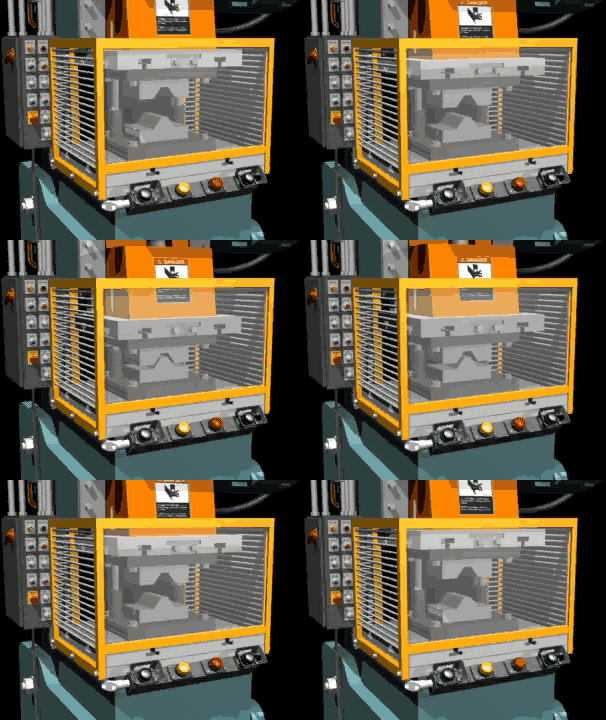
A stamping press (also known as a punch press or forging press) is a machine that uses force to deform metal into specific shapes. Its functions include punching, shearing, forming, deep drawing, and metal forging. Typically used together with dies, it is an essential piece of equipment for manufacturing metal parts.
Comparison of Different Cutting Methods
| Item | Water Jet | Wire Cutting | Plasma | Laser | Milling Machine | Stamping Press |
|---|---|---|---|---|---|---|
| Cutting Edge Quality | Good | Good | Average | Good | Good | Average |
| Precision | Average cutting accuracy is about ±0.003″ (±0.1 mm) | Wire cutting accuracy is ±0.0001″ (±0.025 mm) | Plasma cutting accuracy is ±0.030 to ±0.060″ | Laser accuracy is ±0.001″ (±0.025 mm) | In this range, cutting results are good, about ±0.0003″ (±0.01 mm) | Cutting result is average |
| Cutting Thickness | Usually best for materials around 3″ (75 mm) and below | Can reach up to 12″ (about 30 cm) | Usually less than 1.25″ | Usually less than 0.25″ (6.35 mm) | Can process three-dimensional parts | Thin sheet processing |
| Cutting Speed | When the cutting thickness is less than or equal to 25 mm, it is 5 to 10 times faster than wire cutting. | Slower than water jet (about 5–10 times slower) | Only suitable for thin sheet cutting | Only suitable for thin sheet cutting | Average | Good for batch processing |
| Heat Effect | None | Yes | Yes | Yes | None | None |
| Material Deformation | No deformation | Thermal deformation occurs | Thermal deformation occurs | Thermal deformation occurs | None | Occasional |
| Other Features | Can cut conductive and non-conductive materials; no secondary machining needed for drilled holes; fast installation and programming; basically no auxiliary equipment needed | Only suitable for conductive materials | Requires special gas, which increases cost | Suitable for non-reflective materials; different materials require different gases | Requires professional tools and skilled operators; materials must not be too large to process | Requires special tools; Difficult to process; not suitable for very thick materials. |
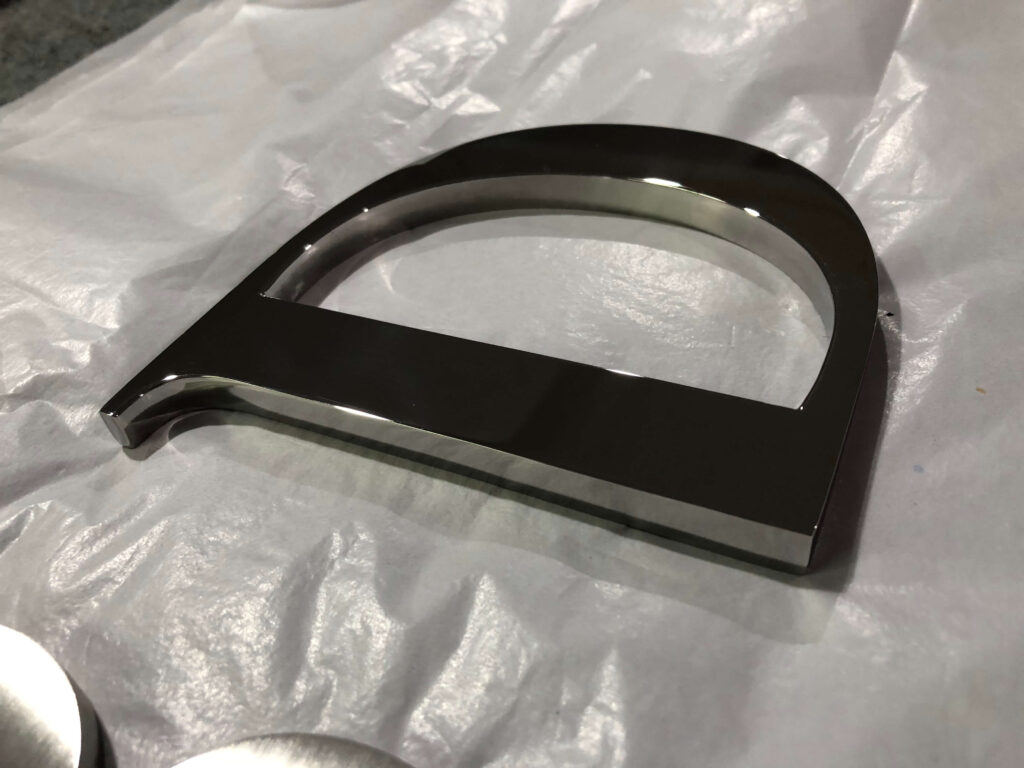
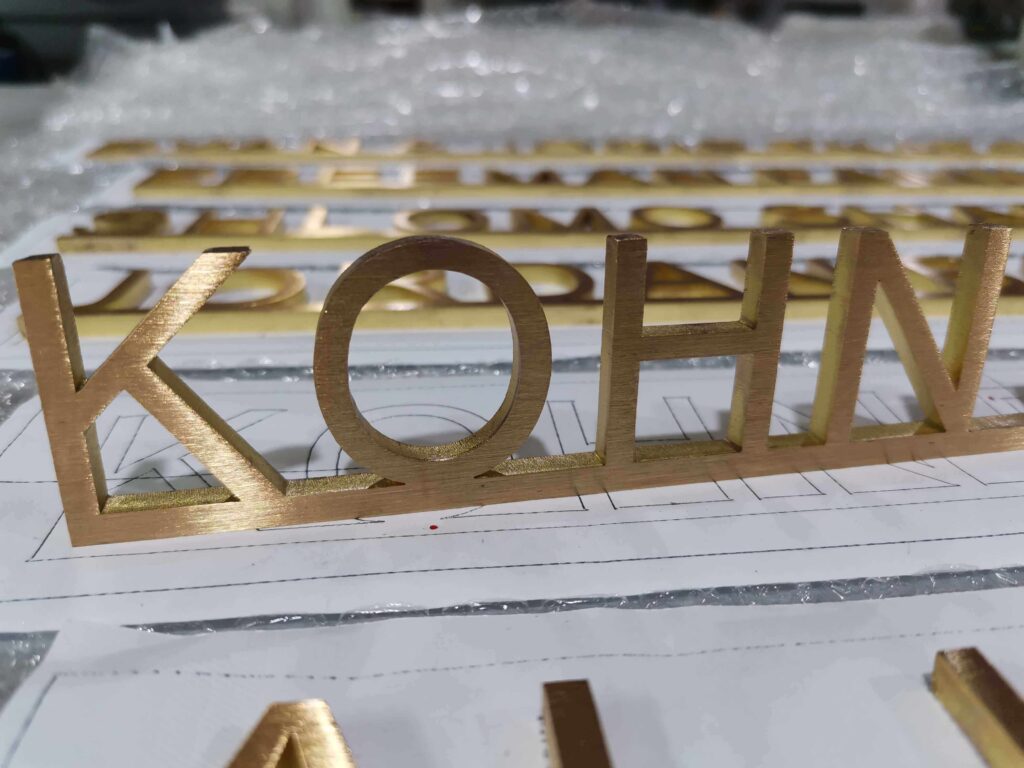
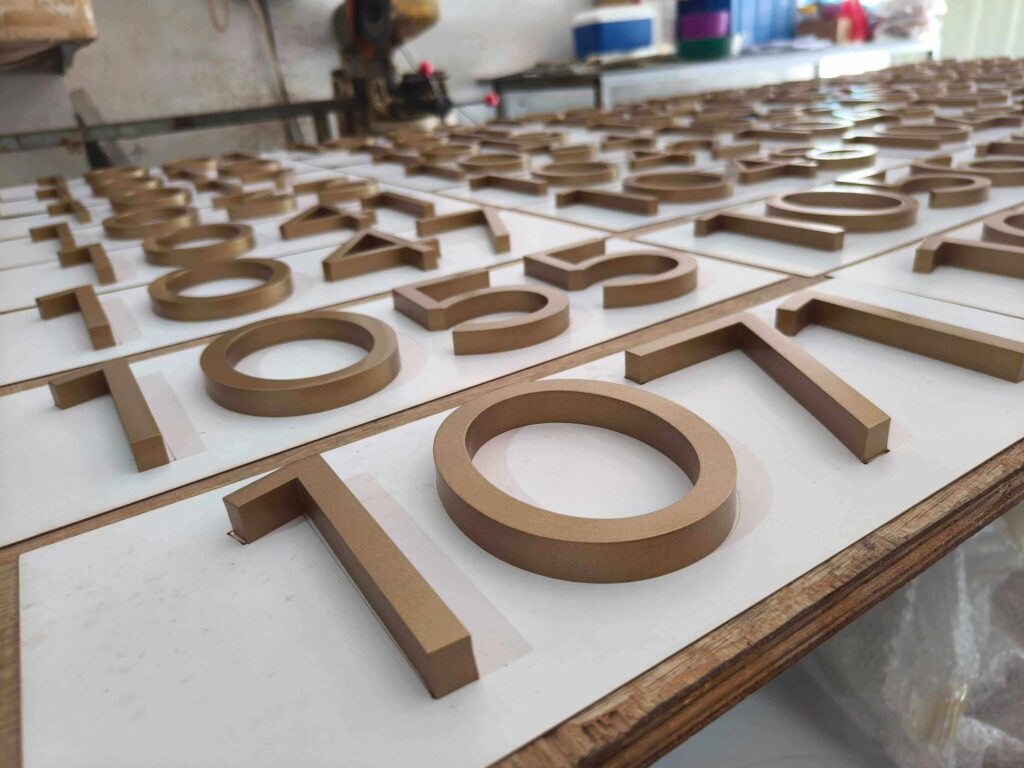
Among all these cutting methods, laser cutting is the most commonly used in the custom letters industry—whether for metal or acrylic letters—because it offers high precision along with excellent cost-effectiveness.
FAQ
Which cutting method is best for custom signage?
Laser cutting is generally the best choice for custom signage, especially for metal and acrylic letters. It offers high precision, clean edges, and strong cost-effectiveness, making it ideal for most commercial applications.
What materials can be used for letter cutting?
Common materials include stainless steel, aluminum, acrylic, brass, and copper. The best cutting method depends on the material type, thickness, and desired finish.
Take Away
There are several ways to cut letters, each with its own strengths—water cutting for no heat impact, wire EDM for extreme precision, plasma for speed on conductive metals, milling and stamping for specific structural needs. However, in the custom letters industry, laser cutting stands out as the go-to solution. It strikes the best balance between precision, efficiency, and cost, making it the most practical and widely used method for both metal and acrylic signage.
For any custom signage requirements, please feel free to contact us at your convenience.
References: