A brushed finish is a surface treatment process that creates decorative linear patterns by abrading the material surface. Depending on how it is produced, it can be divided into mechanical brushing and hand brushing. Based on the different surface grain patterns, brushed finishes are often described as straight‑line, spiral, wave, random, or circular grain. In the signage field, however, straight‑line brushing is used in most cases.
Brushing Methods
Mechanical Brushing
Mechanical brushing includes flat‑pressure belt brushing, non‑woven roller brushing, wide‑belt brushing, and centerless grinding, and is commonly used for decorative finishing on metal surfaces. This process gives metal a non‑mirror, low‑gloss appearance and is widely applied to signage, architectural components, home appliances, and consumer electronics.
Within mechanical brushing methods, flat‑pressure belt brushing is suitable for small, flat workpieces; non‑woven roller brushing works well on curved surfaces or parts with raised features; and wide‑belt brushing is specifically used for sheet and plate materials.
Hand Brushing
Because the grain produced by machines is often relatively coarse, a second hand‑brushing step is usually needed to refine the finish. For example, an operator may go over the surface again using a Scotch‑Brite pad or similar abrasive to achieve a finer, more uniform grain.
Brushing Effects and Grain Types
Based on surface texture, brushed finishes can be classified as straight‑line, spiral, wave, random, and circular grain.
Straight‑Line Brushing
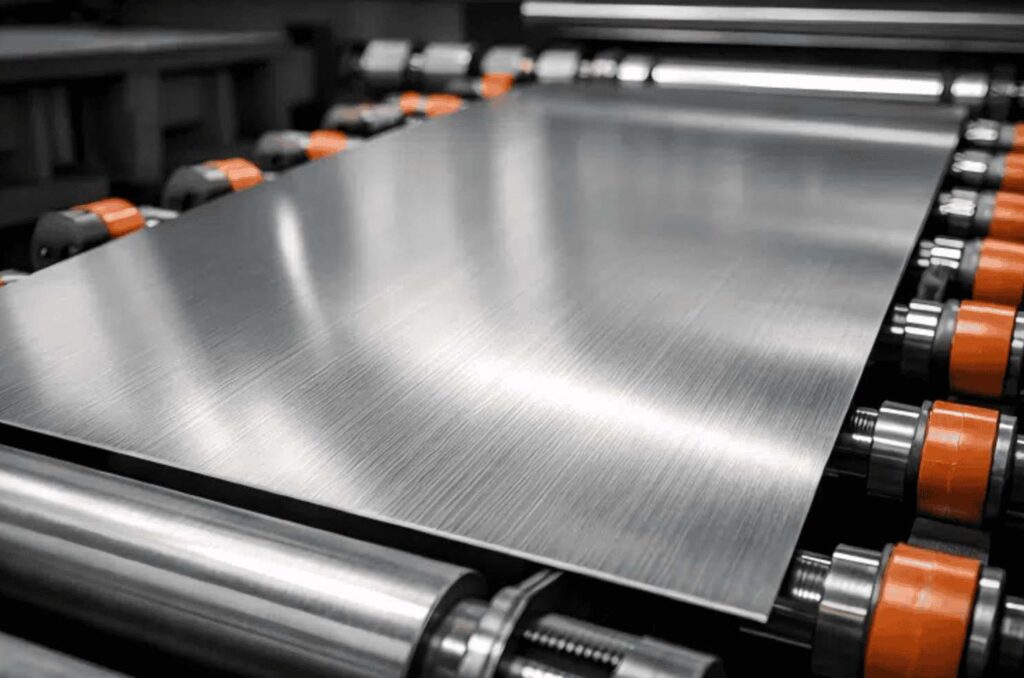
Straight‑line brushing refers to linear grain produced on aluminum, stainless steel, and other metals by mechanical friction. It serves a dual purpose: removing surface scratches and providing a decorative finish. Straight-line grain is the most commonly used brushing finish in the signage industry.
Spiral Brushing
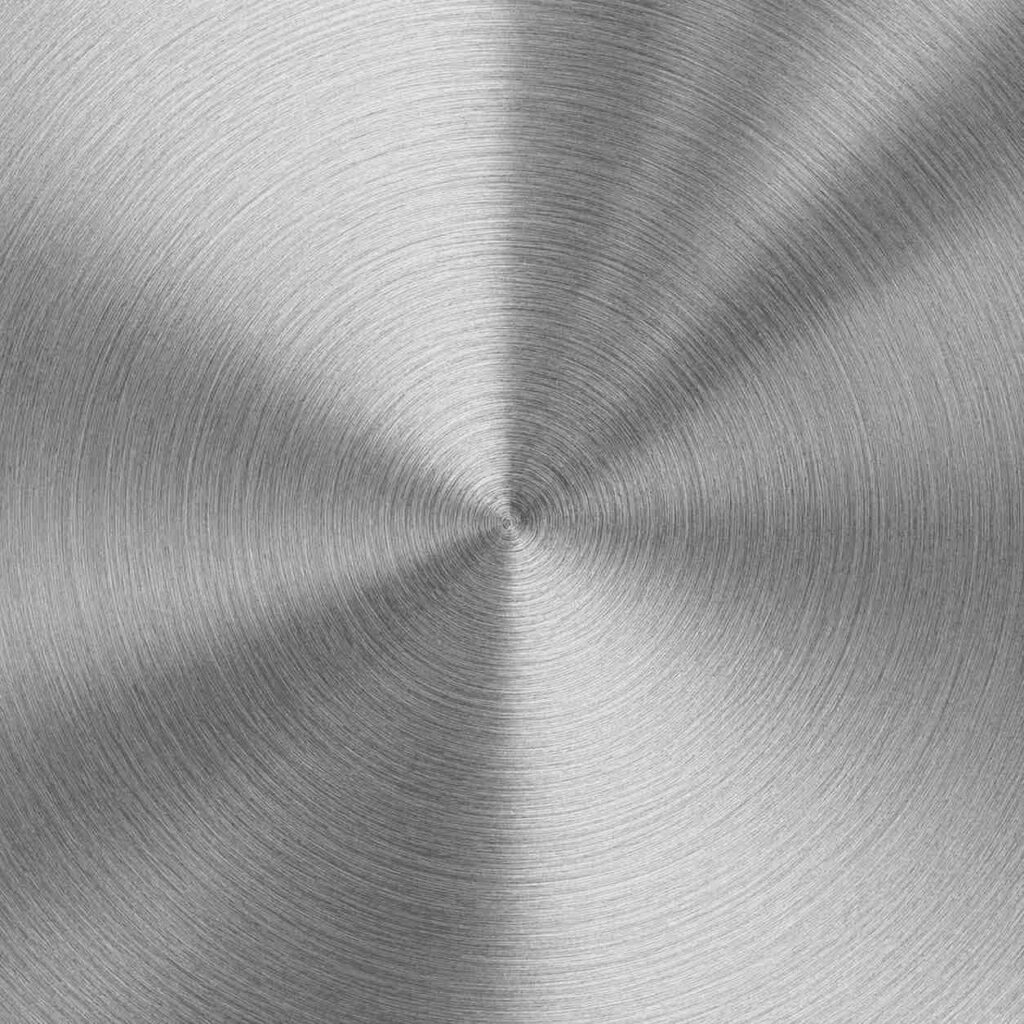
Spiral brushing is usually done with a small motor fitted with a circular felt wheel mounted on a shaft and fixed at about a 60‑degree angle to the edge of a workbench. A sliding fixture with a clamping device holds the metal sheet, and a strip of straight‑edged polyester film is attached to the fixture to control the pitch of the spiral. The combination of the rotating felt wheel and the straight‑line movement of the fixture produces spiral grain of consistent width across the metal surface.
Wave Brushing
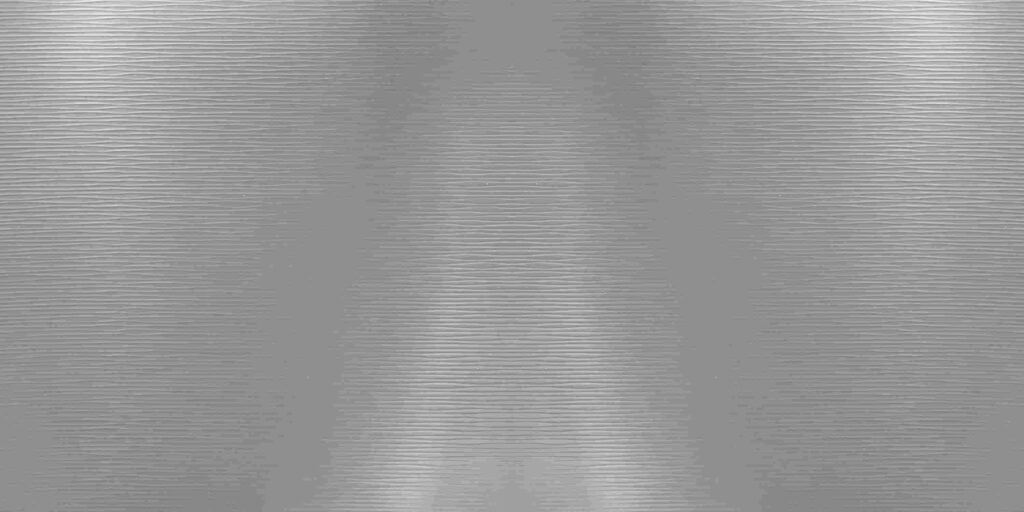
Wave grain is generally produced on polishing or brushing machines. By introducing axial movement to the upper abrasive roller while brushing the surface of aluminum or stainless‑steel sheets, a wave‑like pattern is created across the panel.
Random Brushing
Random brushing is produced by moving the metal sheet back and forth and side to side under a high‑speed rotating brass‑wire brush. This results in a diffuse, non‑directional matte grain without obvious pattern. Because the grain is subtle and uniform, this method requires high quality and cleanliness of the base metal surface.

Circular Brushing
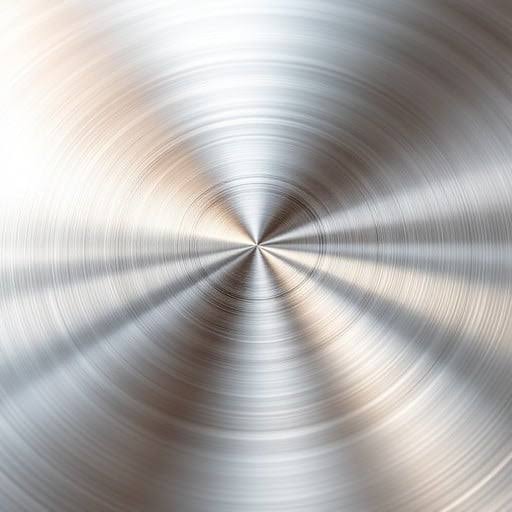
Circular brushing, sometimes called “spun finish,” is achieved by mounting a cylindrical felt wheel or abrasive nylon wheel on a drill press. Using a polishing compound mixed with kerosene, the operator touches the rotating wheel to the metal surface to create overlapping circular grain. This finish is commonly used on round signs, small decorative dials, and similar ornamental parts.
Why Use a Brushed Finish?
A brushed finish offers not only an attractive appearance but also excellent durability and scratch resistance. Unlike highly polished, shiny surfaces that tend to show every scratch and mark, brushed surfaces make scratches much less visible. This makes them ideal for high‑traffic areas such as elevators, lobbies, offices, and commercial buildings.
Brushed surfaces are also easy to clean and maintain. In particular, brushed stainless steel usually does not require special treatments or coatings, routine cleaning with a damp cloth is enough to keep it looking good.
What Materials Are Suitable for Brushing?
Brushing is especially suitable for metal surfaces. Common brushed metals include stainless steel, aluminum, copper, and nickel.
Applications of Brushed Finishes in Signage
Brushed finishes are widely used across many industries, including architectural decoration, home appliances, consumer electronics, automotive interiors and exteriors, and of course metal signage and wayfinding systems.
For signage, a brushed surface enhances the perceived quality and texture of metal, and helps reduce the visibility of fingerprints, watermarks, and minor scratches, so the sign face remains visually appealing and durable over time. Typical examples include brushed stainless‑steel door signs, floor number plates, elevator plaques, enclosure nameplates, access control and security device panels, and wayfinding signage in shopping malls and office buildings.
In the signage industry, brushing can be combined with other processes such as chemical etching, screen printing, laser engraving, and UV printing. A common approach is to apply unidirectional or cross brushing to stainless steel or aluminum first, then add text and graphics through etching or printing. This keeps the information clear and legible while preserving the premium metallic look. For high‑end commercial projects—such as hotels, office towers, and branded retail stores—brushed stainless‑steel or aluminum alloy signs have become a common design language, aligning well with modern minimalist aesthetics while offering long‑term durability and easy maintenance.
FAQ
What is the difference between a brushed finish and a mirror finish?
A brushed finish is a directional, matte surface with visible linear texture, while a mirror finish is a highly polished, non‑directional surface with very high reflectivity.
On brushed surfaces, you can clearly see fine lines running in one direction, which helps reduce glare and makes fingerprints and minor scratches less noticeable. This is why brushed metal is widely used for wayfinding signs, nameplates, equipment panels, and other applications that require both durability and a refined, modern look.
By contrast, a mirror finish behaves almost like a true mirror: it is very glossy and strongly reflective, so it is more common on architectural accents, decorative trim, and consumer appliances where visual impact is more important than low glare. For tools, control panels, and signage that must remain readable under strong light, mirror finishes are usually avoided because of their high reflectivity.
What is the difference between a brushed finish and a satin finish?
Brushed and satin finishes are quite similar and often used interchangeably, as both have low reflectivity and a soft, non‑glossy appearance.
In general, satin finishes tend to look slightly smoother and more uniform than brushed finishes because the surface does not show pronounced one‑directional lines. A satin finish can be produced with sandpaper or other abrasives, while a brushed finish is typically created using wire brushes or abrasive belts that leave clear directional grain.
In everyday applications, the practical differences are small, but satin finishes usually offer slightly better corrosion resistance and are therefore more widely used on kitchen sinks, faucets, and other products that are exposed to water and moisture for long periods.
Which brushed finish is most commonly used in signage?
Straight-line brushed finish is the most commonly used type in the signage industry. It creates clean, uniform linear grain on metal surfaces, which gives signs a modern, professional look while also helping reduce the visibility of fingerprints and minor scratches. Because of its simple appearance and wide compatibility with materials such as stainless steel and aluminum, straight-line brushing is widely used for nameplates, wayfinding signs, door signs, and other metal signage applications.
Overview of Brushed Metal Signs
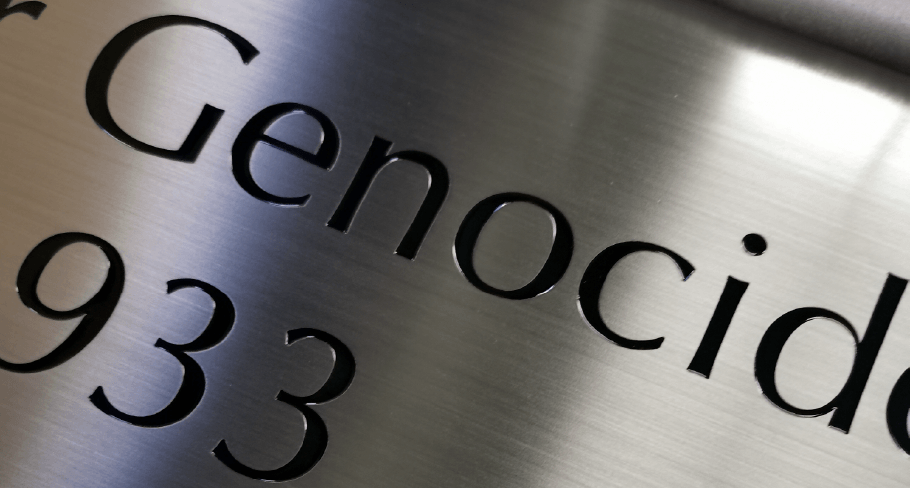
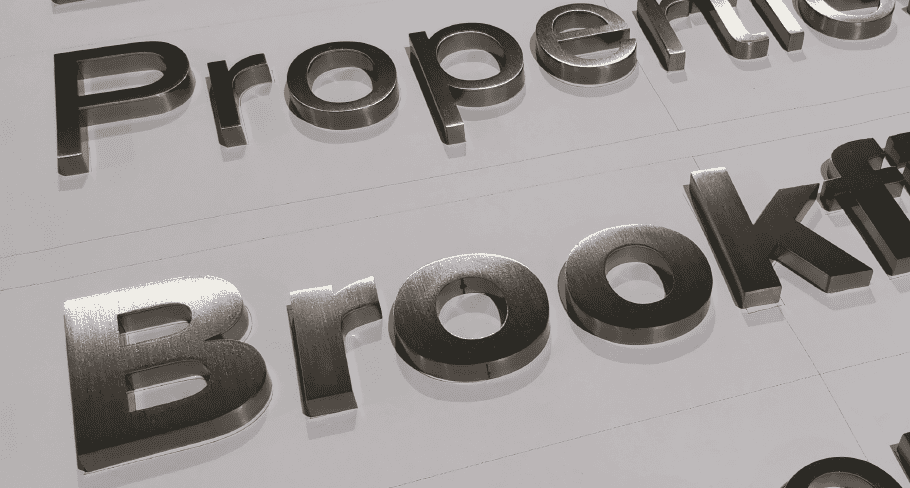
Many of FT Signage’s projects make extensive use of brushed finishes, and the following images showcase some of our brushed metal signage products:
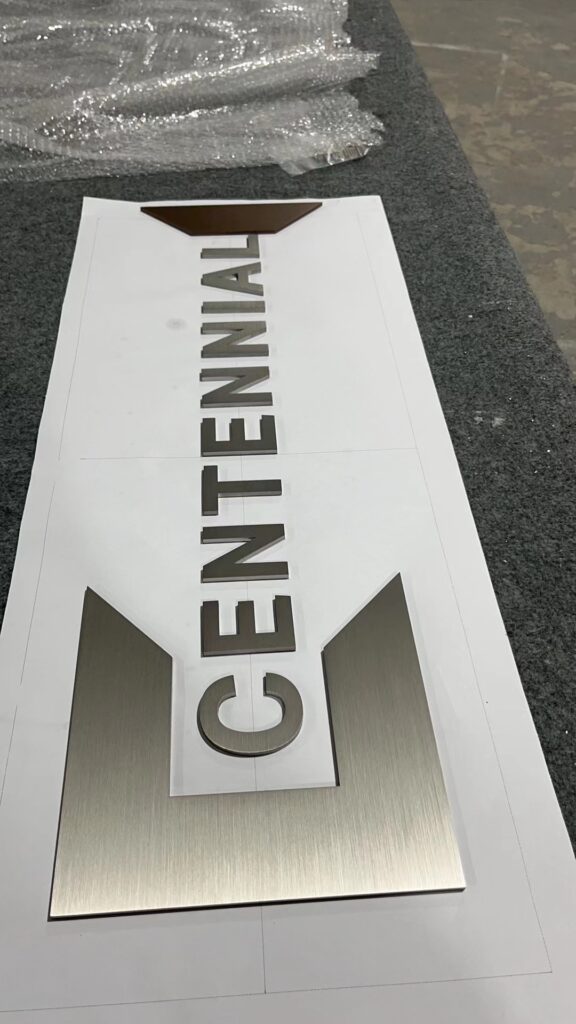
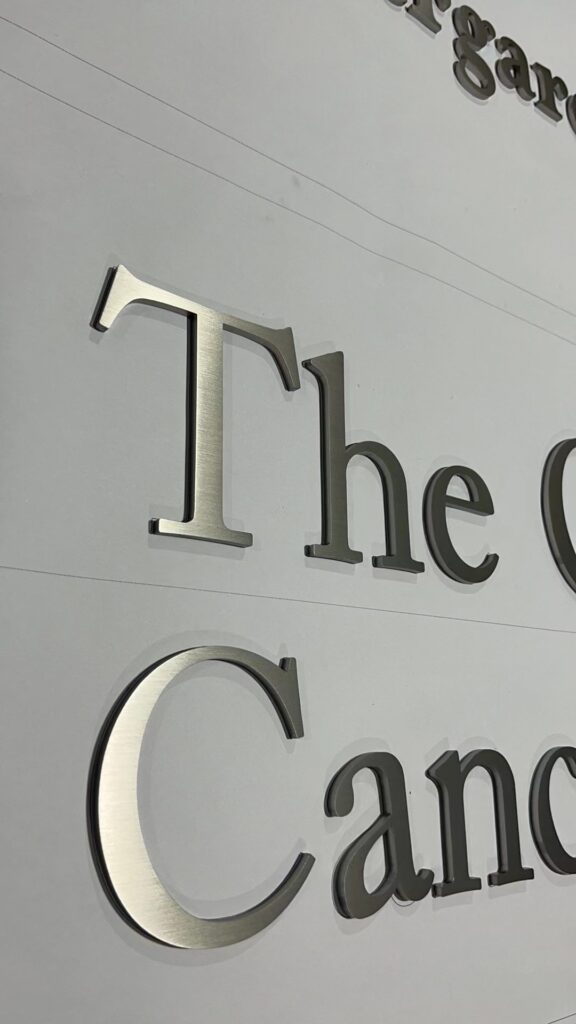
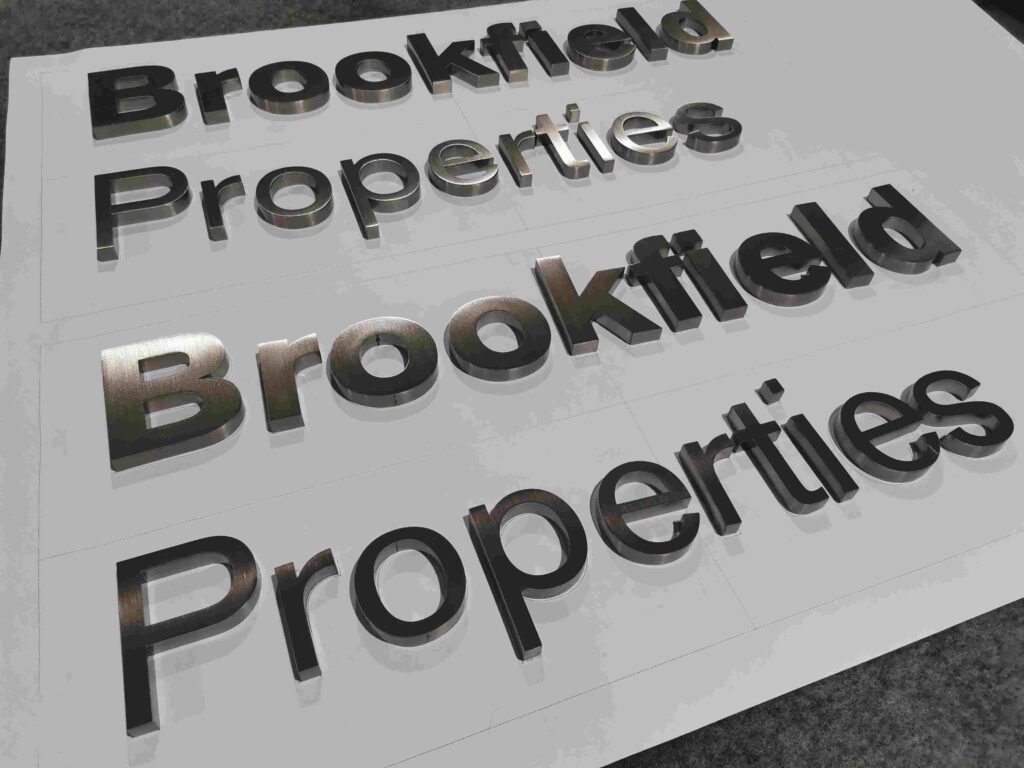
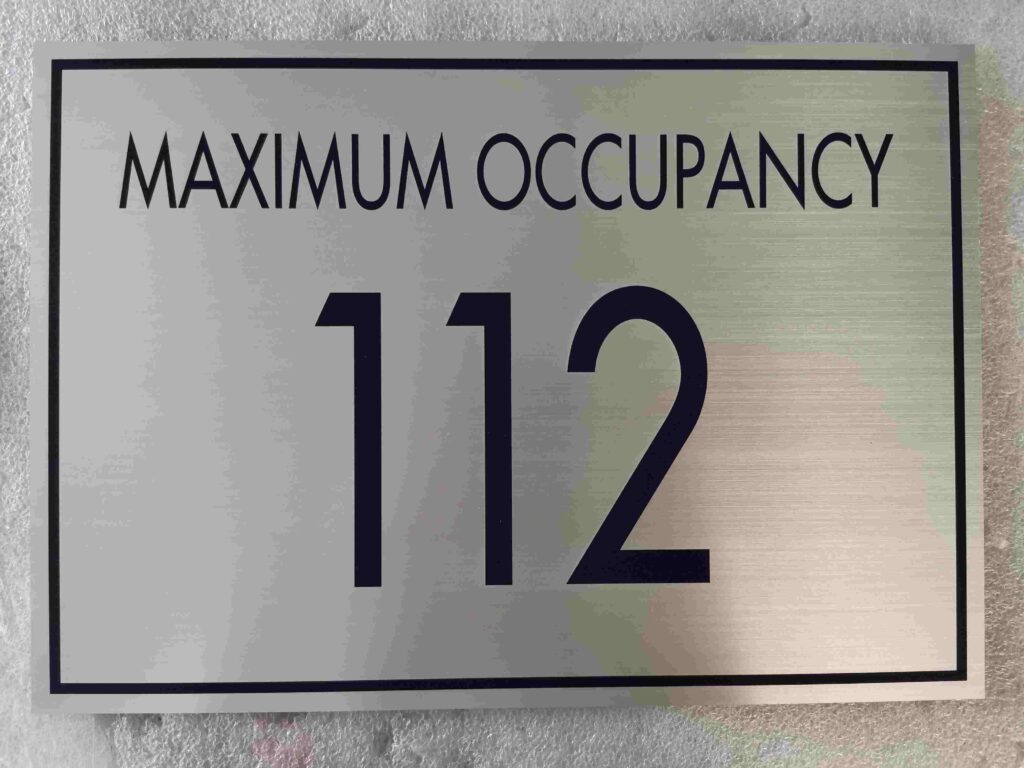
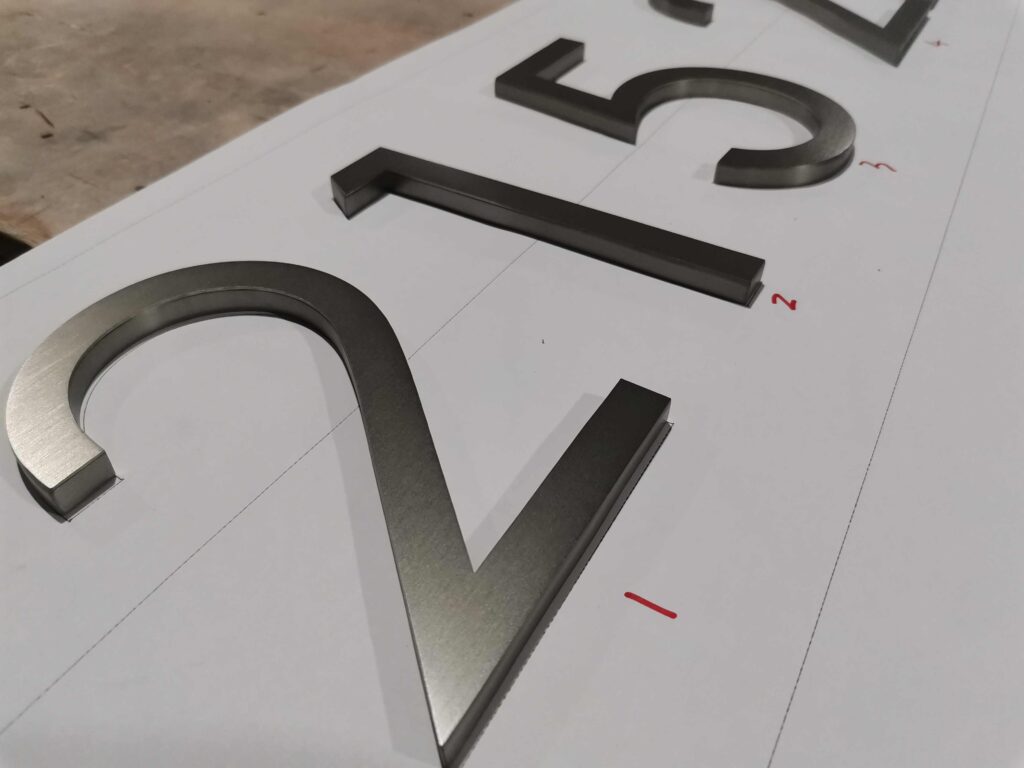
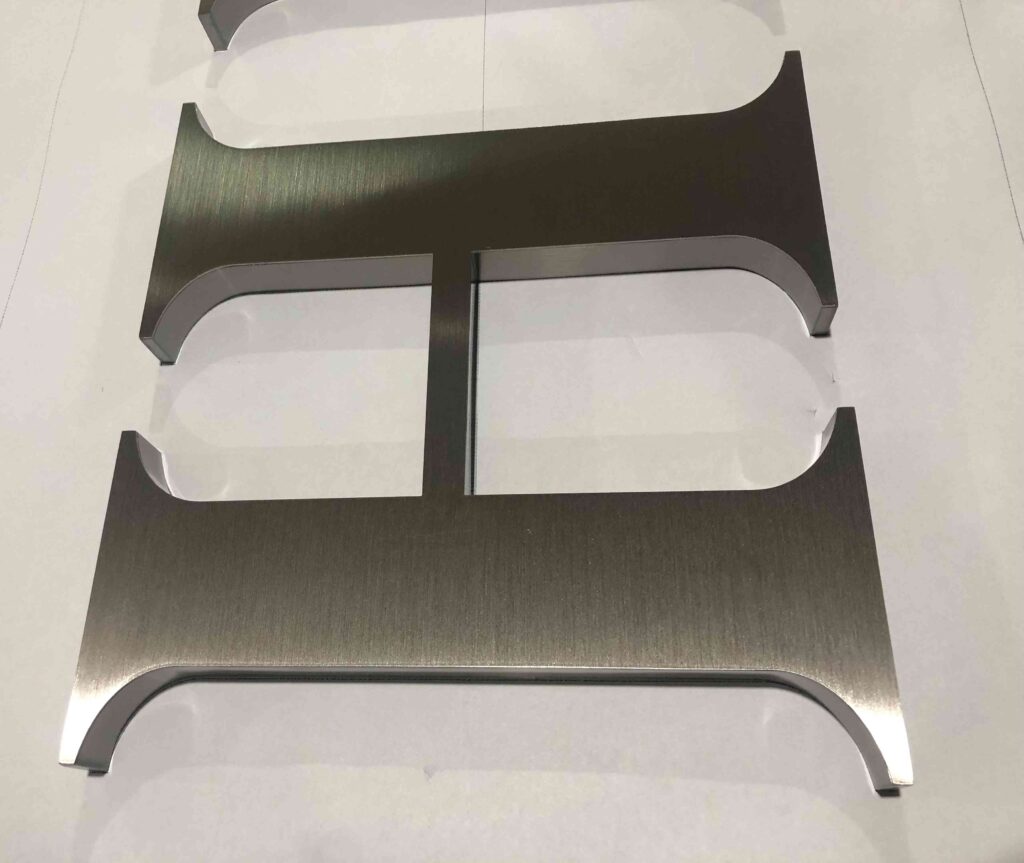
If you have custom requirements for brushed metal signs, please feel free to contact us.
References: