What Are Channel Letters?
Channel letters are three-dimensional signage commonly found on the exterior walls of shops, restaurants, and commercial buildings. They are typically made of metal or plastic and can have internal light sources installed to illuminate the front or back of the letters, improving visibility and brand recognition at night and indoors.
What Do Channel Letters Look Like?
Channel letters are a group of independent three-dimensional letters, which typically have the following characteristics:
- Each letter is made individually, not as a single flat sticker.
- The lettering has thickness, protruding from the wall like a “box”.
- Common materials are aluminum, metal, and acrylic.
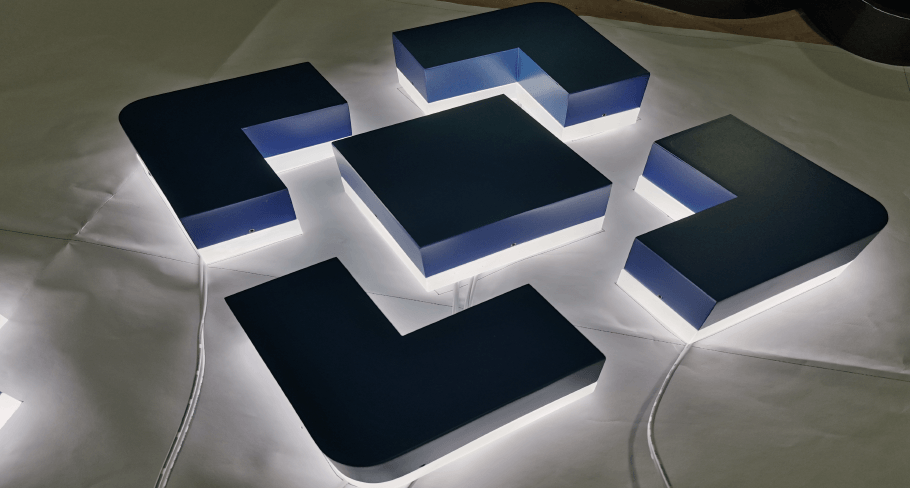
- Illuminated versions usually have a transparent or semi-transparent front with concealed lighting.
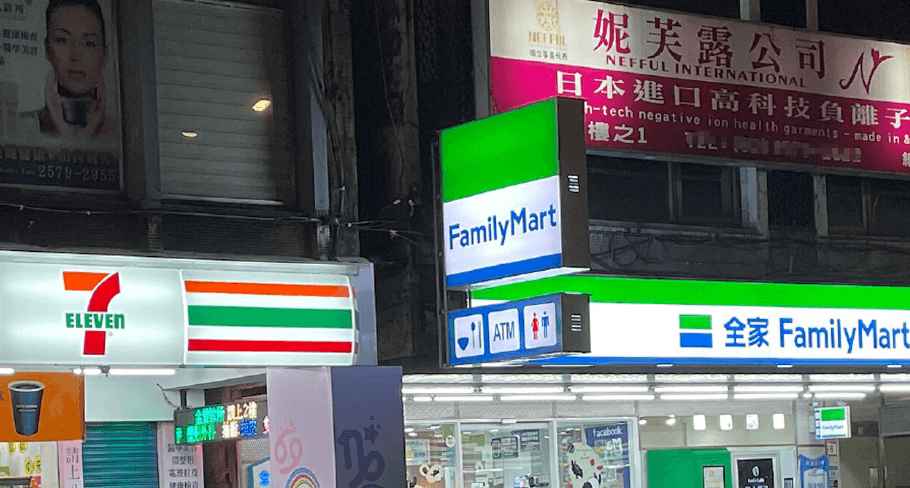
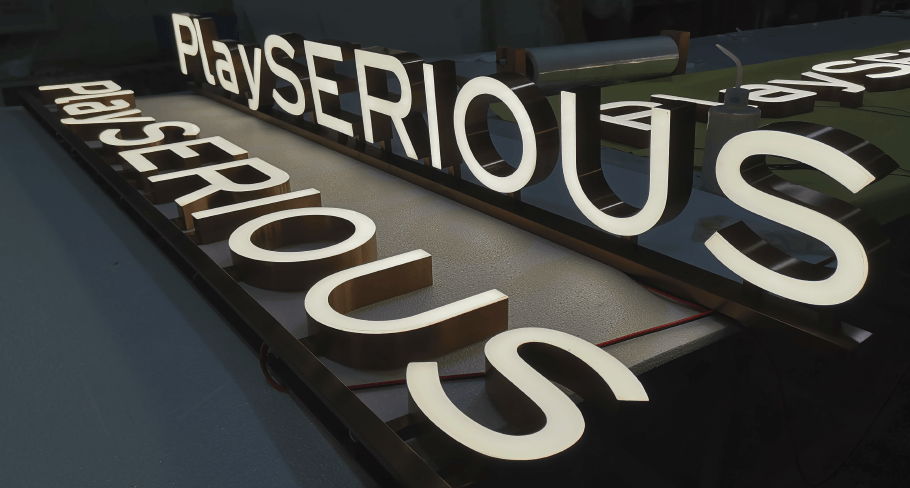
The large letters you see on the storefronts of shopping malls or restaurants that appear as colorful 3D letters during the day and become illuminated at night are channel letters.
As shown in the video below:
Why Are They Called Channel Letters?
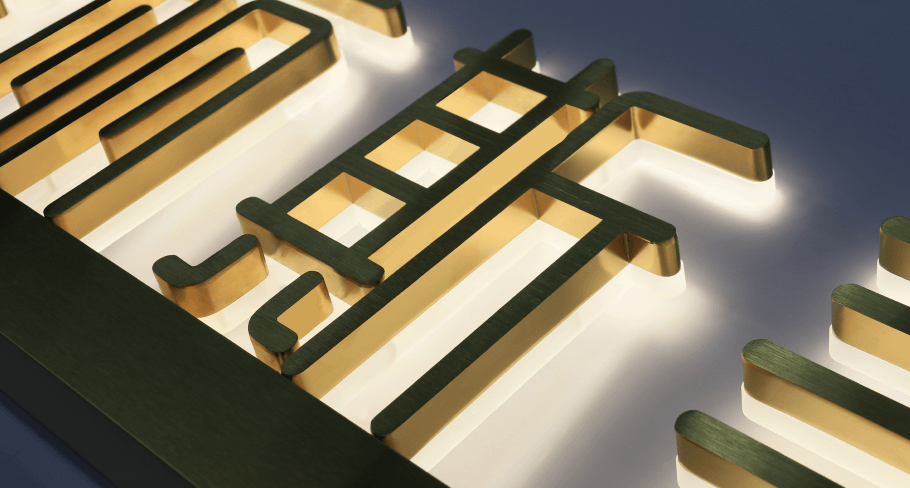
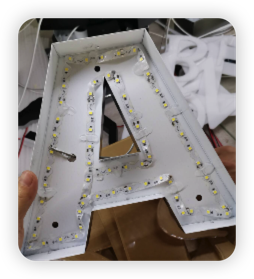
They are called channel letters because their structure contains a “slot/channel”-like space. The front, sides, and back of the letter are made to form a deep three-dimensional “slot/channel”, as shown in the image below:
How Deep Are Channel Letters?
Channel letter depth (also called return depth) typically ranges from 2” to 5” for standard signs, with some options going up to 8” or more for custom designs:
- Front-lit (standard) channel letters:
- Common depths: 3”, 3.5”, 4”, and 5”
- Typical industrial standard: 4.3” depth coil (giving 4” returns)
- Halo-lit / reverse channel letters:
- Common depths: 2”, 3”, 3.5”, 4”, and 5”
- Return is typically smaller, around 3.5”
- Custom depths:
- Available from 1” to 6” or more depending on manufacturer and letter size
In practice, most businesses choose 3”–5” depth as a balanced option for visibility, structure, and cost.
Do Channel Letters Always Need to be Illuminated?
No, channel letters don’t have to be illuminated. They can be either illuminated (with lights) or non-illuminated (without lights), depending on the specific application scenario. For instance, if a store primarily operates during the daytime, non-illuminated channel letters can be chosen, resulting in a simpler appearance, lower cost, and easier installation and maintenance as there’s no need to consider power wiring.
What Are LED Channel Letters?
LED channel letters are custom 3D sign letters or logos with built-in LED lighting. They are typically fabricated from aluminum and acrylic, and each letter is illuminated individually for strong visibility and a modern look.
How Do LED Channel Letters Work?
LED channel letters work by placing LED modules inside each 3D letter, then directing that light through the front face or out the back, depending on the style. The letter bodies are usually made from aluminum, with acrylic faces for front-lit signs and spacer-mounted backs for halo-lit signs.
What is The Purpose of LED Channel Letters?
Illuminated letters and LED channel letters are used to make business signs more visible, memorable, and effective at attracting customers, especially at night.
How LED Channel Letters Are Made?
Taking Front-Lit Channel Letters as an example, the creation of LED channel letters generally involves the following process:
- Material Cutting: CNC routing for acrylic faces and Laser Cutting for metal returns/backs.
- Letter Bending: Automated precision bending of returns to match the letter stroke.
- Welding & Assembly: Joining returns and backs with welding, riveting, or other structural fastening methods.
- Painting & Finishing: Interior White Reflective Coating and exterior custom brand color finishing.
- LED & Component Integration: Strategic LED layout to eliminate Hot Spots, plus installation of Bushings, Nutserts, and a 24–48 Hour Burn-in Test.
- Face Assembly: Installation of the Acrylic Face and Trimcap with industrial-grade sealing and fastening methods.
- Mounting Prep: Preparation of Raceways, mounting hardware(e.g., Threaded Rods), and a 1:1 Paper Pattern for on-site installation.
- QC & Shipping: Final inspection of Luminance Uniformity and waterproof sealing, followed by Heavy-duty Crating for safe transit.
How LED Channel Letters Are Installed?
The standard installation process for a LED channel letters are as follows:
- Site Preparation: check conditions, clean the area, and confirm the layout.
- Measurement and Marking: mark mounting points using templates for alignment.
- Structure Attachment: install raceway, wireway, or backer if required.
- Wiring: route and secure power cables.
- Letter Installation: mount letters using screws, studs, or adhesives, ensuring stability and alignment.
- Electrical Connection: connect LEDs and verify electrical components.
- Final Testing: check lighting, adjust brightness, timer, and inspect for any issues.
- Finishing and Cleaning: make adjustments, clean the sign, and remove debris.
- Final Handover: inspect with the client and ensure compliance with regulations.
LED channel letters can be installed in the following 5 ways:
- Studs
- Studs with Spacers
- Double-sided Tape
- Raceway/Wireway
- Mounted with Backer
For more details, please refer to this article:
Front-Lit Channel Letters: Structure, Materials, and Installation Guide
How to Install LED Channel Letters to Ensure Compliance?
Taking Los Angeles County as an example, three major standards must be met simultaneously: product certification, on-site installation, and local regulations.
- Product Safety & Manufacturing Standard (UL 48): Published by UL Standards & Engagement, this standard governs the structural integrity, internal wiring, and damp/wet location enclosures of electric signs.
- Field Installation & Electrical Conduit Standard (CEC/NEC): Enforced via Title 24, Part 3, California Electrical Code (CEC). Field construction must strictly follow Article 600 (Electric Signs and Outline Lighting).
- Local Amendments: Los Angeles County officially adopted and enacted the 2026 Los Angeles County Electrical Code (Title 27) and Building Code (Title 26), effective January 1, 2026.
For more details, please refer to this article:
California & Los Angeles County LED Channel Letter Installation Compliance Guide (2026 Edition)
How Much Power Does an LED Channel Letter Sign Consume?
Taking a channel letter containing 50 LED modules as an example, the calculation method is as follows:
- Number of Modules: 50
- Power Consumption per Module: 0.72W
- Total Power = 50 x 0.72 = 36W
- Safety Margin: 25%
- Total Power with Margin = 36 x 1.25 = 45W
- Recommended Driver: Choose a power supply with a capacity higher than 45W(e.g., 60W).
Do LED Channel Letters Attract Bugs?
Yes, LED channel letters can attract bugs, because they are naturally sensitive to ultraviolet and short-wavelength light from LED module inside the LED channel letters, but compared to traditional neon signs, LED channel letters are much less attractive to bugs.
For more details, please refer to this article:
Do LED Channel Letters Attract Bugs?
Do LED Channel Letters Cause Light Pollution? How Can You Stay Compliant?
Not necessarily. LED channel letters won’t cause light pollution if they’re designed and installed correctly.
To stay compliant with U.S. DarkSky and local lighting rules:
- Keep light directed downward—no uplight or side light leaking.
- Use warm colors (3000K or lower) to reduce blue light and skyglow.
- Control brightness with dimmers, timers, or sensors so the sign isn’t too bright or on all night.
- Avoid glare and light spill onto nearby properties or streets.
- Check your local lighting ordinances, since rules vary by city and state.
When done right, LED channel letters are bright, eye-catching, and compliant.
For more details, please refer to this article:
Are Your LED Signs Compliant? Navigating U.S. DarkSky and Light Pollution Laws
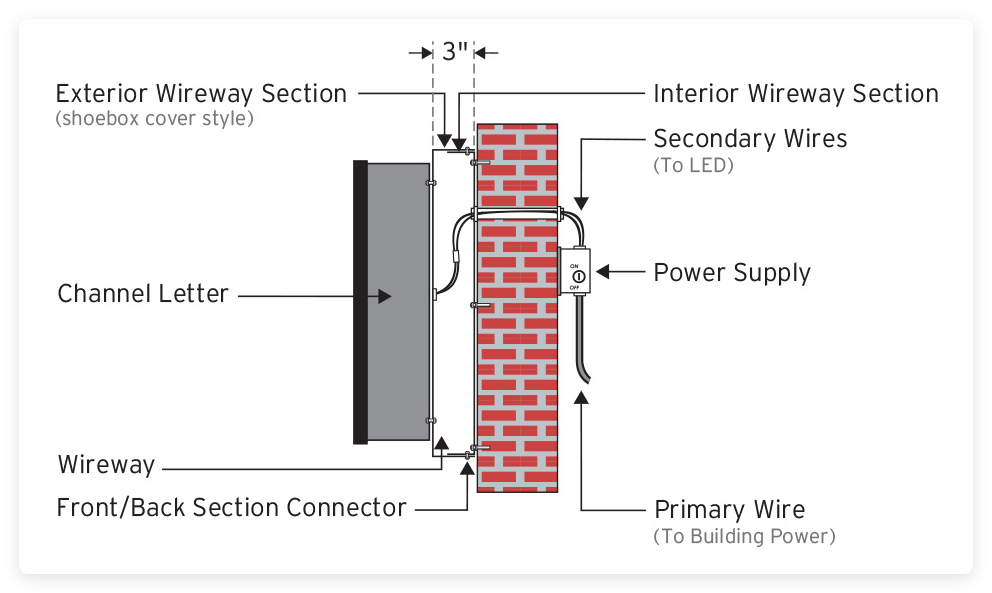
What Does an LED Channel Letter Wiring Diagram Show?
It shows how to wire all letters to the power supply in a parallel configuration so each letter gets the same voltage and brightness. As shown in the figure below:
What Are RGB Channel Letters?
RGB Channel Letters are illuminated signs that use RGB LED modules to produce dynamic, color-changing effects. Unlike traditional channel letters that typically emit a single fixed color, RGB channel letters can display a wide spectrum of colors and lighting patterns.
These signs are commonly constructed using stainless steel returns, opal acrylic faces, and integrated RGB LED lighting systems, offering both durability and visual versatility.
RGB stands for Red, Green, and Blue—the three primary colors of light. By adjusting the intensity of each color within the LED module, RGB systems can generate over 16 million color variations, enabling customizable and programmable lighting effects.
For more details about RGB channel letters, please refer to below article:
General Guide For RGB LED Channel Letters
What Are the Different Types of Channel Letters?
The main types of channel letters are listed below:
- Front Lit
- Back/Halo Lit
- Front and Back/Halo Lit(Dual-Lit)
- Trimless Back/Halo Lit
- Trimless Front Lit
- Side Lit
- Front and Side Lit
- Bevelled Edge
- Marquée
- Faux Neon
- Open Face
- Non-illuminated
- RGB Channel Letters
- Epoxy Resin Channel Letters
- Push-Through Letters
For more details, please refer to this article:
What Are the Different Types of Channel Letters?
How Much Do LED Channel Letter Signs Cost?
This question cannot directly give a fixed number, because LED channel letters are not standardized products, but customized according to customer needs. Pricing is quoted based on each project’s artwork, specifications, dimensions, quantity, and finishing requirements.
Prices can vary significantly from project to project.
Based on experience, I can tell you the approximate proportion of the cost of each part in a typical LED channel letter project, as shown in the following table:
| Item | Percentage | Notes |
|---|---|---|
| Product Cost | 40-50% | This cost is relatively fixed; while influenced by raw material prices and process complexity, it experiences minimal fluctuations. |
| Sea / Air Freight | 30-40% | Shipping costs are heavily affected by weight/volume, logistics methods, fuel prices, and international geopolitics. They tend to surge significantly during times of uncertainty, making up a higher share of the total cost. |
| Customs Duties | 25-30% | The duty rate is determined by the HS Code. If the product falls under Section 301, an additional 25% tariff will be levied on top of the general rate. |
Note: These percentages represent typical ranges for individual cost components. Because shipping rates fluctuate and tariffs vary by HS code, the total breakdown will vary per project.
What Materials Are Commonly Used for Fabricating LED Channel Letters?
Taking front-lit channel letters as an example, front-lit channel letters typically use translucent acrylic for the front panel. Sometimes, printed translucent vinyl, cut vinyl, or day/night vinyl are applied to the acrylic panel, or the front is simply open-faced, exposing the neon or faux neon inside. The casing is usually made of lightweight and rust-resistant aluminum, but stainless steel, corten steel, or brass are also used, or even translucent acrylic can be used directly.
For more details, please refer to this article:
Front-Lit Channel Letters: Structure, Materials, and Installation Guide
What’s the Difference Between Channel Letter Signs and Box Signs?
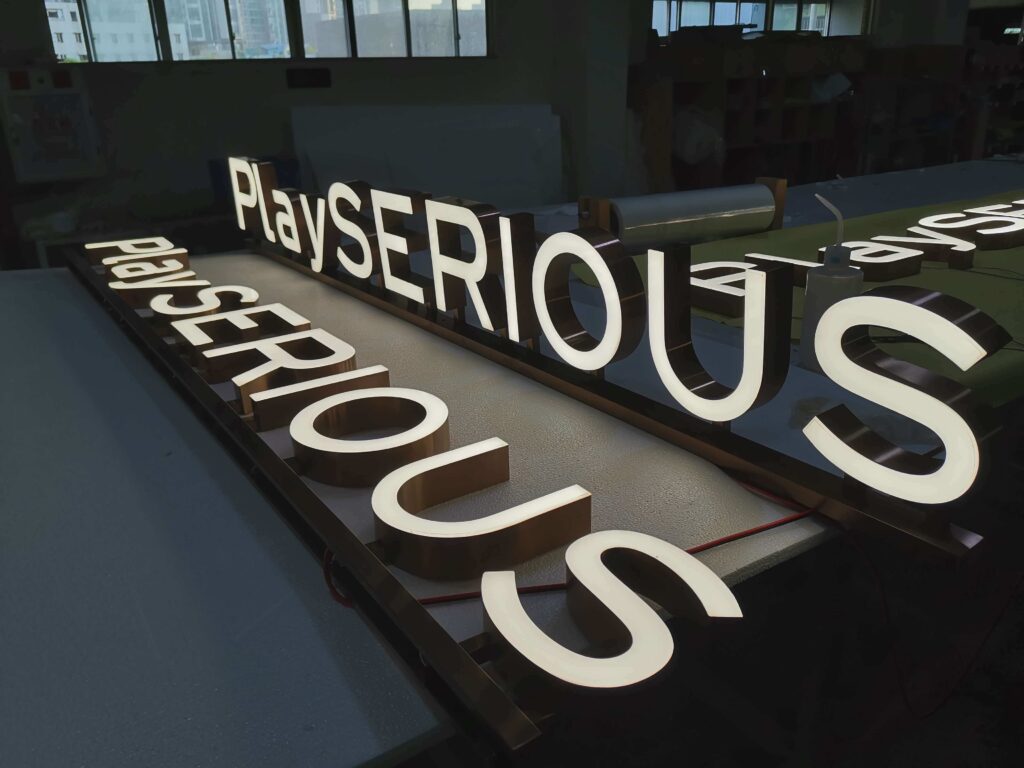
Channel letter signs are made of individual 3D letters, each fabricated from aluminum and acrylic, with internal LED lighting. They look modern, premium, and are great for showcasing a company name or simple logo. As shown in the figure below:
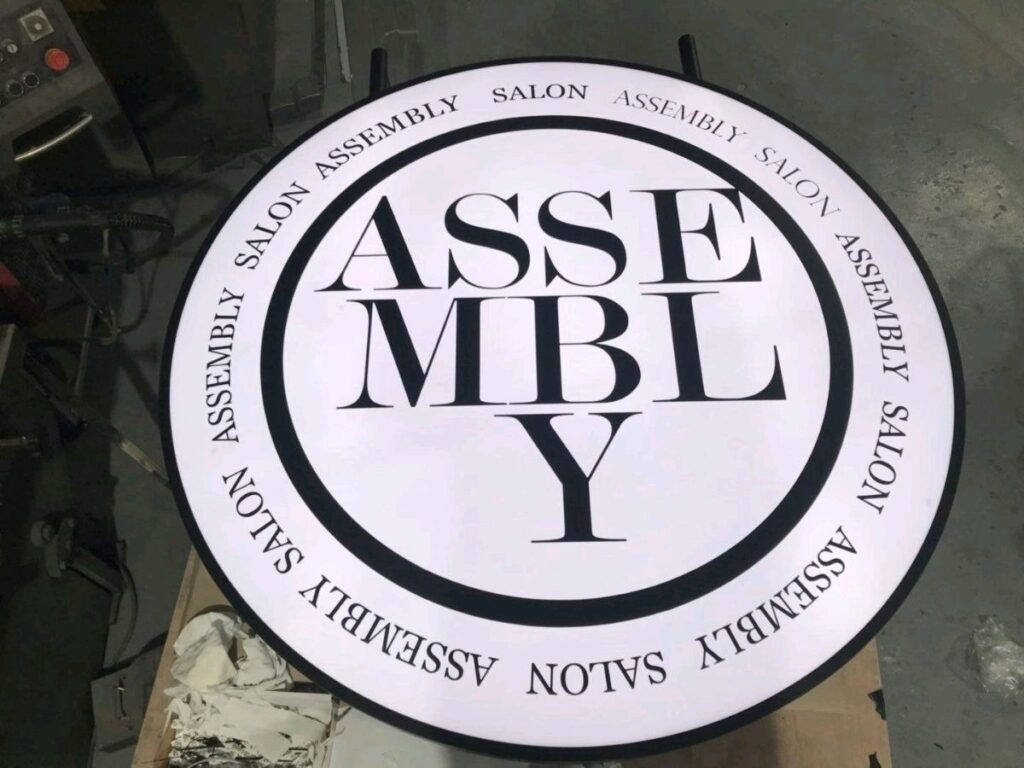
Box signs (also called cabinet or lightbox signs) are a single rectangular or square “box” with a flat face. The design is printed or applied on the face, and lighting is usually LED or fluorescent inside the box. They work well for more complex logos, multiple lines of text, or detailed graphics. As shown in the figure below:
Key Differences:
| Aspect | Channel Letter Signs | Box Signs |
|---|---|---|
| Shape | Individual 3D letters | One enclosed box |
| Look | Sleek, upscale, modern | Classic, bold, graphic-heavy |
| Best for | Company name, simple logo | Complex logos, multi-line text, detailed graphics |
| Customization | Font, size, color, lighting style | Full-color graphics, printed designs |
| Lifespan | 7–10 years | 5–7 years |
What is the Difference Between Front-lit and Bac-klit Channel Letters?
The main difference lies in the direction of light projection. Front lit letters emit light directly from the surface of the sign; while halo lit letters project light onto the wall behind them, creating a halo around the lettering.
What Are the Benefits of Using LED Channel Letter Signs?
LED channel letter signs give your business strong visibility day and night, a professional 3D look, and long-term marketing value. They’re energy-efficient (using up to 80% less power than neon), last 50,000–100,000 hours, and require very little maintenance. Plus, they’re eco-friendly and offer great design flexibility in size, color, and lighting style.