A customer asked me recently how FT Signage’s sign letters can avoid oil canning, and this article is here to answer that question.
What Is Oil Canning?
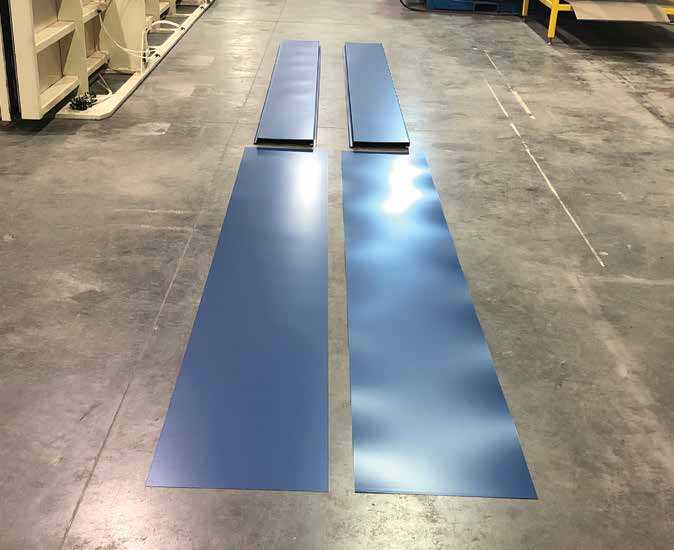
Oil canning refers to the visual phenomenon in which thin metal sheets, such as aluminum, steel, or pre-painted panels, develop irregular waviness, surface rippling, or slight elastic distortion when subjected to stress or environmental changes.
The term comes from a classic metal oil can: when you press the flat bottom with your finger, it suddenly caves inward; when you release it or press from the other side, it snaps back to its original shape with a sharp “pop” sound.
What Causes Oil Canning?
The main reasons oil canning occurs are thin sheet material, thermal expansion and contraction, insufficient support structure, uneven installation pressure, and residual stress that was not released.
- Thin metal sheets: The sign face may use aluminum or steel that is too thin, so it is more likely to develop waviness during installation or when temperatures change.
- Thermal expansion and contraction: Long hours of outdoor sunlight and day-to-night temperature swings can cause the panel to expand and contract, which may lead to visible distortion.
- Insufficient support structure: If there is no proper backing support behind the panel, such as a honeycomb panel or ribs, uneven pressure can easily cause deformation.
- Uneven installation pressure: Improper fixing points or uncontrolled torque during installation can concentrate stress in certain areas and create an unbalanced surface tension.
- Residual stress not released during fabrication: Cutting, bending, or embossing can leave internal stress in the material. If it is not properly relieved before installation, the panel may deform later in use.
How Can Large Sign Letters Avoid Oil Canning?
When producing and installing large metal sign letters, such as rooftop letters, exterior wall company logos, or storefront signage, oil canning is a particularly tricky issue. Because large metal letters have a broad surface area, once the sheet metal is too thin or the support is insufficient, the surface may become uneven, reflect light distortion, or even produce a popping sound when pressed.
To prevent oil canning in large metal letters and ensure both the quality and safety of the finished sign, the following key factors are usually optimized:
Material and Sheet Thickness
Large letters place much higher demands on metal sheet thickness, and thin sheet used for small letters should definitely not be used here.
For aluminum or stainless steel, when the letter height is around 1 to 1.5 meters, a sheet thickness of at least 1.5 mm to 2.0 mm is recommended. For letters over 2 meters tall, 2.5 mm to 3.0 mm or even thicker material is usually preferred.
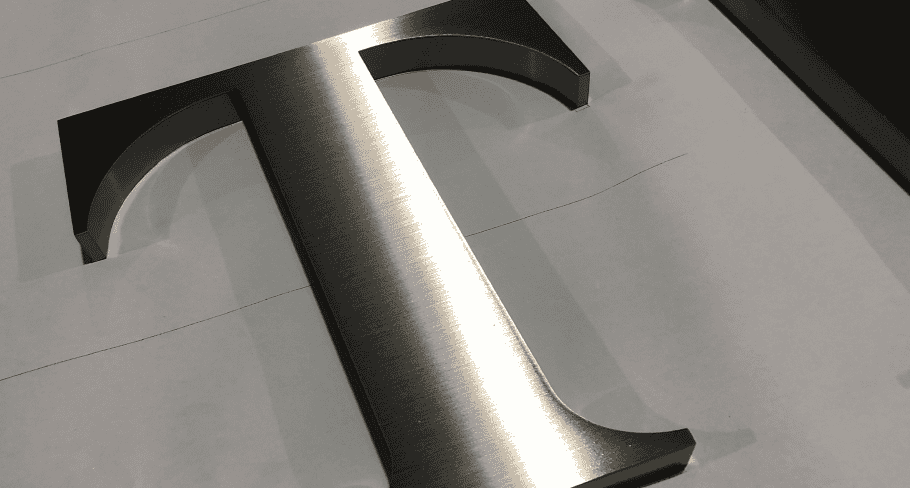
Furthermore, high-gloss surfaces should be avoided, matte finishes are preferable, as highly reflective mirror-like metal surfaces tend to magnify even the smallest surface imperfections. Brushed finishes, matte paint, or fluorocarbon coatings are strongly recommended, since they help diffuse light and visually reduce the appearance of oil canning.
Internal Structural Reinforcing Ribs
The inside of large letters cannot be hollow, they need a skeleton built like a structure.
Welded reinforcing ribs: On the back side of the metal letter, usually in the central area, square tubing or angle iron should be welded into a grid pattern of reinforcing ribs, typically using aluminum square tube or stainless steel square tube.
Function: These ribs hold the front metal face firmly in place, distribute internal stress caused by thermal expansion and contraction, and help prevent the face from bulging or collapsing.
Installation and Process Details
Leave room for thermal expansion and contraction: large metal letters will expand under intense summer sunlight. When joining letter panels or fastening them to the steel frame, they should not be completely welded shut or pulled too tightly, a small amount of movement space should be left to release stress.
Avoid distortion from seam welding: if the letter size exceeds a full sheet of metal, usually 1.22 m x 2.44 m, splicing is required. The localized heat generated during seam welding can easily cause panel distortion, so segmental tack welding, low-heat TIG welding, or brushed seam splicing should be used instead.
Folded edge construction: the return depth of large metal letters should be set reasonably, usually no less than 8 cm to 15 cm. A proper return depth can naturally improve the stiffness of the face through geometry.
FAQ
Is it always necessary to weld reinforcing ribs to prevent oil canning?
Not necessarily. For smaller metal letters with shorter spans, it may be possible to avoid reinforcing ribs if the material selection, residual stress control, structural design, and surface finish are all handled properly. Reinforcing ribs help improve rigidity and reduce the risk of deformation, but they are not the only solution.
Do only metal letters have oil canning, while non-metal letters such as acrylic lettering does not?
Yes, oil canning usually refers to visible waviness or surface rippling on metal surfaces, especially on thin metal letter faces. Acrylic letters are generally not described as having oil canning, but they can still develop other types of deformation issues.
Take Away
Oil canning is not just a surface issue—it is usually the result of material choice, structural design, fabrication process, and installation details working together. For large metal sign letters, the best way to prevent it is to control stress from the start: choose the right material thickness, build in proper internal support, leave room for thermal movement, and use finishes that reduce visual distortion. In short, a well-designed sign is not only stronger and safer, but also looks cleaner and more refined.
If you are planning a large metal sign project and want to minimize the risk of oil canning, contact FT Signage to discuss the right structure and finish for your application.