

Edge flame polishing is a surface treatment process that uses a pure, carbon-free flame to polish the edges of transparent acrylic materials.
However, during the actual production process, merely using flame polishing is not sufficient. Other polishing techniques must also be combined to make the edge of a transparent acrylic sheet smooth, flat and transparent.
Why Is Polishing Important for Transparent Acrylic Edges?
Many people think that polishing is merely a process of treating the surface of the signboard, but they fail to realize that the edges also need to be polished.
Why is polishing required even on the edges?
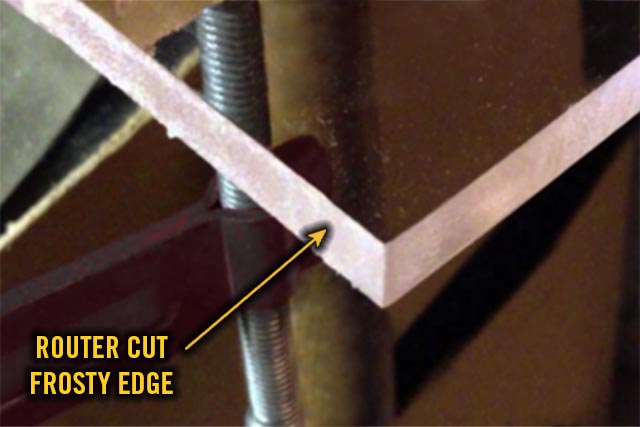
In fact, the reason is that the edges of the cut acrylic sheets have the marks left by the saw blades during the cutting process. If these edges are not treated, they will not only affect the appearance (frosty edge, as shown in the picture below), but more importantly, when blind people read Braille and touch the edges, it will affect the tactile sensation. In severe cases, it may even cause cuts to their fingers.
How to Polish Transparent Acrylic Edges?
First, use coarse sandpaper (around 400 grit) for rough grinding, and then use fine sandpaper for detailed grinding (grit above 800, such as 1200 grit is even better).
Secondly, clean the polished surface, and then use a pure carbon-free flame polishing method, such as a flame polishing machine or hydrogen-oxygen polishing machine, as shown in the following video:
Only in this way can we obtain a very smooth, flat and transparent acrylic edge, significantly enhancing the appearance and touch, and reducing the risk of being cut.
FAQ
Can flame polishing be used alone for acrylic edges?
No. Flame polishing alone cannot remove deep saw marks or uneven surfaces. Proper sanding (from coarse to fine grit) is required first to achieve a smooth and even base before applying flame polishing.
Does flame polishing improve both appearance and safety?
Yes. Flame polishing restores optical clarity to acrylic edges, making them look clean and transparent. At the same time, it smooths sharp edges, reducing the risk of injury and improving tactile comfort—especially important for Braille and ADA-compliant signage.
Take Away
Edge flame polishing is essential for achieving smooth, clear, and safe acrylic edges, but it should never be used alone. Proper results require a combination of mechanical sanding (from coarse to fine grit) followed by flame polishing with a clean, carbon-free flame. This process removes cutting marks, improves visual clarity, and—most importantly—ensures a safe, comfortable touch, which is especially critical for applications like Braille signage where users rely on tactile interaction.