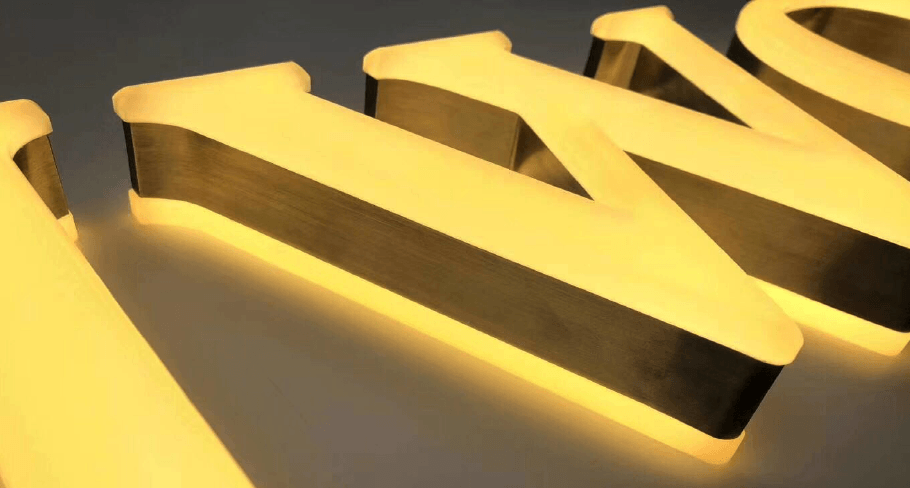
Yes, LED channel letters can attract bugs, but they do so significantly less than traditional neon signs.
On summer nights, the most troublesome thing is that your LED channel letters are full of bugs. This not only affects your brand image, but also makes customers hesitate to come.
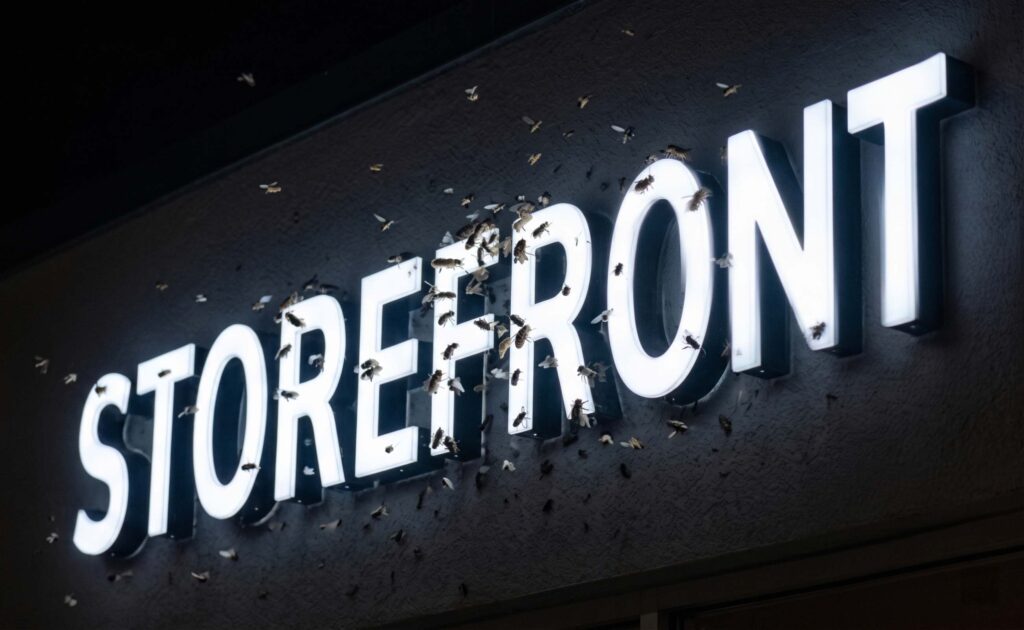
Why do bugs fly toward LED Channel Letters? How to keep bugs away from LED Channel Letters? How to choose bug-free LED signs?
This article will discuss these topics.
Why are Bugs Attracted to LED Channel Letters?
The LED channel letters contain a large number of LED modules. These LED light sources are not only bright but also have a large area, which is the core factor that attracts bugs.
But why do bugs fly toward light?
The main reasons why light attracts insects (i.e., phototaxis) can be summarized as follows:
- Spectral Emission (Wavelength): Insects are highly sensitive to specific wavelengths of light.
- Heat and Infrared Radiation: Although some lamps do not emit ultraviolet (UV) light (such as traditional incandescent bulbs), they can still be highly attractive to insects due to the thermal radiation they emit.
- Polarization and Flicker: Insects naturally react to the polarization patterns and flickering characteristics of light sources.
- Visual Contrast: Broad-spectrum “white” light (such as standard LEDs) can create dark silhouettes of objects against a bright background. This high contrast acts as a critical visual cue for certain insects, such as mosquitoes and tsetse flies, when detecting potential hosts.
- Electric Fields: Though less common, higher power outputs can generate subtle electric fields, which certain insects (such as bumblebees) are fully capable of detecting.
In summary, insects are attracted primarily because they are naturally sensitive to ultraviolet and short-wavelength light, or because the heat emitted by certain lamps mimics the biological hosts they seek. The LED light source inside LED channel letters provides these inducements, resulting in numerous bugs attaching to the channel letters and even crawling into the gaps, severely impacting the brand and lifespan of the channel letters.
Which Light Colors Are More Likely to Attract Insects?
The color of light (i.e., its wavelength) is a key factor in determining its attraction to insects. In general, short-wavelength light is far more attractive to insects than long-wavelength light.
The following is a specific analysis regarding the attractiveness of light of different colors (wavelengths):
- Ultraviolet (UV) light: Insects’ visual sensitivity is typically biased towards the ultraviolet end of the electromagnetic spectrum (wavelength <380 nm). Even very small amounts of UV light can be extremely attractive to insects, particularly disease-carrying insects such as black flies, mosquitoes, and tsetse flies.
- Short-wavelength light (blue and green light): In addition to UV light, many insects also exhibit a strong attraction to blue and green light. Studies have shown that blue and green light is attractive to a variety of biting flying insects.
- Long-wavelength light (red light) and infrared light: Generally, long-wavelength light (such as red light) is less attractive to most insects, but it still attracts them. This is not because of its color, but because it emits a large amount of near-infrared radiation (heat), which biting insects mistake for a heat signal emitted by a warm-blooded host.
Comparison Chart: Signage Light Colors and Bug Attraction
| Light Color / Type | Wavelength / Temp | Attractiveness Level | Primary Scientific Reason |
|---|---|---|---|
| UV (Ultraviolet) | < 380 nm | 🔴 Extreme | Sits at the peak of insect visual sensitivity. Highly attractive to mosquitoes, blackflies, and midges. |
| Blue / Green Light | 400 – 550 nm | 🔴 High | Short-wavelength light that triggers strong phototaxis (light-seeking behavior) in most nocturnal insects. |
| Cool White LED | > 5000K | 🟡 Medium-High | Contains a high proportion of blue spectrum light; creates sharp visual contrasts and silhouettes. |
| Warm White / Yellow | 2700K – 3000K | 🟢 Low | Long-wavelength light that falls mostly outside the visual spectrum of most common flying insects. |
| Red / Infrared | > 6000 nm | 🟢 Very Low (Except Heat) | Virtually invisible to insects’ eyes, but excessive heat emission can mimic warm-blooded hosts for biting pests. |
Key Takeaway: To keep your storefront clean, always prioritize long-wavelength spectrums like warm white or amber for your channel letter illumination.
How to Keep Bugs Away From LED Channel Letters?
First, regarding color selection, we should avoid short-wavelength colors such as green, blue, and violet.
Second, regarding color temperature, we should choose warm white rather than cool white, as cool white’s emission wavelength is biased towards the ultraviolet end of the spectrum, making it more attractive to bugs.
Furthermore, choosing high-quality LED modules avoids flicker issues and reduces bug attraction.
Additionally, shadows in LED channel letters can also attract bugs. Therefore, eliminating shadows not only makes your letters look better but also reduces bug attraction. For information on how to eliminate shadows in LED channel letters, please refer to the following article:
Why LED Illuminated Signs Have Shadows? How to Fix It?
Finally, it is best to choose low-power LED light sources to reduce the possibility of generating heat, near-infrared radiation, and electric fields, thereby reducing the attraction of bugs.
How to Choose Bug-free LED Signs?
With the above foundation, we now know how to select LED channel letters to avoid bugs.
First, prioritize warm white or yellow light for the letters, and avoid high color temperature cool white light, especially above 5000K.
Second, if possible, avoid using green, blue, or purple light as the main color for the sign.
Third, in terms of letter structure, avoid openings or open faces that directly expose the LED light source. If possible, use a halo-lit letter solution and ensure proper edge sealing.
Fourth, choose high-quality, low-power LED light sources to reduce flicker and heat dissipation.
Checklist: How to Order Bug-Free Commercial Signs
| Selection Dimension | Specs to Avoid | Recommended Specs | Anti-Bug & Maintenance Principle |
|---|---|---|---|
| Color Temperature | Cool White ( > 5000K ) | Warm White ( 2700K – 3000K ) | Minimizes high-energy blue light emissions to reduce insect visibility. |
| Acrylic Face Color | Blue, Green, Purple, or Clear | Red, Yellow, or Warm Amber | Acts as a natural filter that blocks shorter wavelengths from escaping. |
| Signage Structure | Exposed LED / Open-back | Halo-lit / Fully Sealed Face-lit | Eliminates gaps where bugs can crawl inside; halo-lit reduces direct glaring glare. |
| Module Quality | Cheap, high-flicker modules | Premium, Low-Flicker, Low-Wattage | Eliminates rapid flicker that agitates bugs and lowers heat dissipation (reducing host mimicry). |
FAQ
Which light color is best for preventing bugs on storefront signs?
To reduce bugs around storefront signs, warm-colored light is usually the better choice. Yellow, amber, and warm white are generally less attractive to insects than cool white, pure white, or bluish white. The higher the blue-light content, the more likely the light is to attract phototactic insects.
How do you design commercial illuminated signs to minimize insects?
The key principles are to reduce blue light, limit light spill, prevent dust buildup, and eliminate hiding places for insects. For outdoor illuminated signs, it is best to control brightness and use built-in lighting or backlighting whenever possible. Some local regulations also discourage perforated LED illuminated letters and require electrical components to be moisture-resistant, rainproof, and pest-resistant.
How to mitigate bug attraction if cool white LED signage is mandatory?
Cool white lighting can still be used, but it should be paired with light control, sealed construction, and good site management to reduce insect attraction. This approach is less effective than switching to a warmer color, because higher color temperatures and stronger blue-light output tend to attract more insects. If cool white is required, the priority is to reduce blue-light spill and minimize exposed lamp surfaces.
Bug Mitigation Strategies for Cool White LED Signage
| Core Challenge | Technical Solution | Actionable Implementation Advice |
|---|---|---|
| High Blue Light Output | Optical Filtering Films | Apply micro-level UV/Blue light filtering sheets to the interior of the acrylic face to suppress peak wavelengths. |
| Insects Crawling Inside Sign | IP65+ Hermetic Sealing | Ensure the channel letter enclosure is strictly sealed with outdoor-grade silicone or foam gaskets to deny entry. |
| Shadows Creating Silhouettes | Optimized Module Spacing | Increase module density and use wide-angle diffuser lenses to eliminate dark spots that attract host-seeking pests. |
| High Insect Density Around Sign | Peripheral Interception | Install heavy-duty commercial bug zappers or UV traps 15-30 feet away from the storefront to divert pests before they reach your sign. |
Take Away
Achieving a clean, pest-free storefront is a subtle balance of science and craftsmanship. Specific to LED channel letters, in order to ensure your signage remains clean, attractive, and long-lasting throughout the summer, please keep the following four points in mind:
- Color & Spectrum: Prioritize long-wavelength colors like warm white (2700K–3000K), yellow, or amber, and avoid high-energy short-wavelength colors such as blue, green, or cool white above 5000K;
- Module Quality: Select high-quality, low-wattage, and low-flicker LED modules to eliminate rapid visual flashing and minimize heat dissipation that mimics biological hosts;
- Signage Structure: Opt for halo-lit or fully sealed face-lit designs with an IP65+ rating to completely eliminate shadows and seal off gaps where bugs could crawl inside;
- Environmental Management: If cool white light is mandatory for your branding, employ auxiliary defenses like internal optical filtering films and set up peripheral UV traps 15–30 feet away to intercept pests.
As a veteran expert in this industry, FT Signage not only focuses on the products themselves but also closely monitors industry standards and environmental optimizations. This is to accurately grasp the practical needs of our clients and provide them with tailored products and services.
Welcome to contact us to discuss your customization needs and explore further details.
References: