When we enter or leave different indoor and outdoor spaces, we often see a variety of special signs. Some feature a person using a wheelchair, others show someone with a cane, and some display a telephone symbol. What do these signs mean, and where are they typically used?
This article introduces a range of disability access symbols and explains what they mean.
Disability Access Symbols
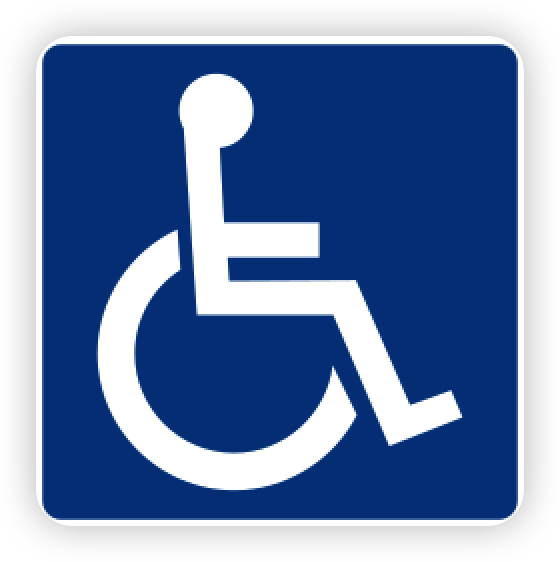
International Symbol of Access
The most common disability access symbol is the wheelchair symbol shown below. It indicates that a space or facility is accessible to people with disabilities. Known as the International Symbol of Access (ISA), it is widely used to identify accessible elements and spaces:
Audio Description for TV, Video, and Film
Audio description for TV, video and film. This service is for persons who are blind or have low vision.

Access to Low Vision
This symbol is used to indicate access for people who are blind or have low vision.

Volume Control Telephone
This symbol indicates the location of telephones that have handsets with amplified sound and/or adjustable volume controls.

Accessible Print
This symbol indicates larger text. It may be used to indicate that print materials are provided in large print (no smaller than 14 point type).

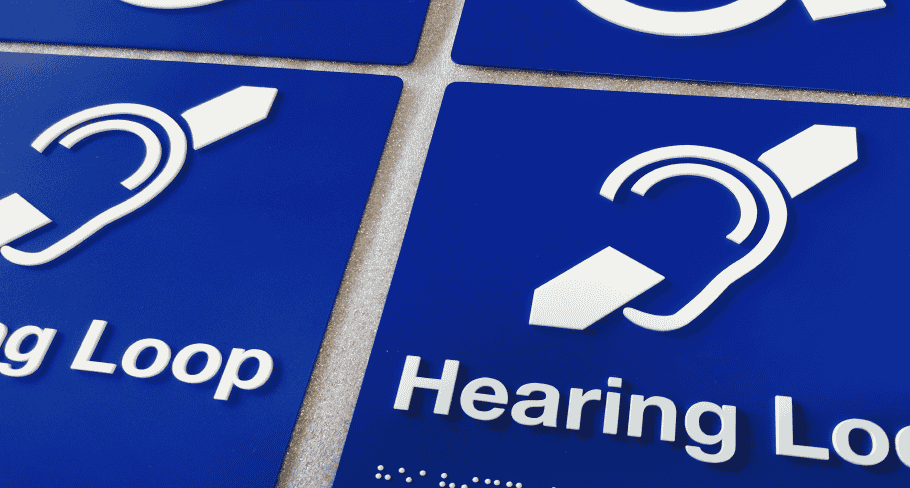
Access for Hearing Loss
This image indicates availability of assisted listening systems or devices.

Sign Language Interpretation
The symbol indicates that Sign Language Interpretation is provided.

Live Audio Description
Live audio description for people who are blind or have low vision. The service makes the performing and visual arts more accessible.

Closed Captioning (CC)
This symbol indicates that a television program or videotape is closed captioned for individuals who are deaf or hard of hearing.

Braille Symbol
This symbol indicates that printed matter is available in Braille.

The Information Symbol
This symbol indicates the location of information or security desk.

Telephone Typewriter (TTY)
This symbol indicates that Telephone Typewriter (TTY) is available.

Restroom Pictogram
Restrooms are one of the most common places where a range of disability access symbols can be found together, although the specific symbols and requirements may vary from country to country.
United States
In the United States, restroom signage at the federal level typically combines a pictogram for men, women, all-gender, or family use with the International Symbol of Access (ISA). These signs help distinguish men’s, women’s, and unisex restrooms, as shown below:


California
California has especially stringent restroom-signage requirements. In addition to meeting federal ADA requirements, restroom entrances must display a geometric symbol on the door: a circle for women’s restrooms, a triangle for men’s restrooms, and a triangle superimposed on a circle for all-gender restrooms, as shown below:


Australia
Australia follows a broadly similar approach to the United States, but its accessibility signage includes several distinctive local requirements.
For ambulant people with disabilities, the pictogram typically depicts a person using two crutches, as shown below:
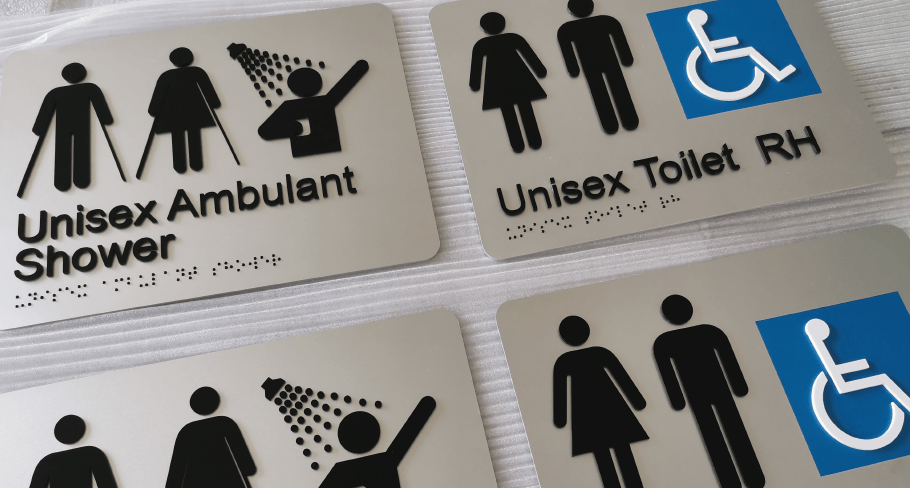
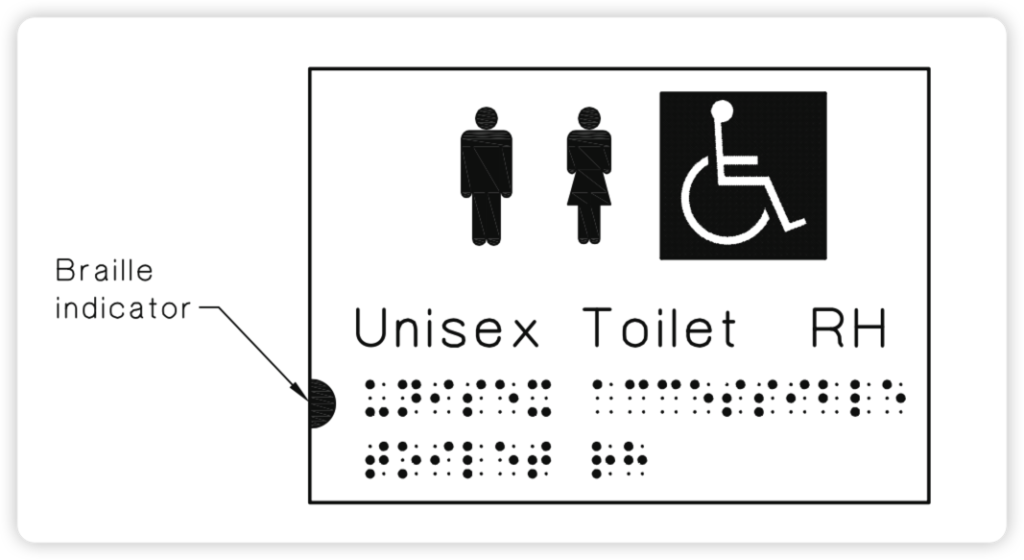
Australia uses Grade 1 (uncontracted) Braille for signage. Because this format can take up more space and may require multiple lines, Australian signs include a distinctive Braille indicator, as shown below:
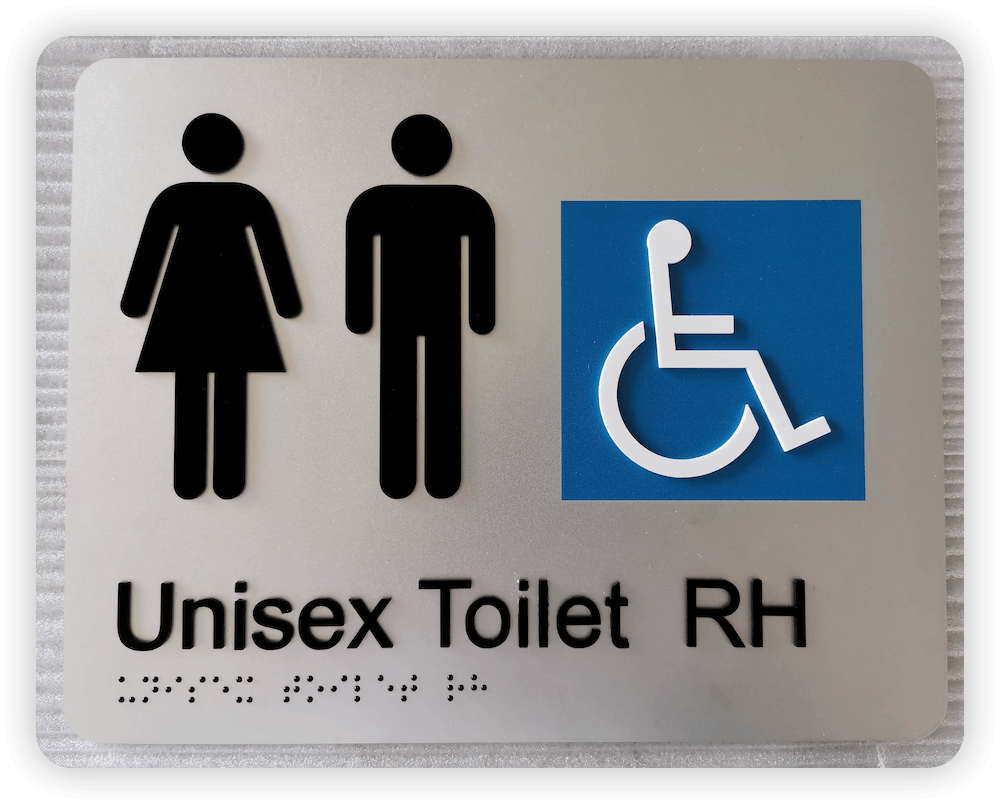
In addition, accessible unisex restroom signs are marked LH or RH to indicate whether a wheelchair user transfers onto the toilet from the left or right side, respectively:
Accessible Means of Egress
An accessible means of egress is another critical area requiring clear signage. These signs must clearly identify accessible emergency exits and provide directions to features such as elevators, stairways, and fire-rated exit routes.
Exit

Elevator

Stairs

Floor(Level)

In Case of Fire

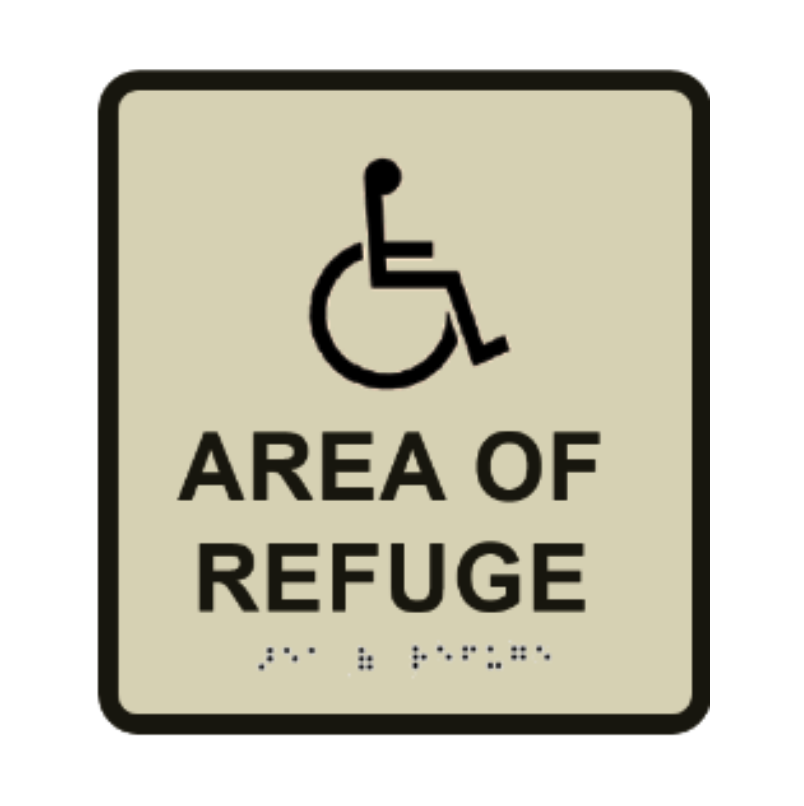
Area of Refuge
References: