As we know, California’s regulatory history has always tweaked federal regulation a little tighter, resulting in confusion between California and Federal standards.
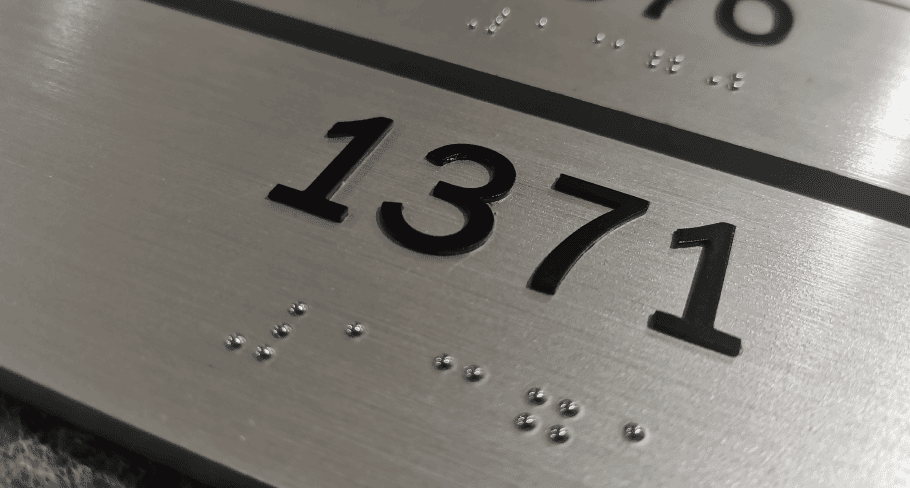
This is also reflected in the field of braille signs.
Braille signs have 2 standards in US: Federal standard which is ADAAG, and Californial standard which is Title 24.
This article is aimed at clarifying the differences between the braille signs under these two standards.
In short, the differences between them are only in braille dot spacing. ADAAG allows for a range of spacing between dots in the same cell as well as dots in adjacent cells. California specifies that these two spacings must be the maximum values allowed for in ADAAG. California believes the greater spacing enhances readability of the message on a sign.
Now I will elaborate on explaining the differences between them.
Federal(ADAAG) Braille Signs
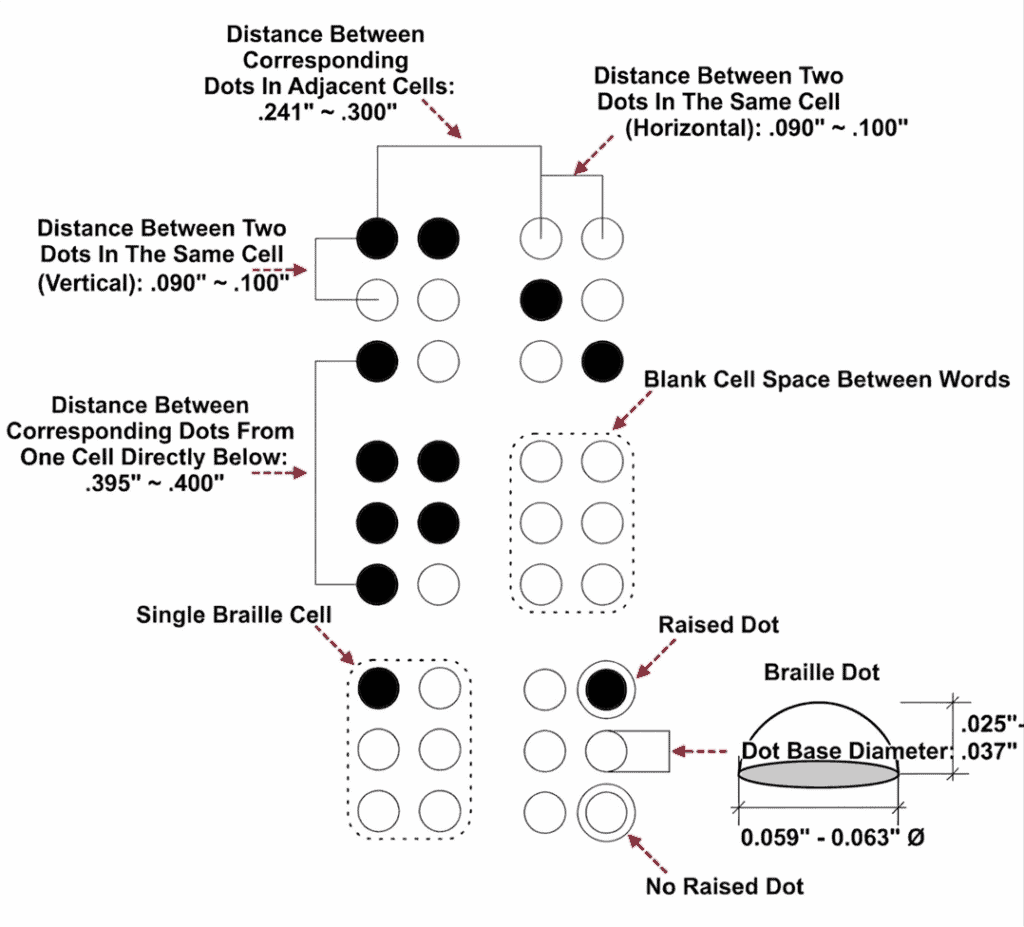
Under The Americans with Disabilities Act Accessibility Guidelines(ADAAG) standard, the braille dots shall be contracted(Grade 2), and have rounded or domed shape. There are also specifications for cell dimentions, dot height, cell spacing, and capitalization that must be observed.
About the cell dimention, dot height, and cell spacing, please see below table and fig:
| Measurement Range | Minimum in Inches to Maximum in Inches |
|---|---|
| Dot base diameter | 0.059 (1.5 mm) to 0.063 (1.6 mm) |
| Distance between two dots in the same cell | 0.090 (2.3 mm) to 0.100 (2.5 mm) |
| Distance between corresponding dots in adjacent cells | 0.241 (6.1 mm) to 0.300 (7.6 mm) |
| Dot height | 0.025 (0.6 mm) to 0.037 (0.9 mm) |
| Distance between corresponding dots from one cell directly below | 0.395 (10 mm) to 0.400 (10.2 mm) |
California(Title 24) Braille Signs
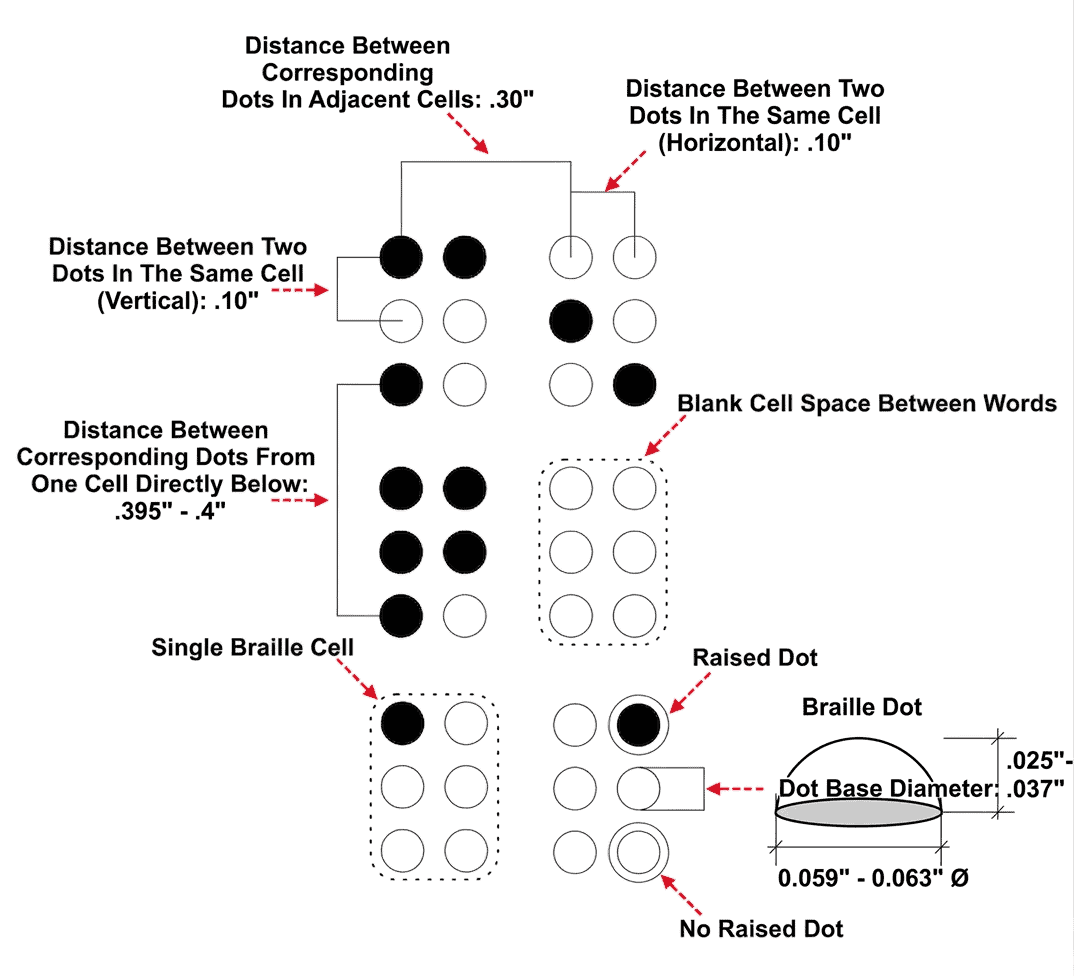
Under California(Title 24) standard, the distance between two dots in the same cell is 0.100 inch, and distance between two adjacent dots in adjacent cells is 0.200 inch. Distance between corresponding dots in adjacent cells should be 0.300 inch.
For your reference, I also put a table here, and mark the differences in Red letters:
| Measurement Range | Minimum in Inches to Maximum in Inches |
|---|---|
| Dot base diameter | 0.059 (1.5 mm) to 0.063 (1.6 mm) |
| Distance between two dots in the same cell | 0.100 (2.5 mm) |
| Distance between corresponding dots in adjacent cells | 0.300 (7.6 mm) |
| Dot height | 0.025 (0.6 mm) to 0.037 (0.9 mm) |
| Distance between corresponding dots from one cell directly below | 0.395 (10 mm) to 0.400 (10.2 mm) |
For your better understanding, I put a fig below:
Which Standard Should You Follow?
If you are not in California, you can follow ADAAG guidelines.
But if you are in California, do you have to follow both the federal standards and the California standards?
The answer is yes.
But fortunately, all you need to do is just follow the California standards, you will be able to meet the federal standards as well. After all, California does not replace the ADAAG, it just adds more law around it. The use of California standards for braille satisfies both Federal and California regulations.
Take Away
Many business owners think the ADAAG is the only law they need to know about accessibility. That is not true in California. Federal law matters, but California has its own rules, mostly stricter.
Although these differences are not significant, it is necessary to make braille signs strictly in accordance with the standards. This will not only benefit those in need, but also ensure compliance and avoid fines due to braille sign compliance issues.
As a veteran expert in this industry, FT Signage has handled a variety of projects, including a large number of braille signs. We are well versed in the different standards of braille signs and can quickly and fully grasp the needs of customers to ensure that the products can be perfectly presented.
If you have any customization needs or questions, please feel free to contact us!