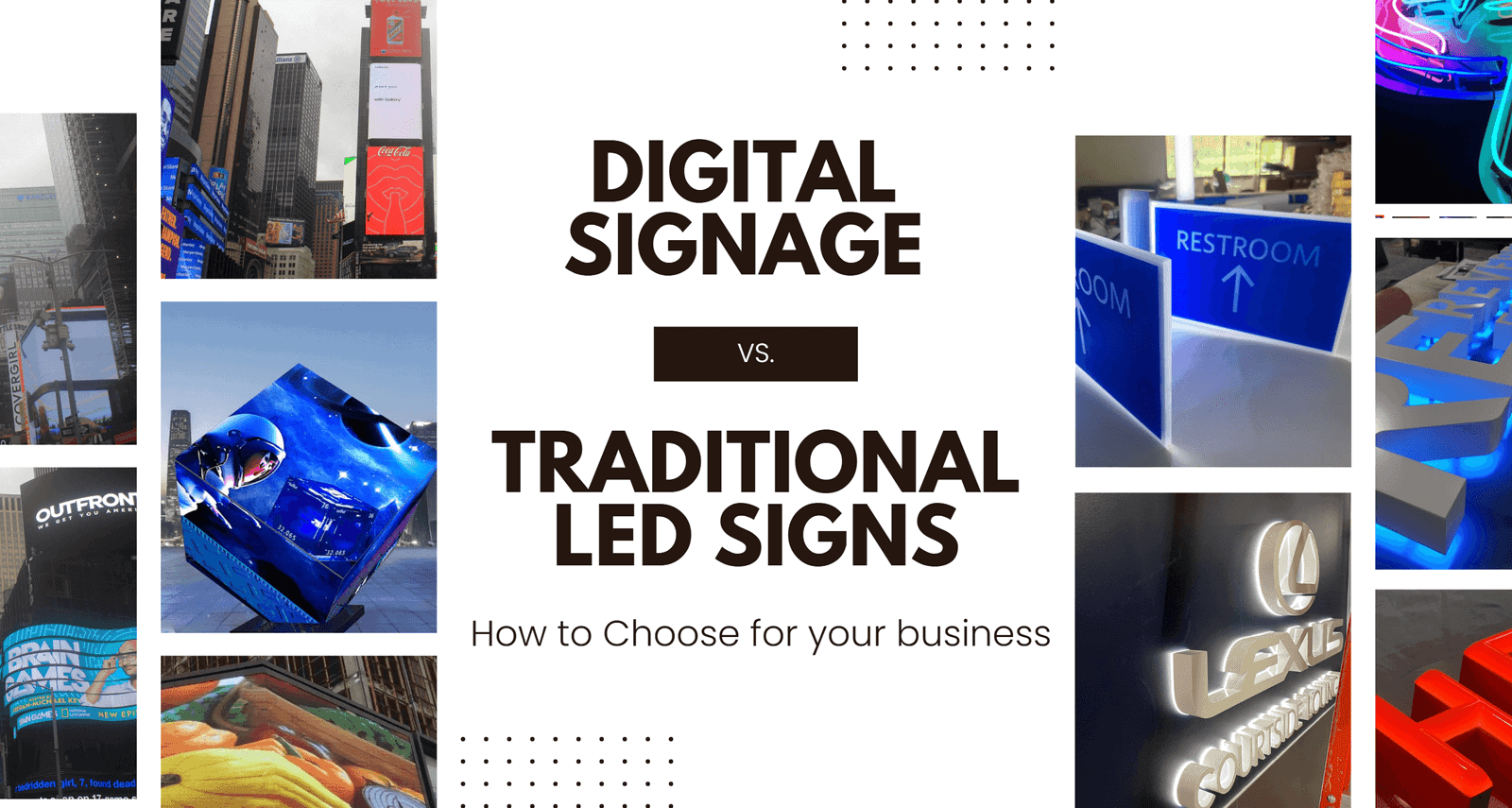
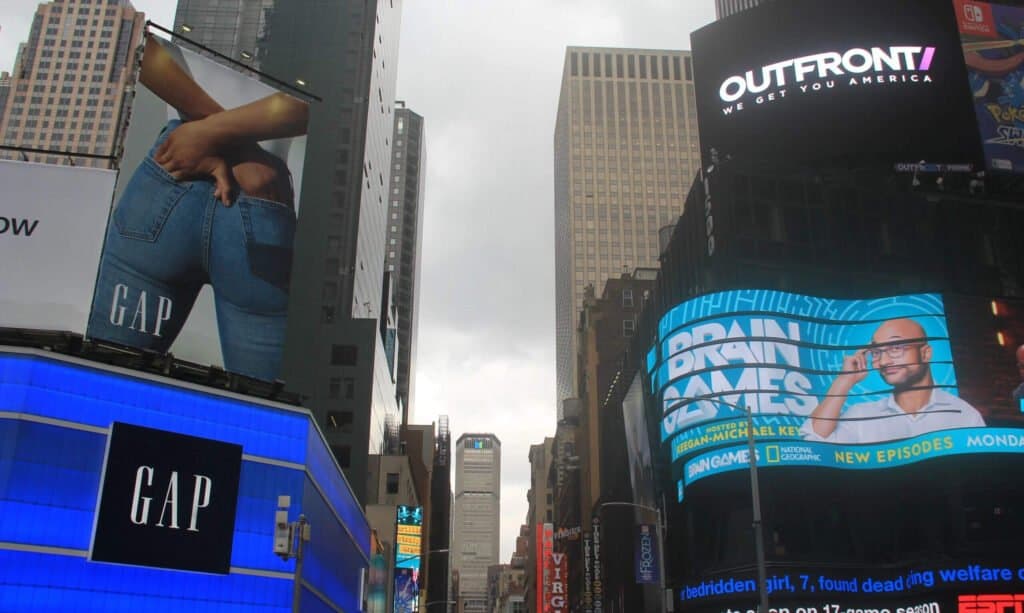
When you walk down a busy street, like Times Square, you’ll notice two main types of signs. Some are big LED screens playing colorful videos, that’s digital signage. Others are solid 3D letters glowing steadily at night, and those are traditional LED channel letters.
Both are great ways to advertise, but they serve different purposes. Before we compare them, let’s first take a quick look at their market scale.
Market Overview
According to Grand View Research, the global digital signage market size was valued at USD 28.83 billion in 2024 and is projected to reach USD 45.94 billion by 2030, growing at a CAGR of 8.1% from 2025 to 2030.
Although there is no direct data for the traditional LED sign industry, we can refer to the LED neon lights market as a reference.
According to Research Nester, this market was worth USD 1.91 billion in 2025 and is expected to reach USD 3.94 billion by 2035, with a CAGR of 7.5% between 2026 and 2035.
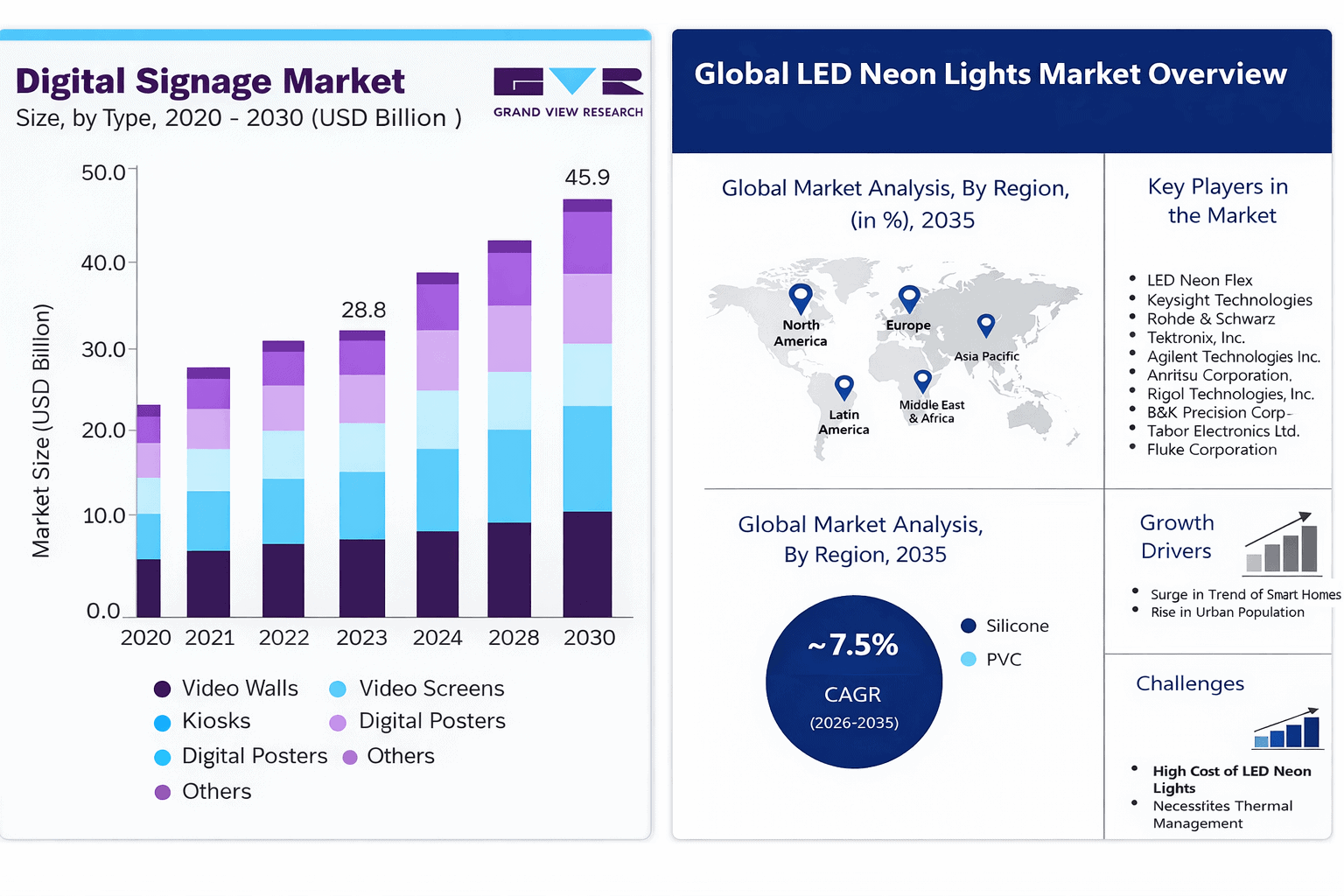
Sources:
These figures show that both types of signage are growing steadily, each serving unique purposes in modern advertising.
In this article, we’ll explore their key differences, pros and cons, and how to choose the right one for your business.
What Is Digital Signage?
Digital signage uses LED or LCD screens to display videos, animations, or scrolling text. These screens are connected to a control system that allows users to change or schedule content remotely.
You’ll often see them in shopping malls, airports, restaurants, or retail chains — anywhere that needs to show fresh information or promotions daily.
Main features:
- Displays videos, menus, or changing messages
- Controlled by software or online platforms
- Modern and eye-catching appearance
What Are Traditional LED Signs?
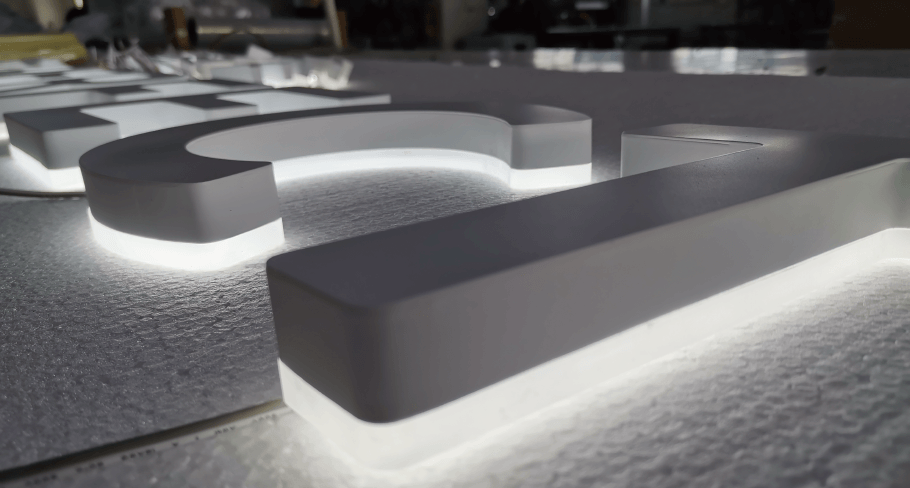
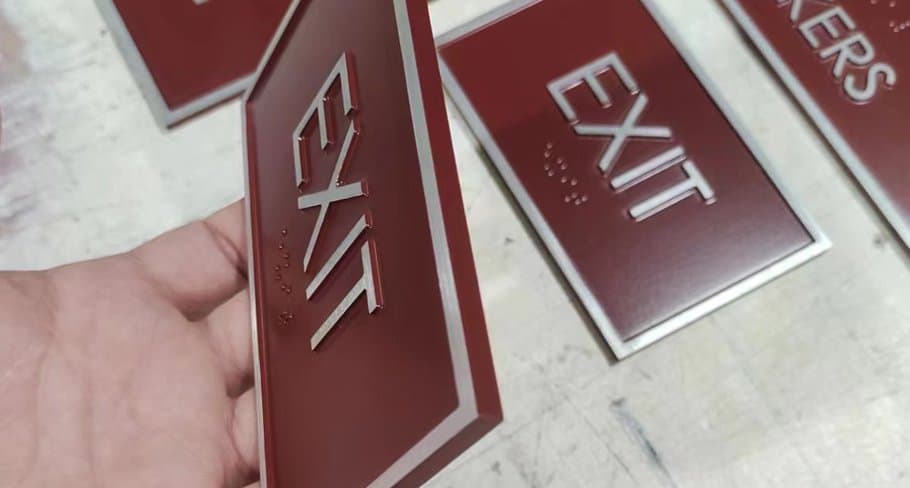
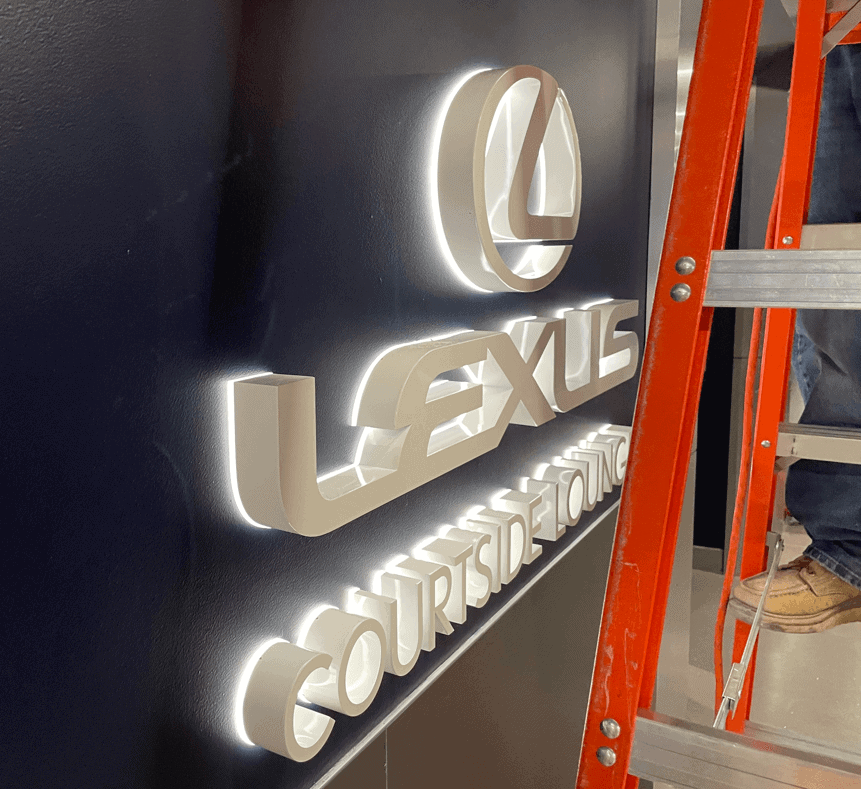
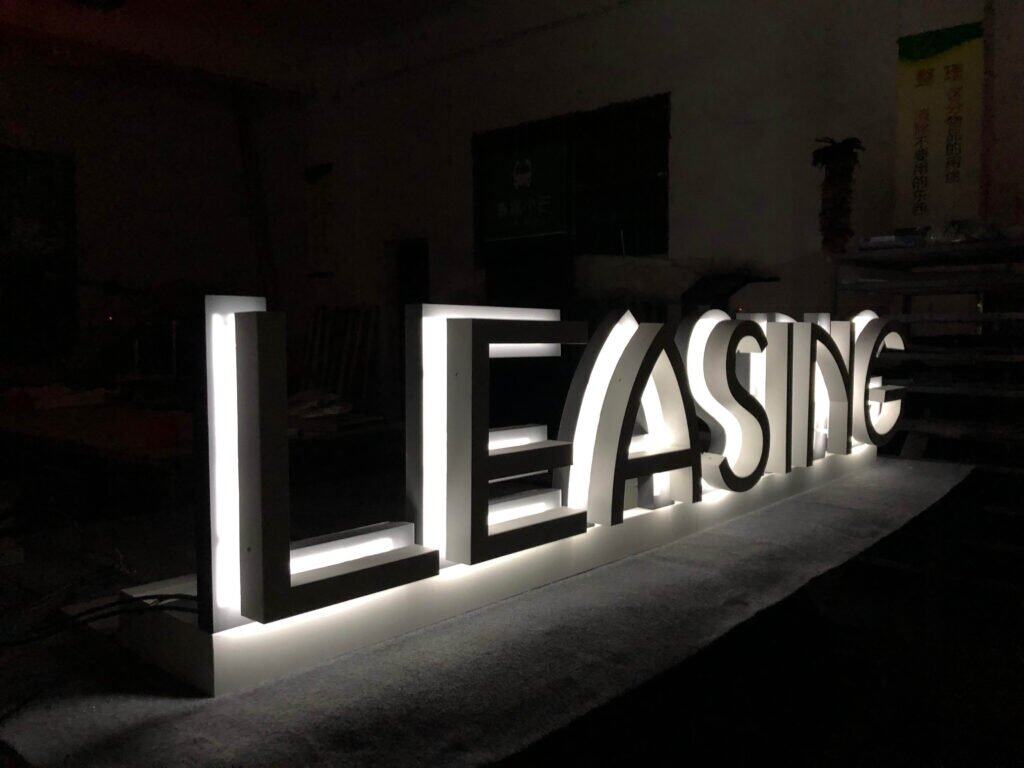
Traditional LED signs, such as metal channel letters, acrylic lightboxes, and stainless steel illuminated logos, are made from durable materials like aluminum or acrylic. They usually include built-in LED lighting that gives a steady glow at night.
These signs don’t play videos or animations, but they clearly and permanently represent your brand identity. You’ll find them on storefronts, hotels, offices, and building facades.
Main features:
- Long-lasting and durable
- Simple structure and easy maintenance
- Perfect for displaying brand logos or names
Main Differences Between Digital and Traditional LED Signs
| Features | Digital Signage | Traditional LED Signs |
| Display | Dynamic – can show videos and animations | Static – fixed logo or text |
| Content Update | Easy to change remotely | Fixed once produced |
| Cost | Higher (hardware + software) | Lower manufacturing cost |
| Maintenance | Requires technical support and software updates | Simple cleaning and occasional LED replacement |
| Durability | Around 5–8 years, depending on components | 8–10+ years, highly weather-resistant |
| Energy Use | Higher | Lower |
| Look | Modern and high-tech | Elegant and classic |
Advantages and Disadvantages
Digital Signage
Advantages
- Attracts more attention with moving visuals, ideal for promoting new offers or menus
- Easy to update content anytime, from anywhere
- Perfect for frequent promotions or information updates
- Supports interactive functions like touch screens or motion sensors
- Eye-catching in high-traffic areas such as shopping malls or public squares
Disadvantages
- High initial investment and maintenance cost — includes hardware, installation, and software support
- Sensitive to weather — outdoor screens require waterproofing, cooling, and regular inspection
- Consumes more power, large LED panels
Traditional LED Signs
Advantages
- Cost-effective and durable: Made from aluminum or stainless steel, lasting for years and affordable for most businesses
- Low maintenance: Simple structure with minimal upkeep
- Elegant appearance: Various finishes, such as brushed, polished, or painted surfaces, give a premium look
- Energy-efficient: LED modules consume little power and have a long lifespan
Disadvantages
- Static display: The content cannot be changed once made
- Limited flexibility: Not suitable for daily promotions or frequently changing messages

Which One Should You Choose?
There’s no one-size-fits-all answer; your choice depends on your business needs, budget, and brand style.
Choose digital signage:
- If you need to update content often, run promotions, or attract attention with dynamic visuals.
- Ideal for restaurants, shopping malls, or retail chains.
Choose traditional signs
- If you want a long-term, elegant, and low-maintenance solution that represents your brand around the clock.
- Perfect for building facades, hotel entrances, or reception areas.
In many cases, the best approach is to combine both:
Use digital signage for advertising or promotions, and traditional signs for your permanent brand identity.
Takeaway
Digital signage represents the future of smart, interactive advertising, offering the advantages of flexibility, high-tech capabilities, and visually impressive displays.
But traditional signage remains a timeless choice that is reliable, durable, and elegant.
As a professional manufacturer of metal and LED channel letters, FT Signage understands that every business has unique needs. Whether you need stainless steel letters, acrylic lightboxes, or illuminated signage, a well-crafted traditional sign can always make a strong and lasting impression.
If you’re unsure which option best fits your project, our team can offer honest advice and design a solution that aligns with your budget, style, and environment. Feel free to contact us!